
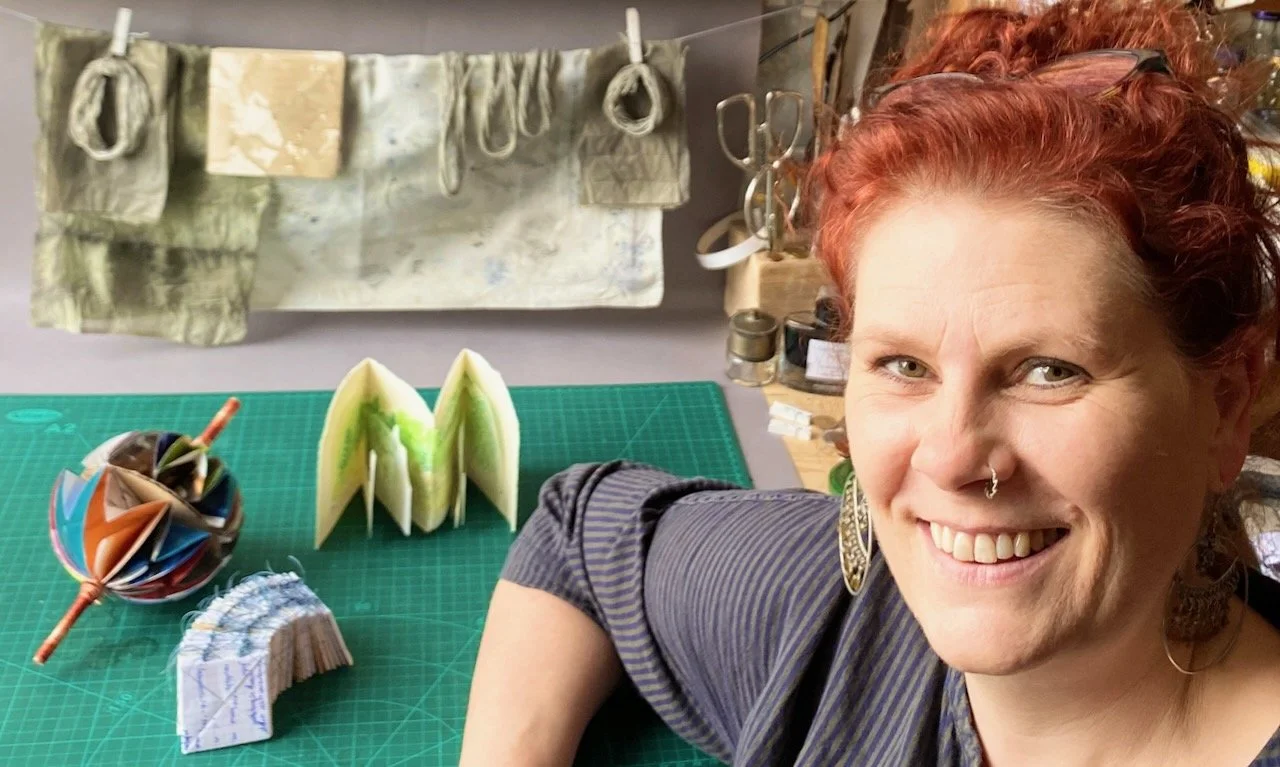
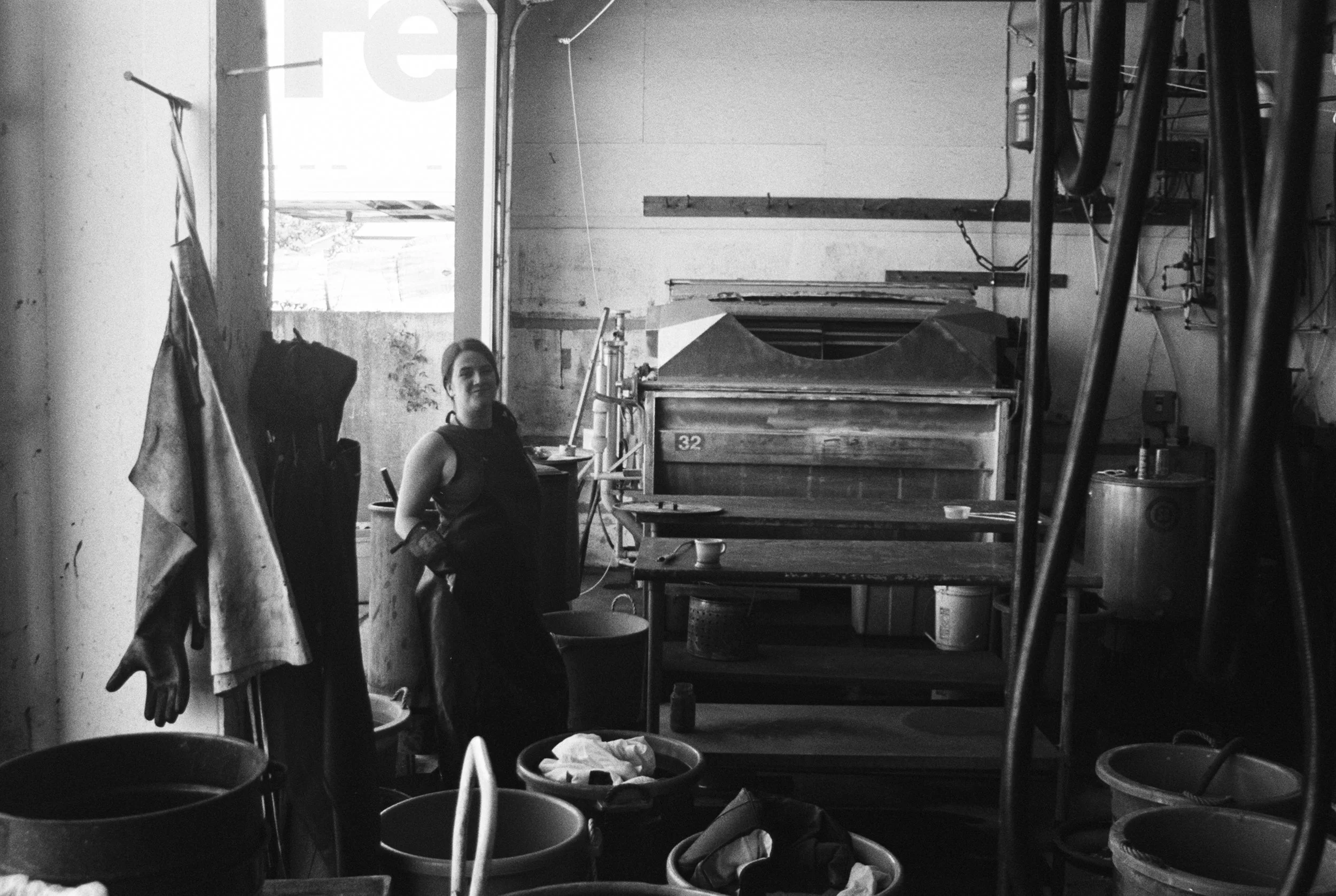
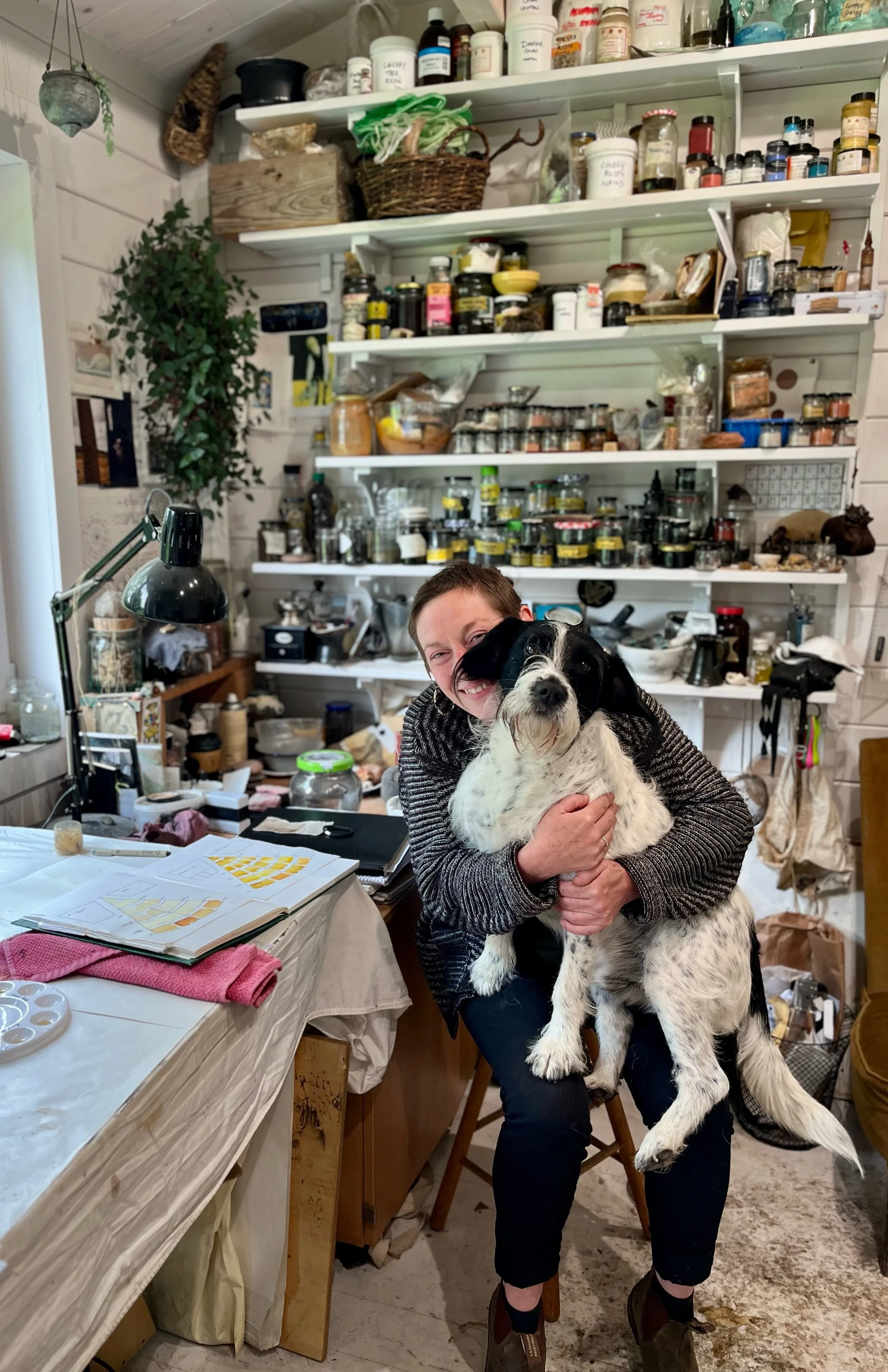
Meet The Plants & Colour Team
We are an international group of artists and makers who specialise in working with natural materials.
We work together to deliver online learning programmes, sharing processes for making and working with natural colour and art materials. Including pigment making, ink making, paint making, and natural dyes, paper making, book making, and more.
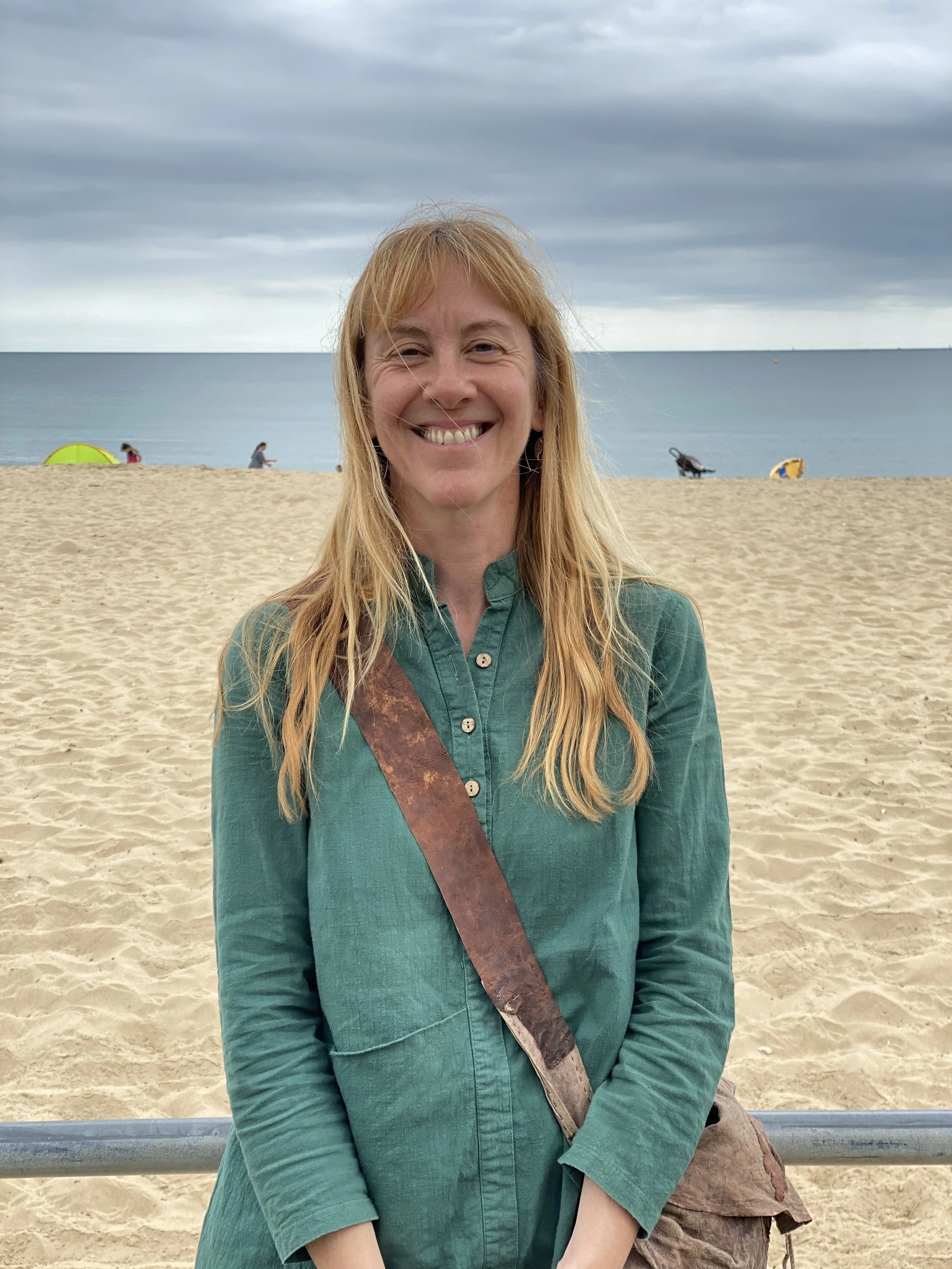
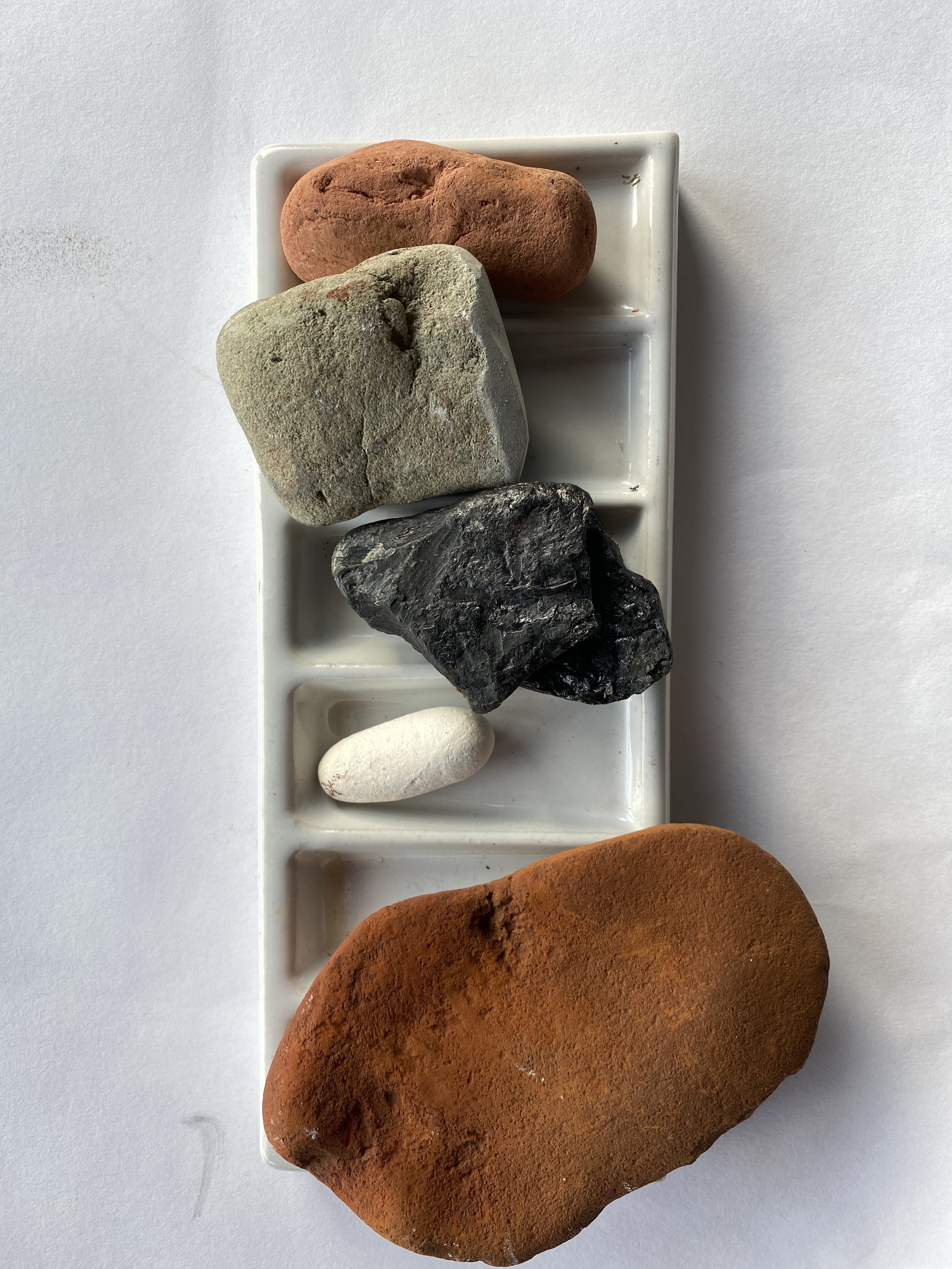
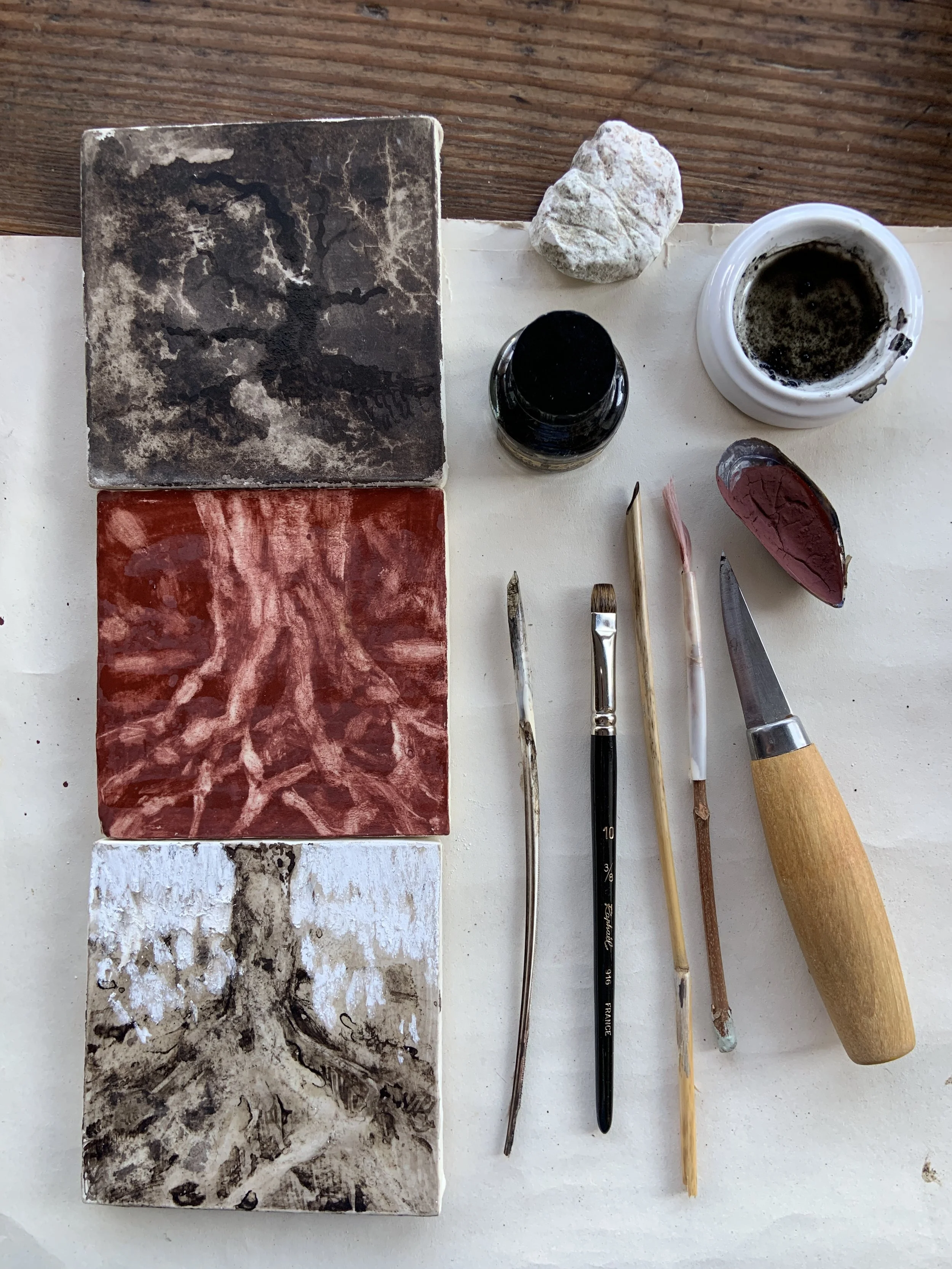
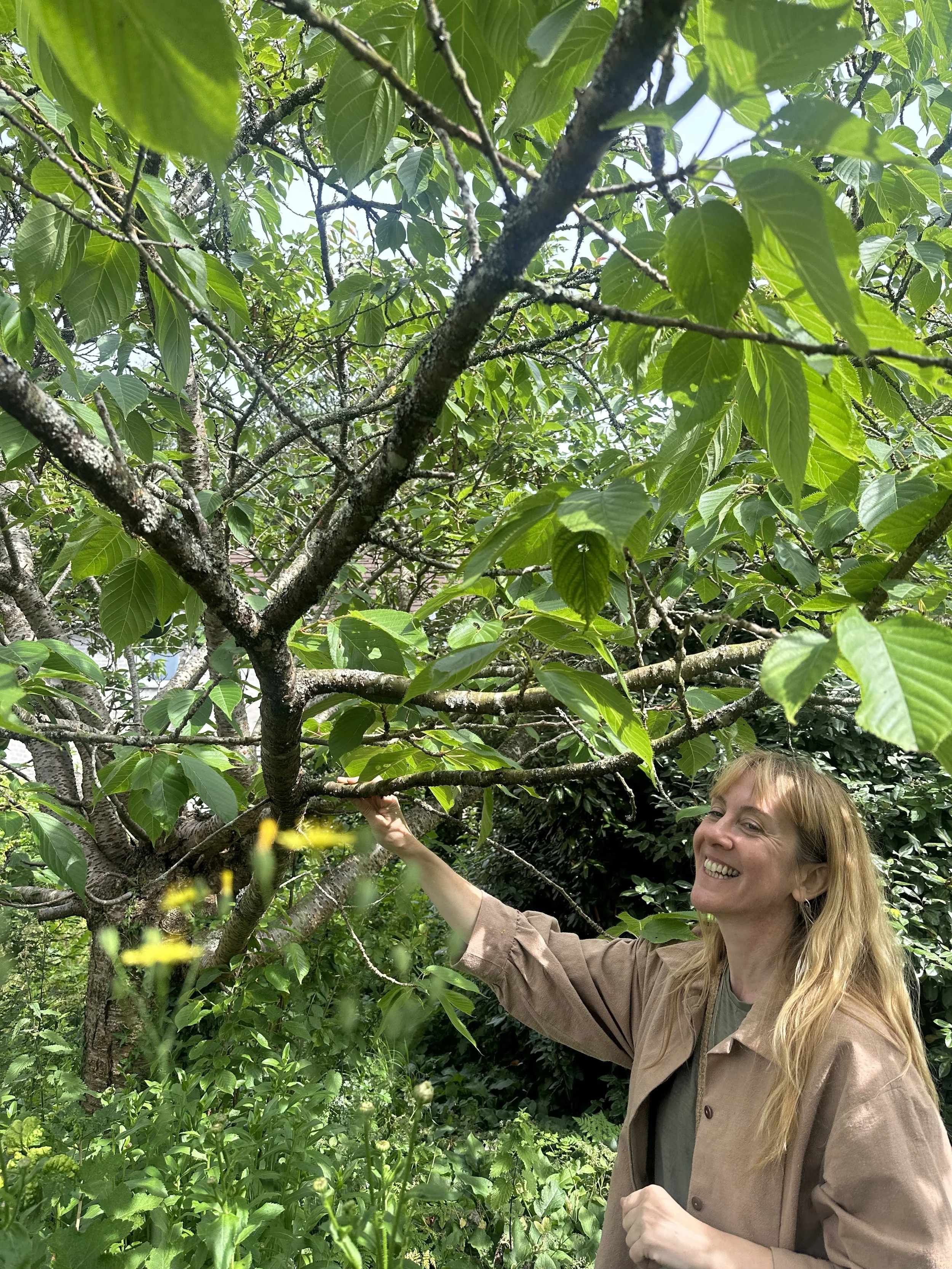
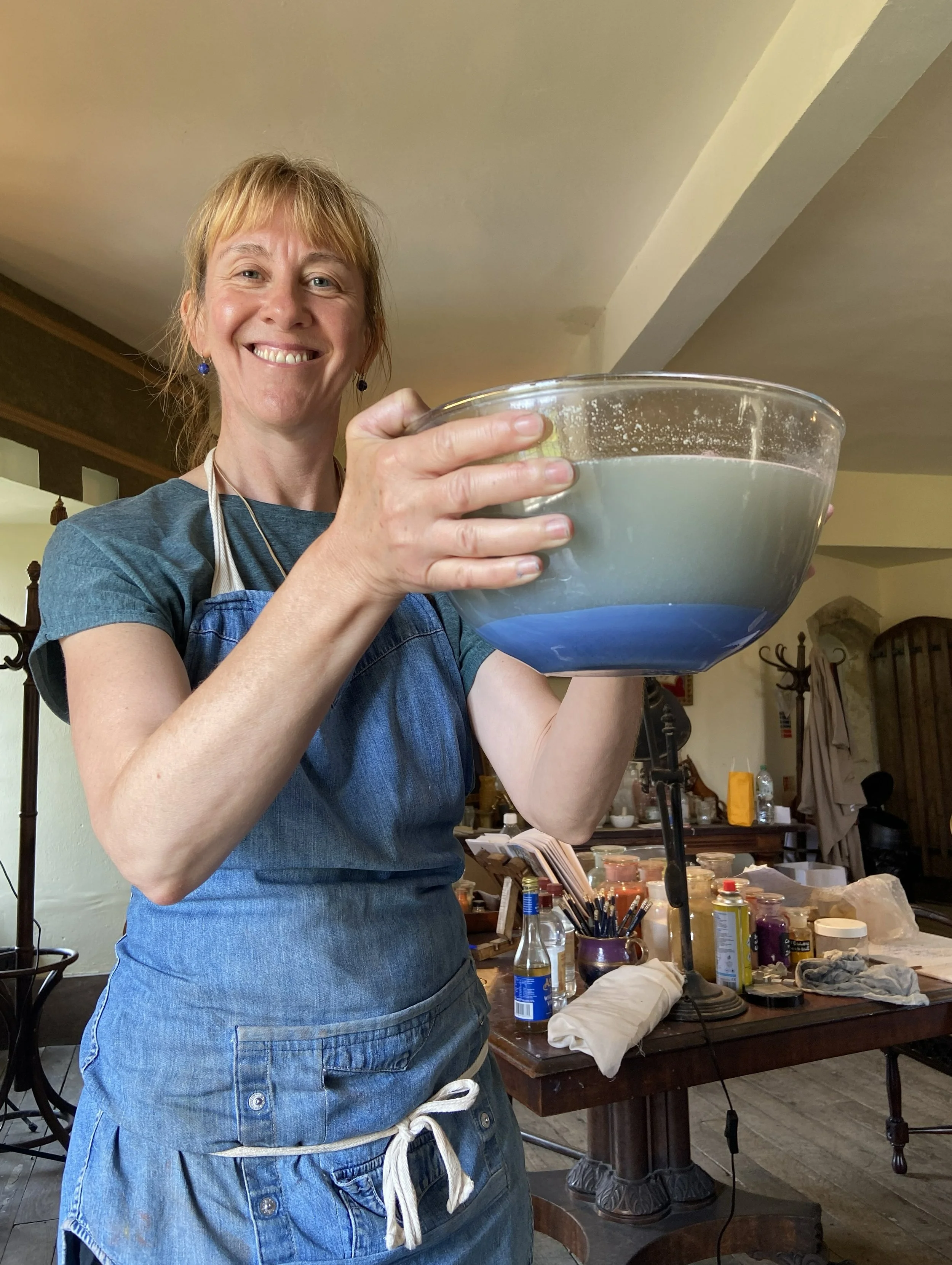
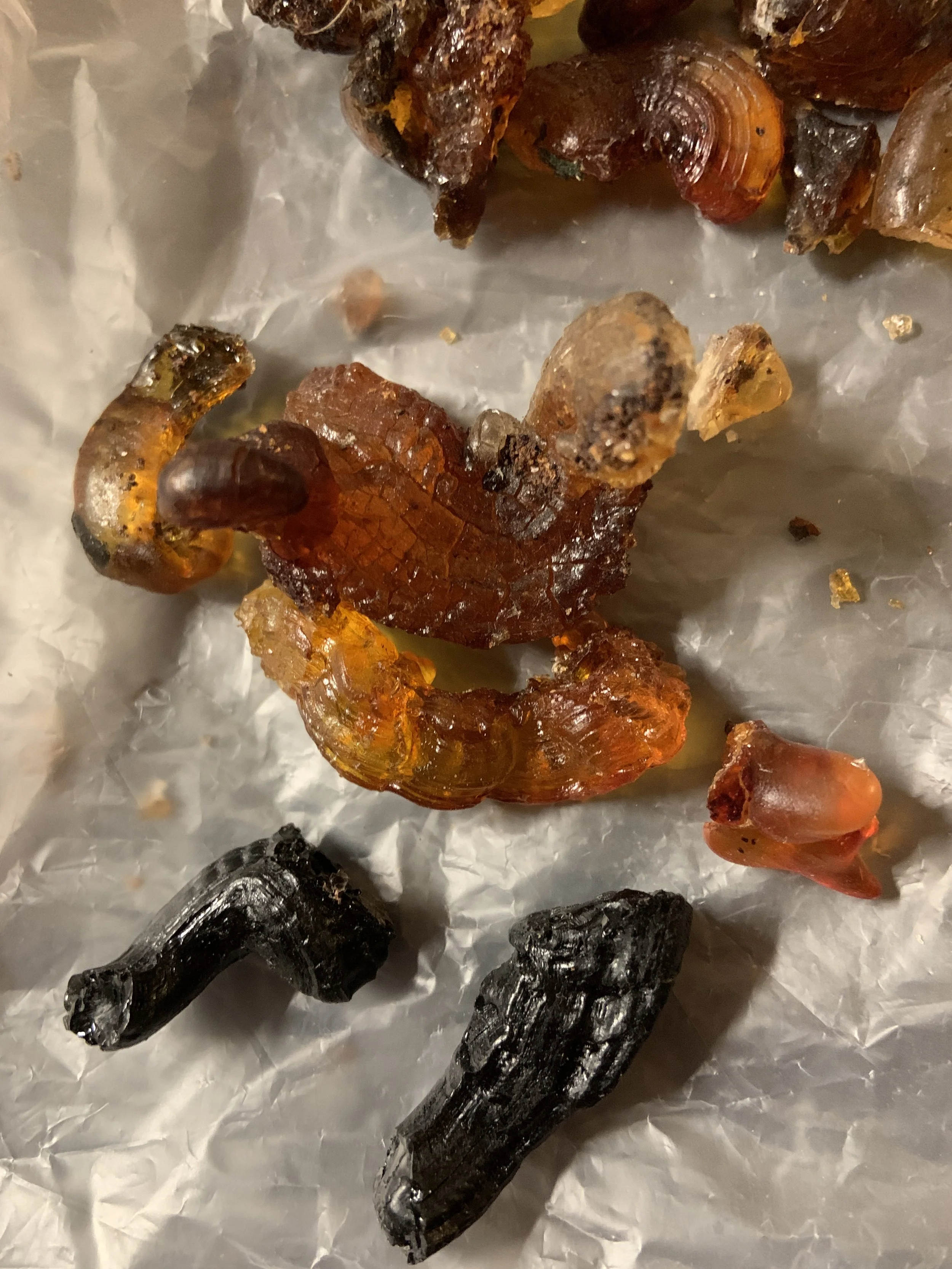
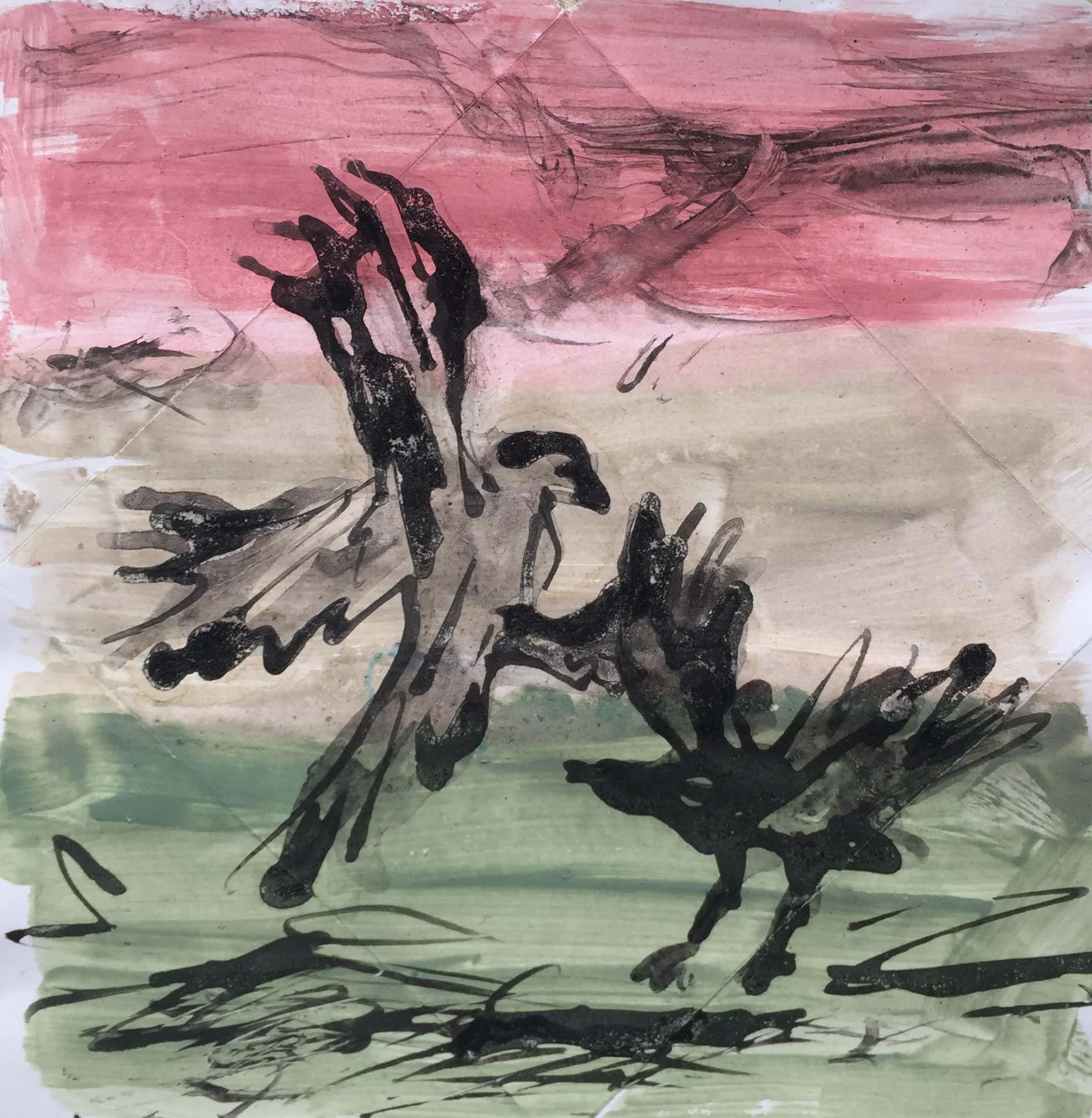
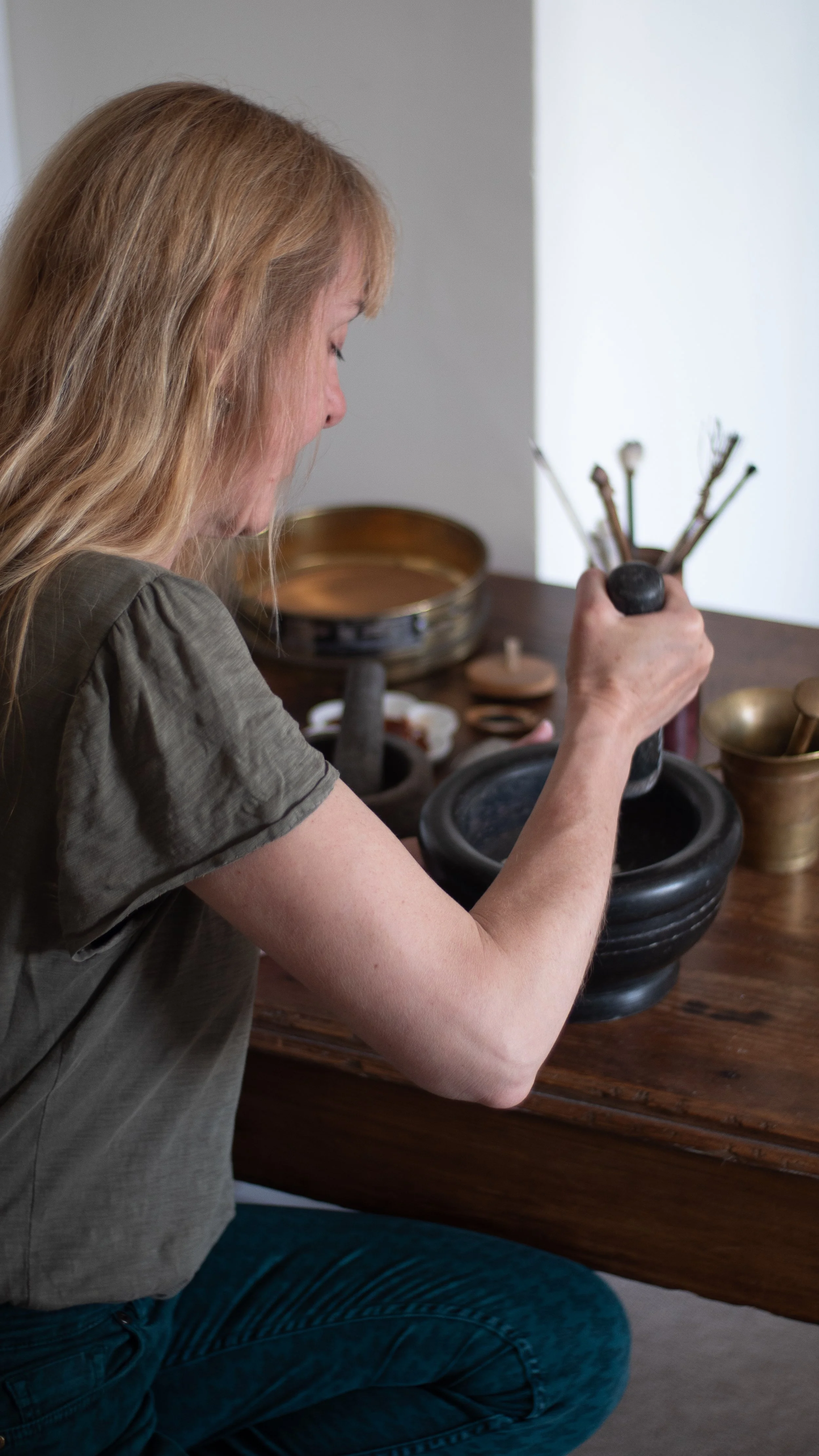
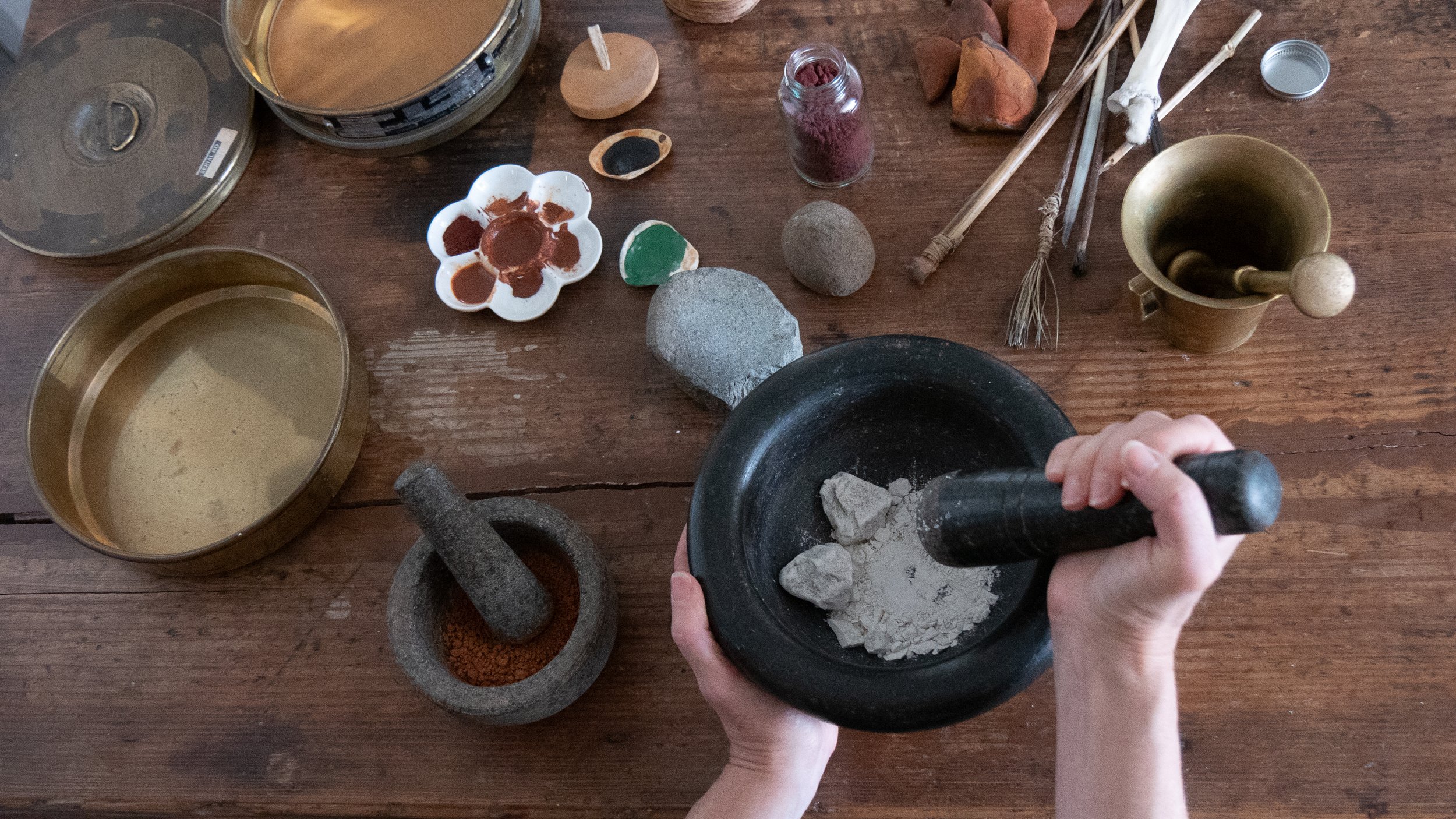
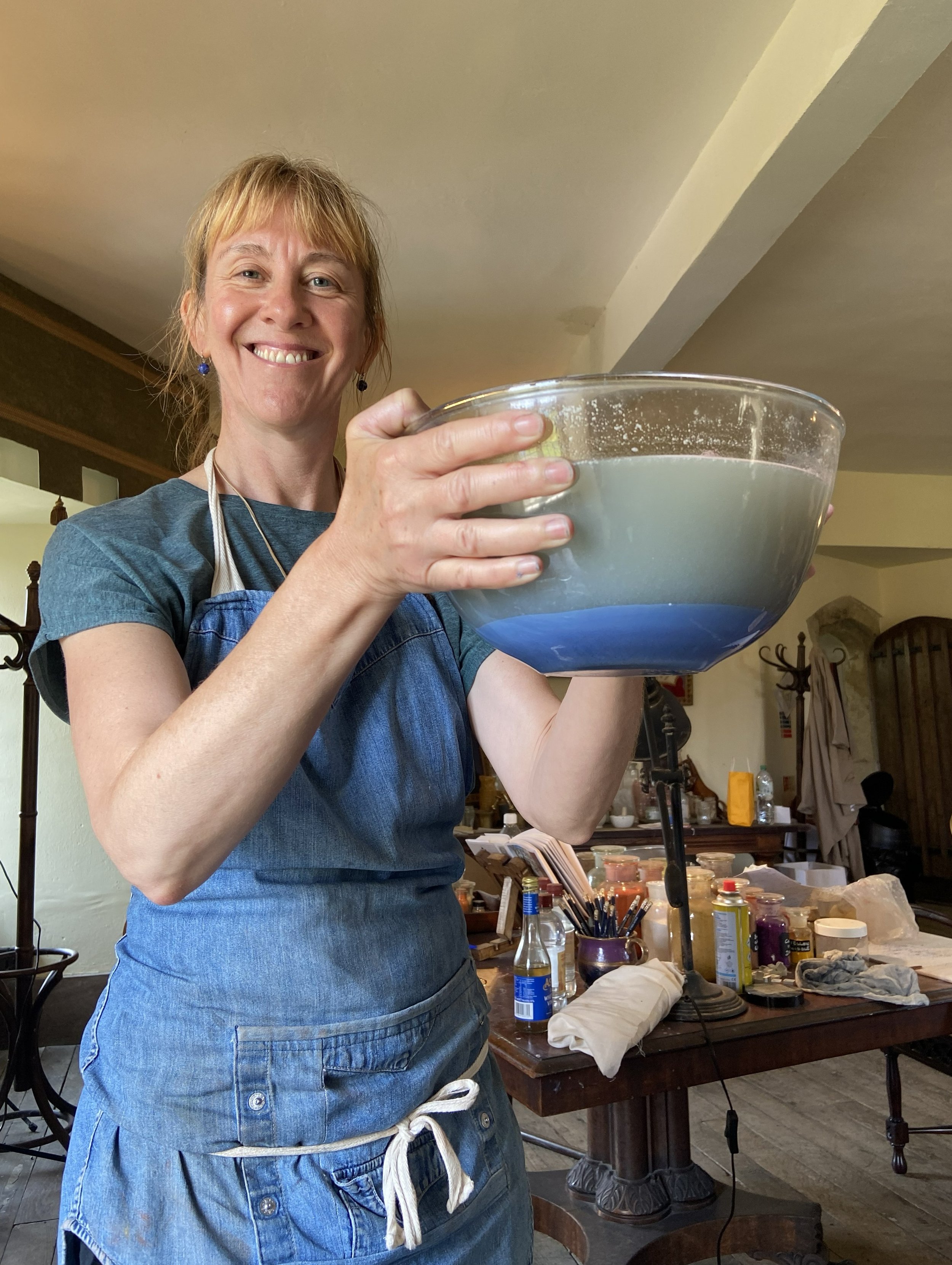
Caroline Ross
Artist and Author
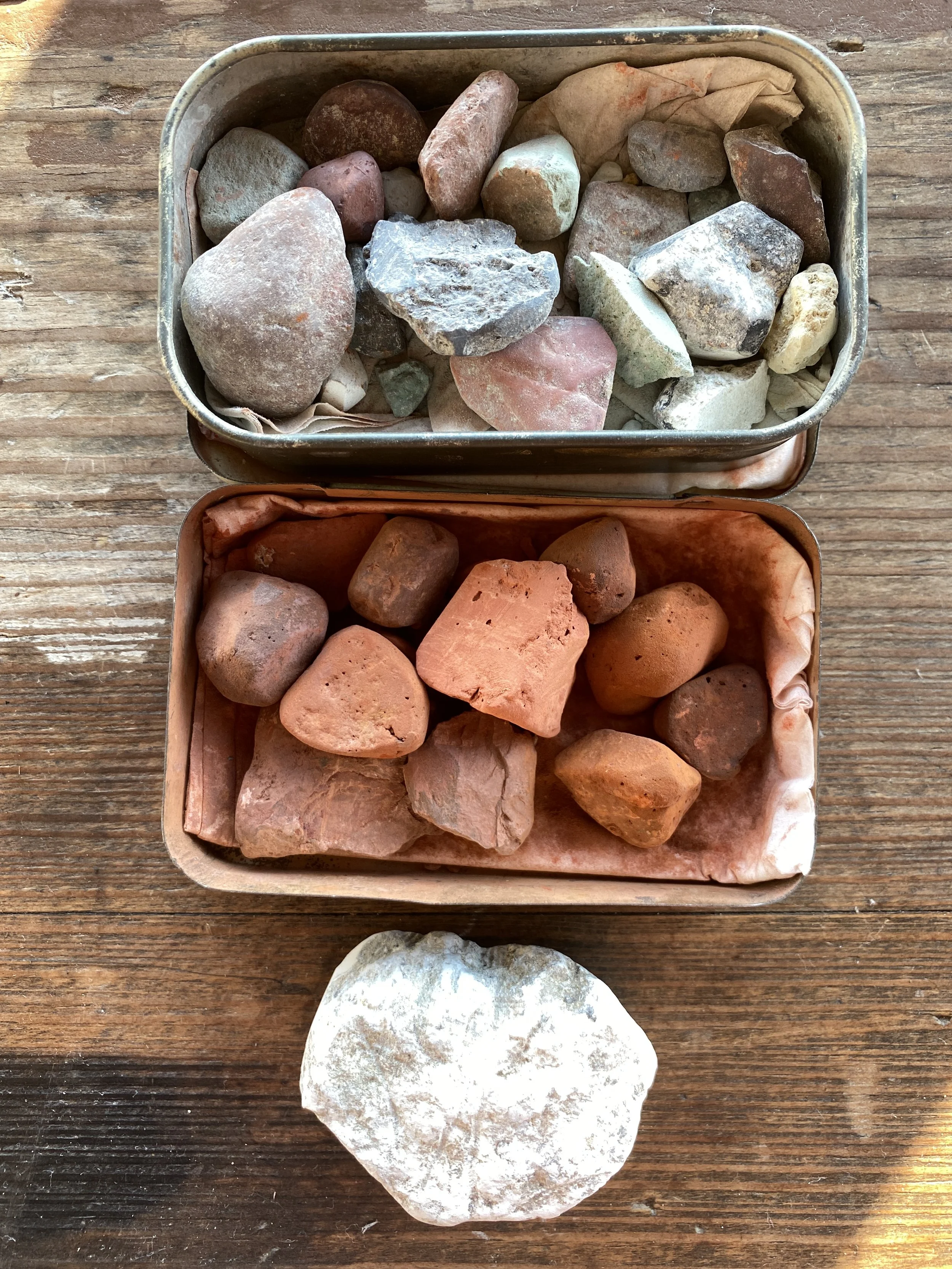
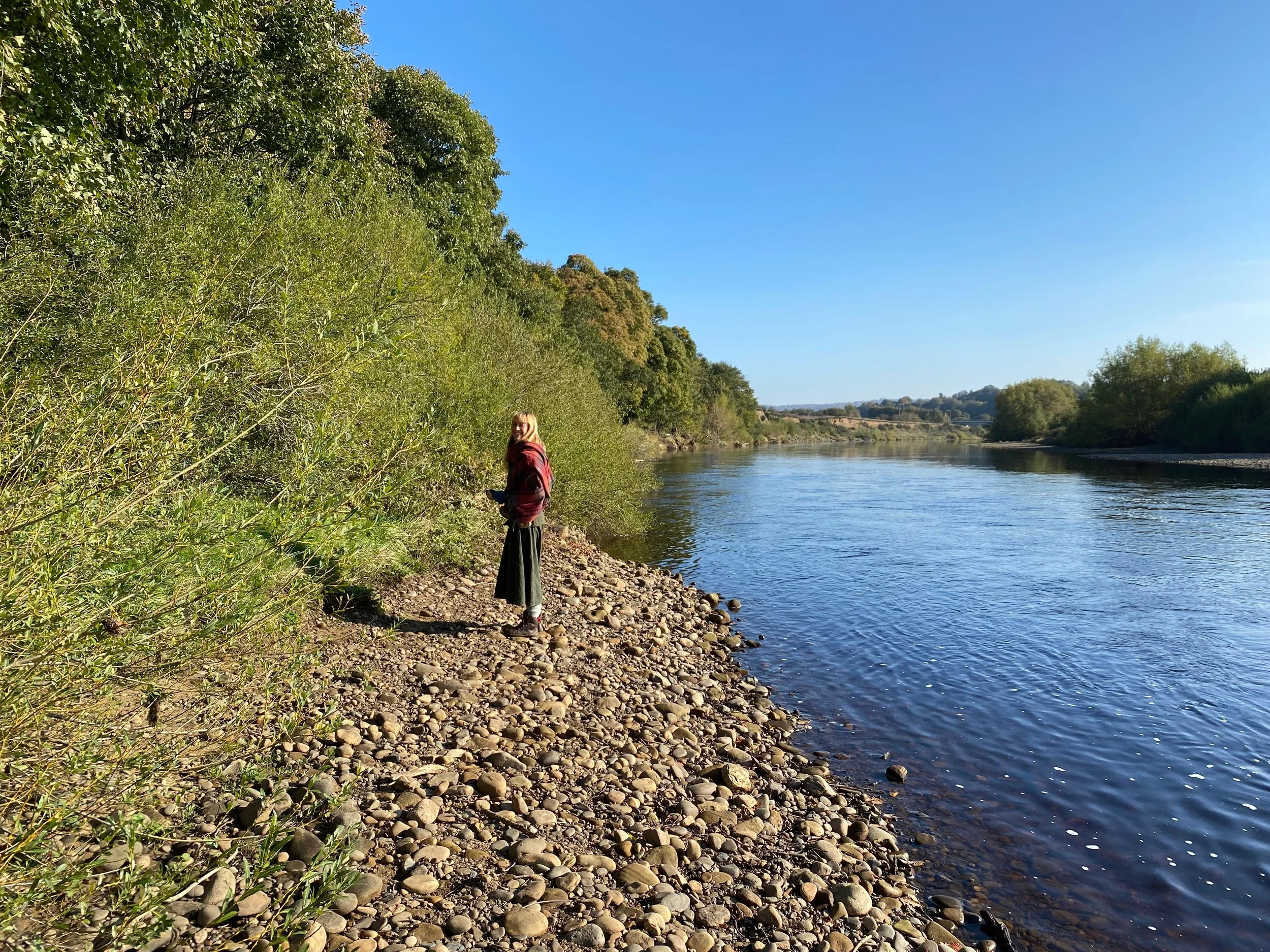
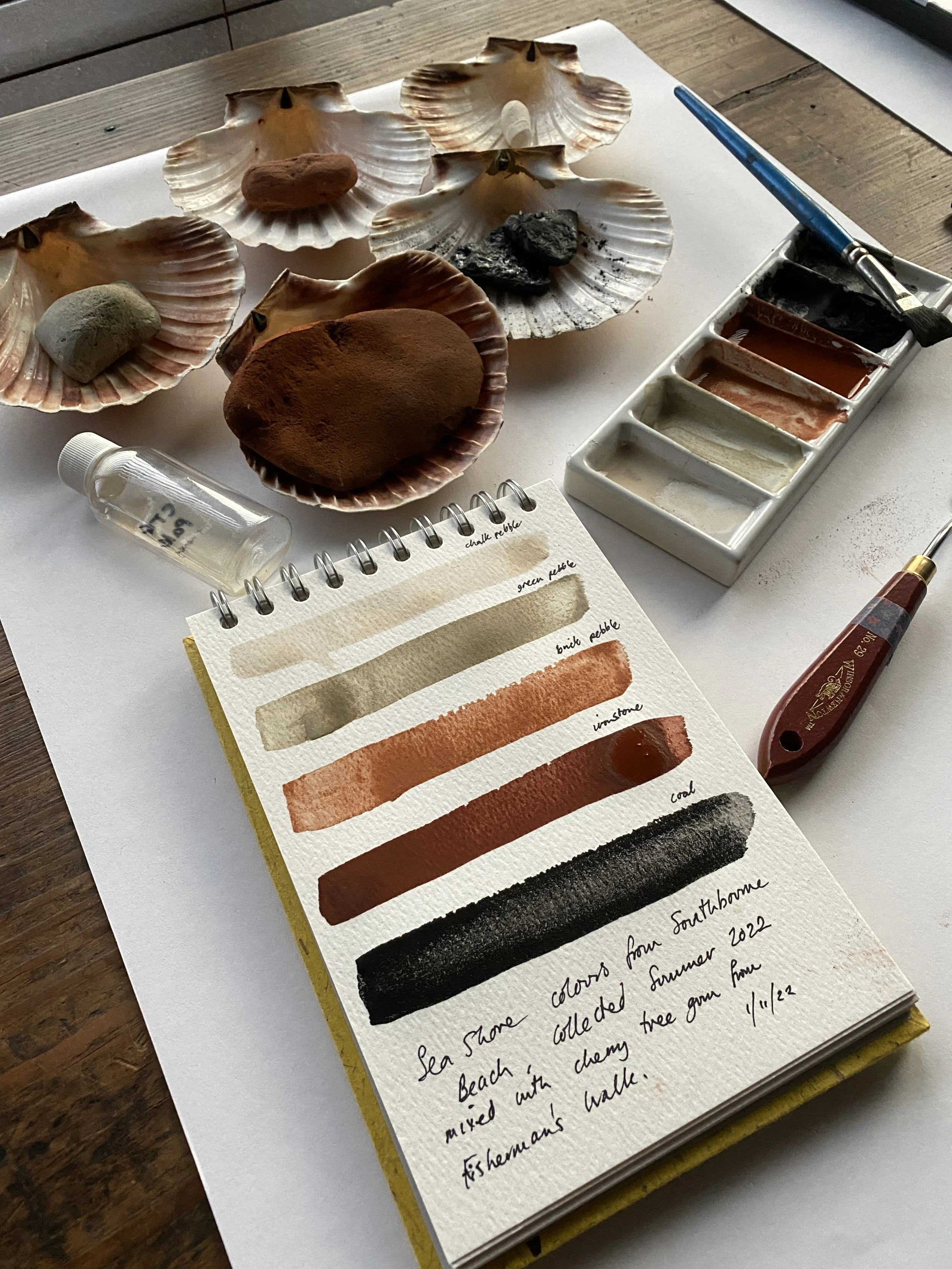
A place that most inspires your work? Where the water meets the land is where I find most inspiration: coastal beaches, river edges, natural springs.
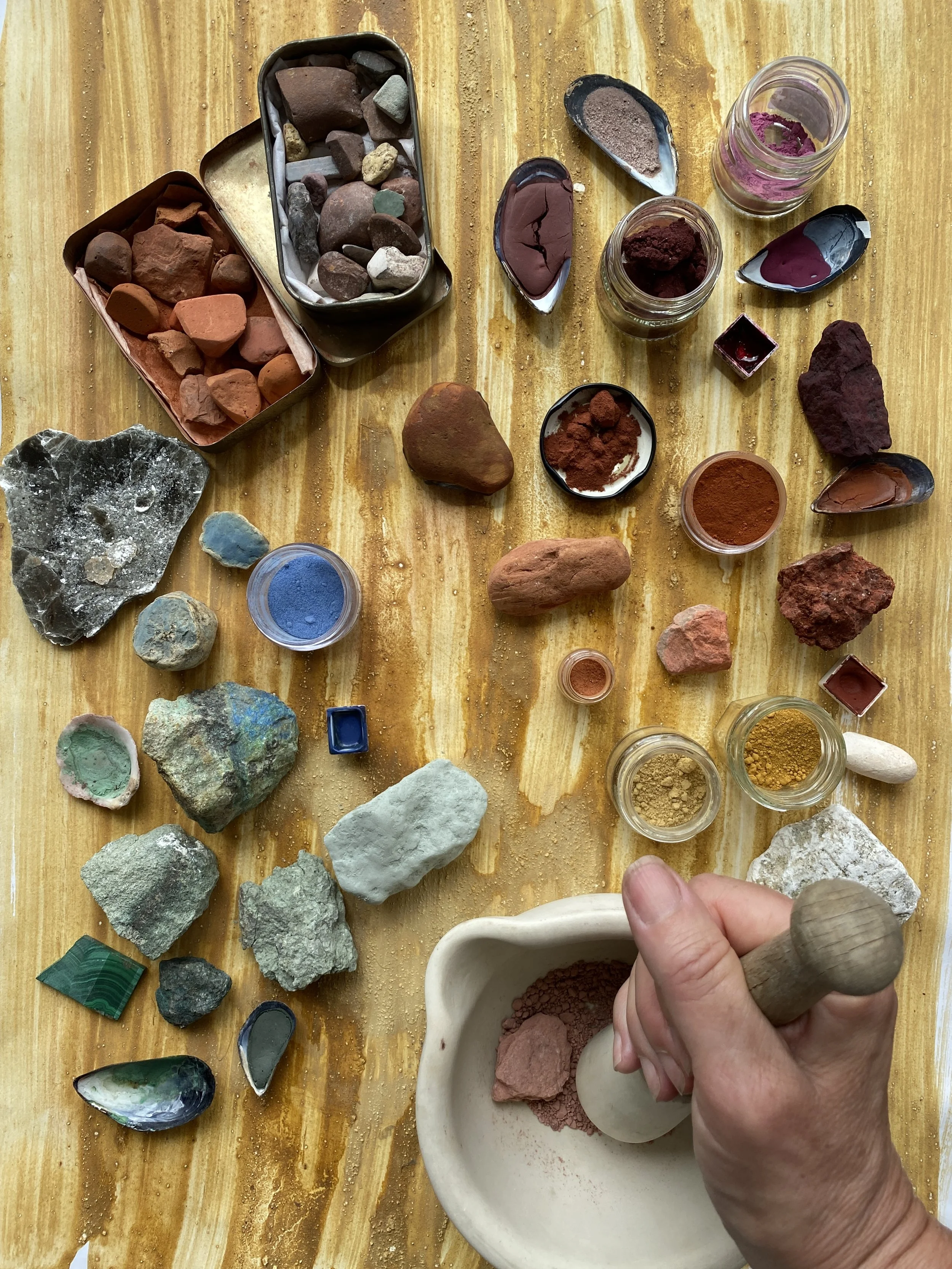
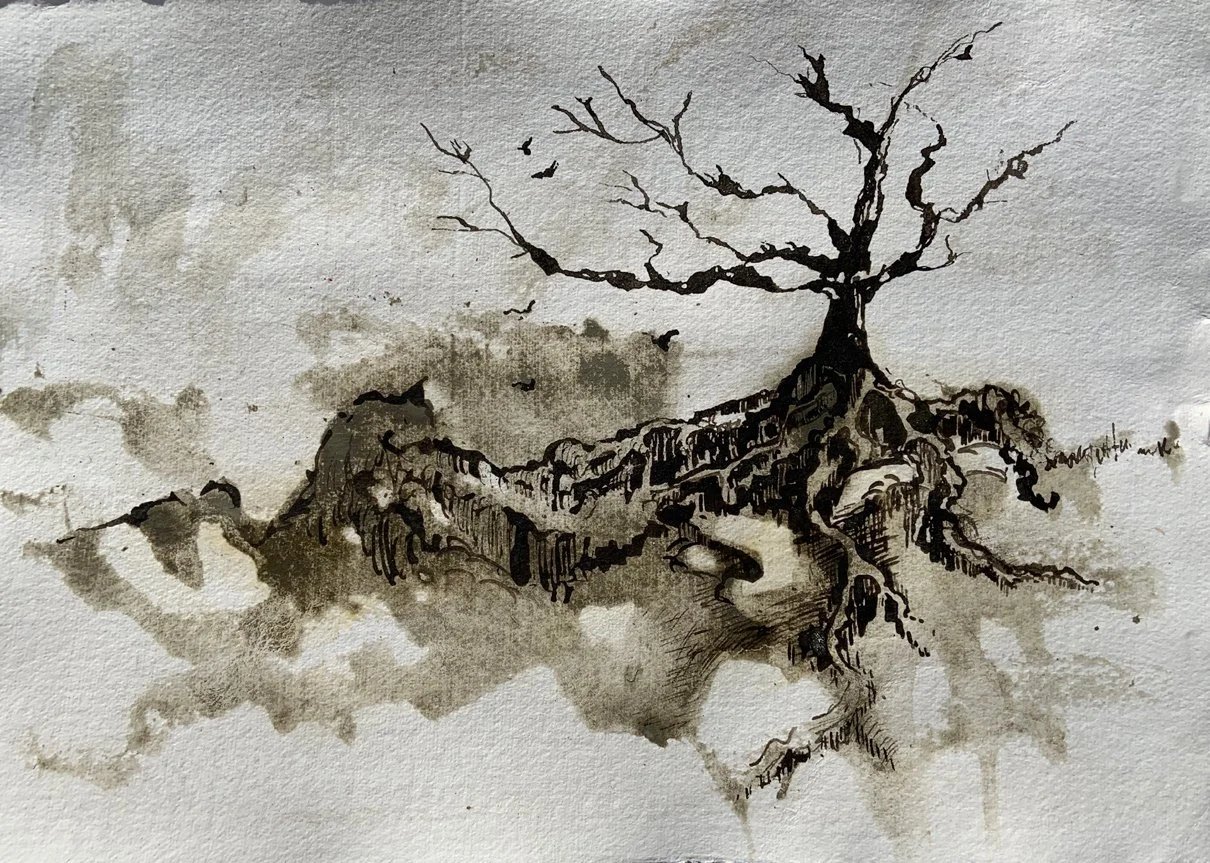
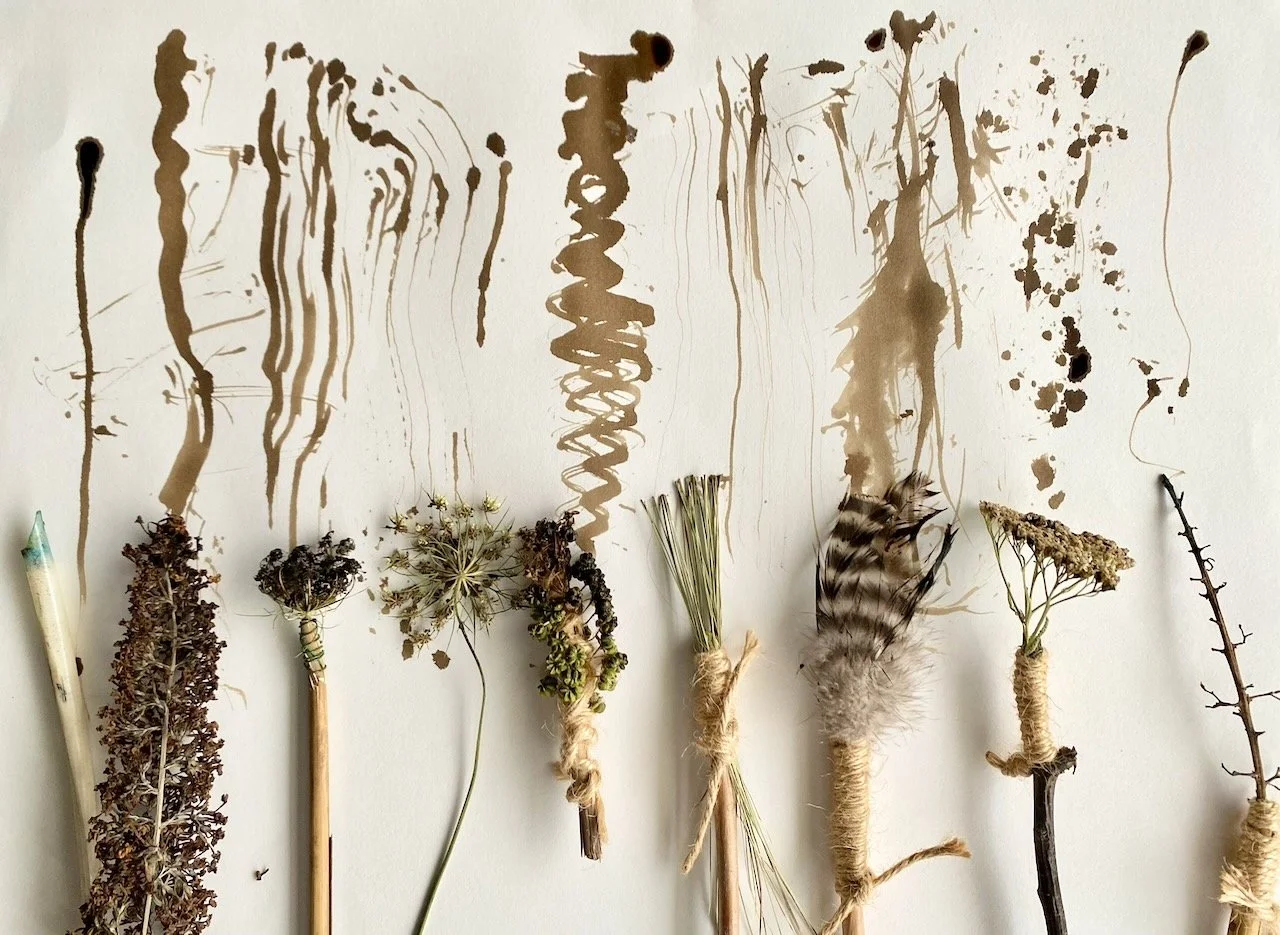
Materials or tools you most often use? Iron gall ink and a quill pen are my go-to material and tools, with inks washes done with a feather brush, whether on rag paper or deer skin parchment, reused or handmade leathers, or on my clothes and shoes.
What do you hope people feel or notice when they see your work? I hope my books and materials work make people want to pick things up and turn them over in their hands. I want people to see the materiality behind the image, whether a drawing or painting I have made, the page of a book, or the details of a course I am offering, and think to themselves, 'Oh, I really want to have a go at that...'
The most important thing you want students to learn from your teaching? I would encourage people to feel that they truly belong on the Earth and that they are part of co-creating art with the greatest artist of all, our home planet, with all its myriad natural processes.
What do you notice in nature now that you might have missed before using natural materials in your craft? I used to miss all the mushrooms before I became a fungi forager, then I overdid it and had to step back a little, as they were all I noticed for a few years. Now, I hope that due to oak galls, mahonia berries, swan feathers, walnut husks and dandelion stalks, amongst other beauties, I have become a little more balanced. At least now I look up as well as down when I am in the woods!
Favourite weed - nettle. Fantastic tea, food, colour, medicine and fibre all in one sturdy, stinging plant. Close runner up is bramble, for almost the same reasons, just replace 'stinging' with 'spiky'. I have huge respect for these ubiquitous 'weeds'.
Guiding principles: Do as you would be done by - I hope to treat the earth how I'd like to be treated. This helps me pay closer attention, tread softly, make connections, not 'take, take, take'. I also try to remember to have fun together, it's a long term relationship, after all.
Anything else? Working with Plants and Colour has been such a delight. It's been rare in my life to have a strong cohort of colleagues and contemporaries, having been self-employed for so long. I appreciate the conviviality, warmth and sharing that has sprung up amongst the faculty and am in awe of many of the teachers' skills. I feel very lucky to have found my colourful niche.
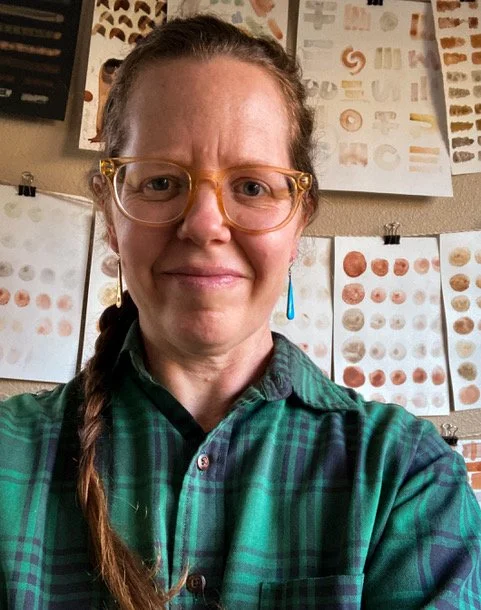
Carolyn Sweeney
Artist
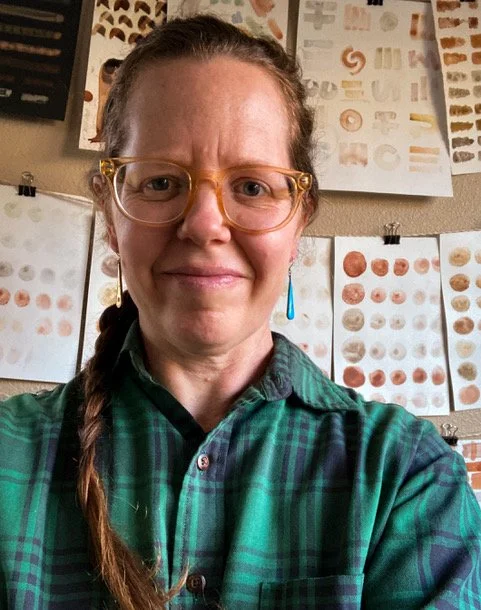
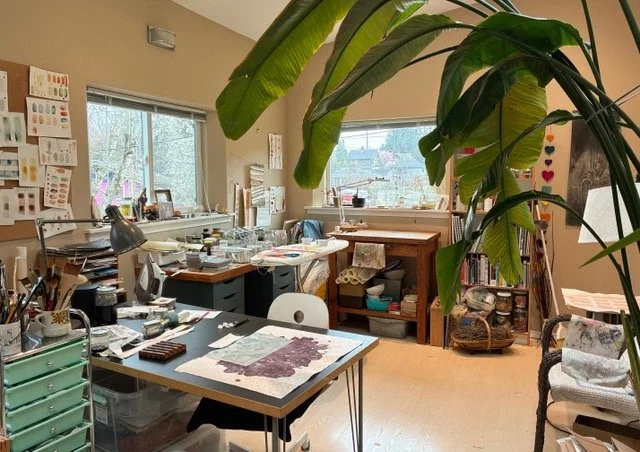
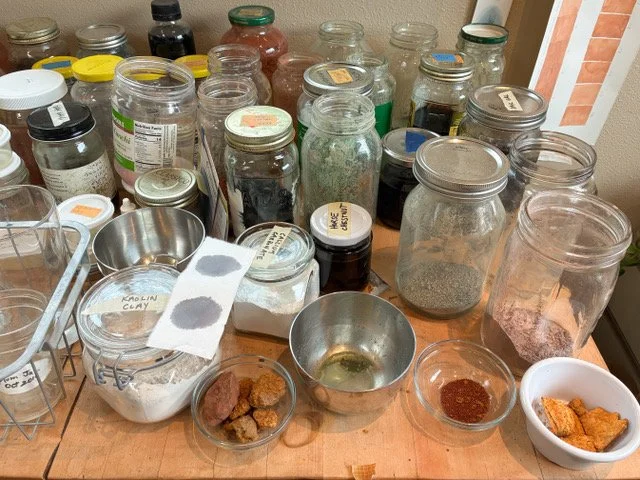
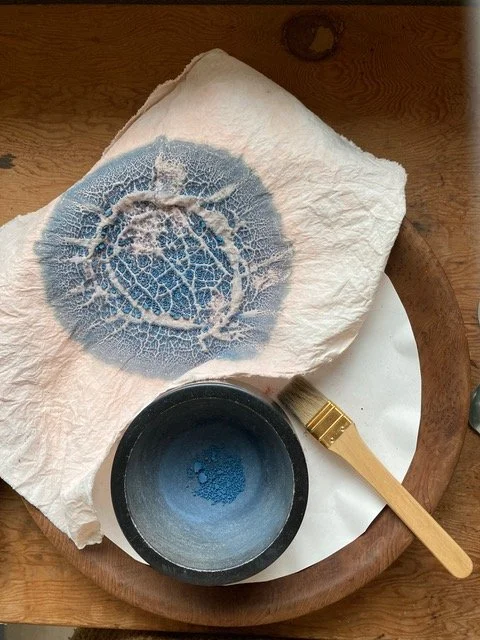
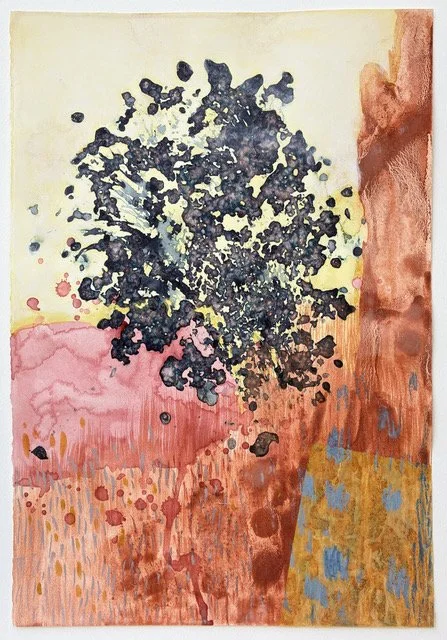
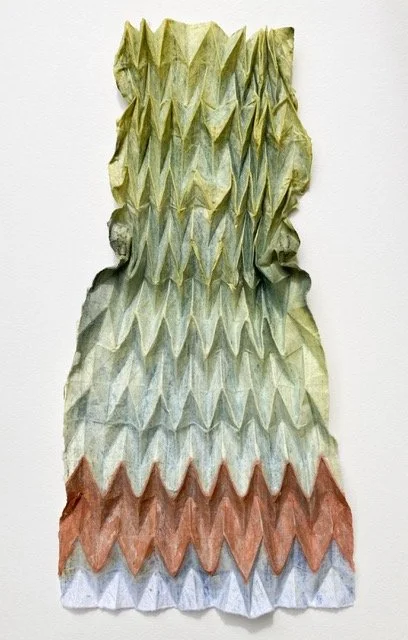
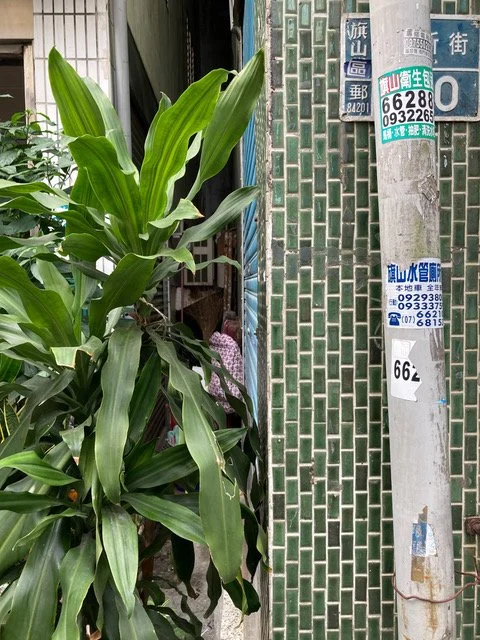
A place that most inspires your work? Oregon is the place that most inspires my work, from the plants I gather on neighborhood walks to hikes that bring me to favorite sources of mineral pigments. I’ve been going to some of these places for decades. Well before I knew about making my own artist materials I was gathering clay for face masks and drawing weeds. A close second is Taiwan, where I go every chance I get. I am always nourished by the visual abundance there, the humble density of plants, people, and the built environment.
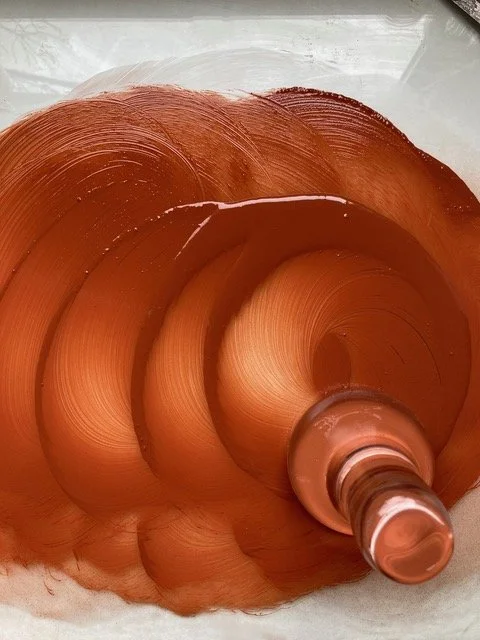
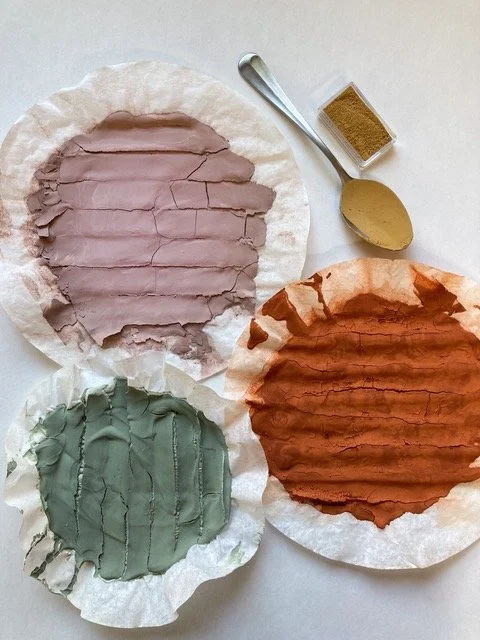
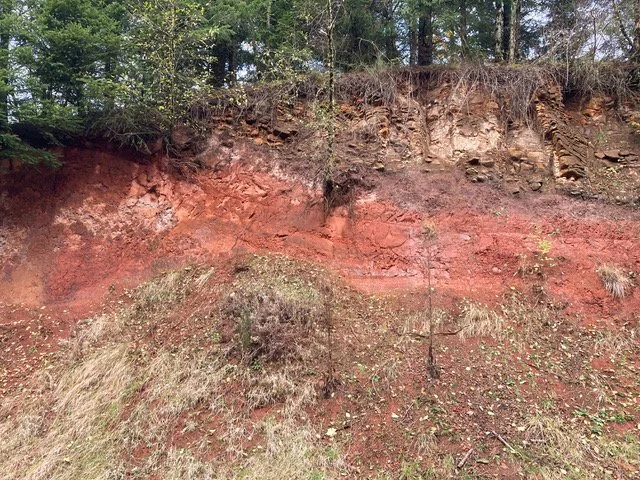
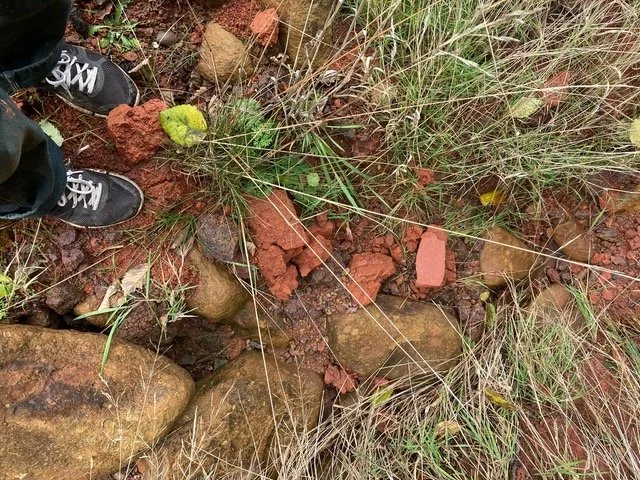
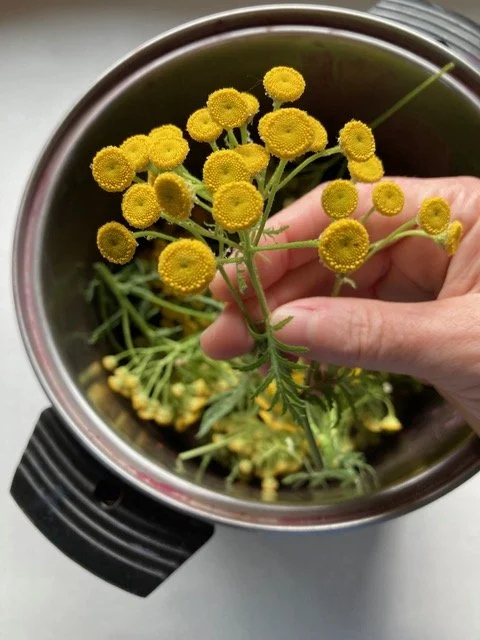
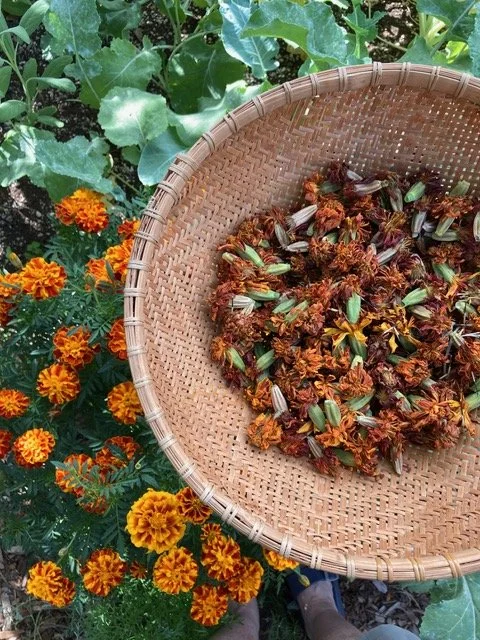
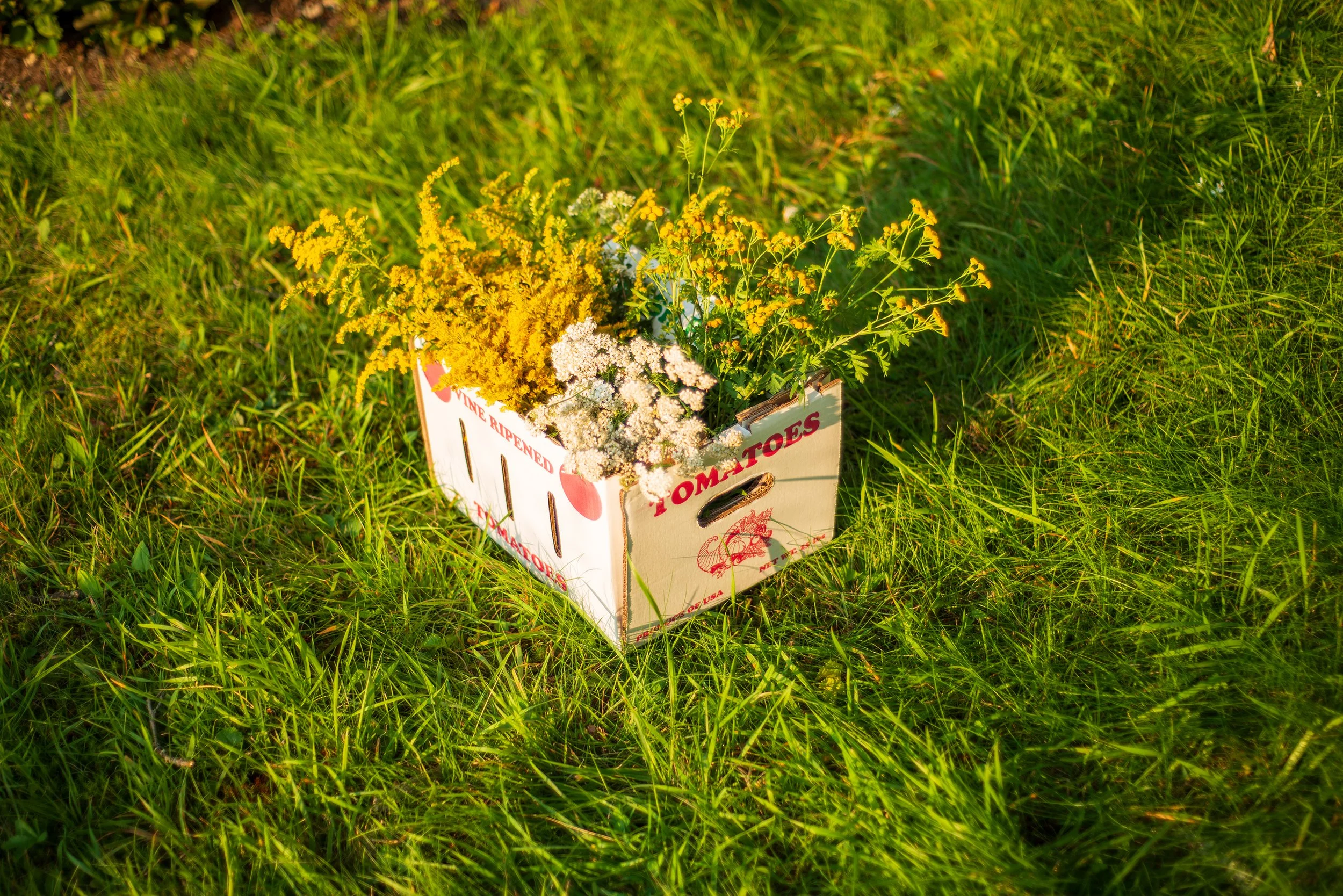
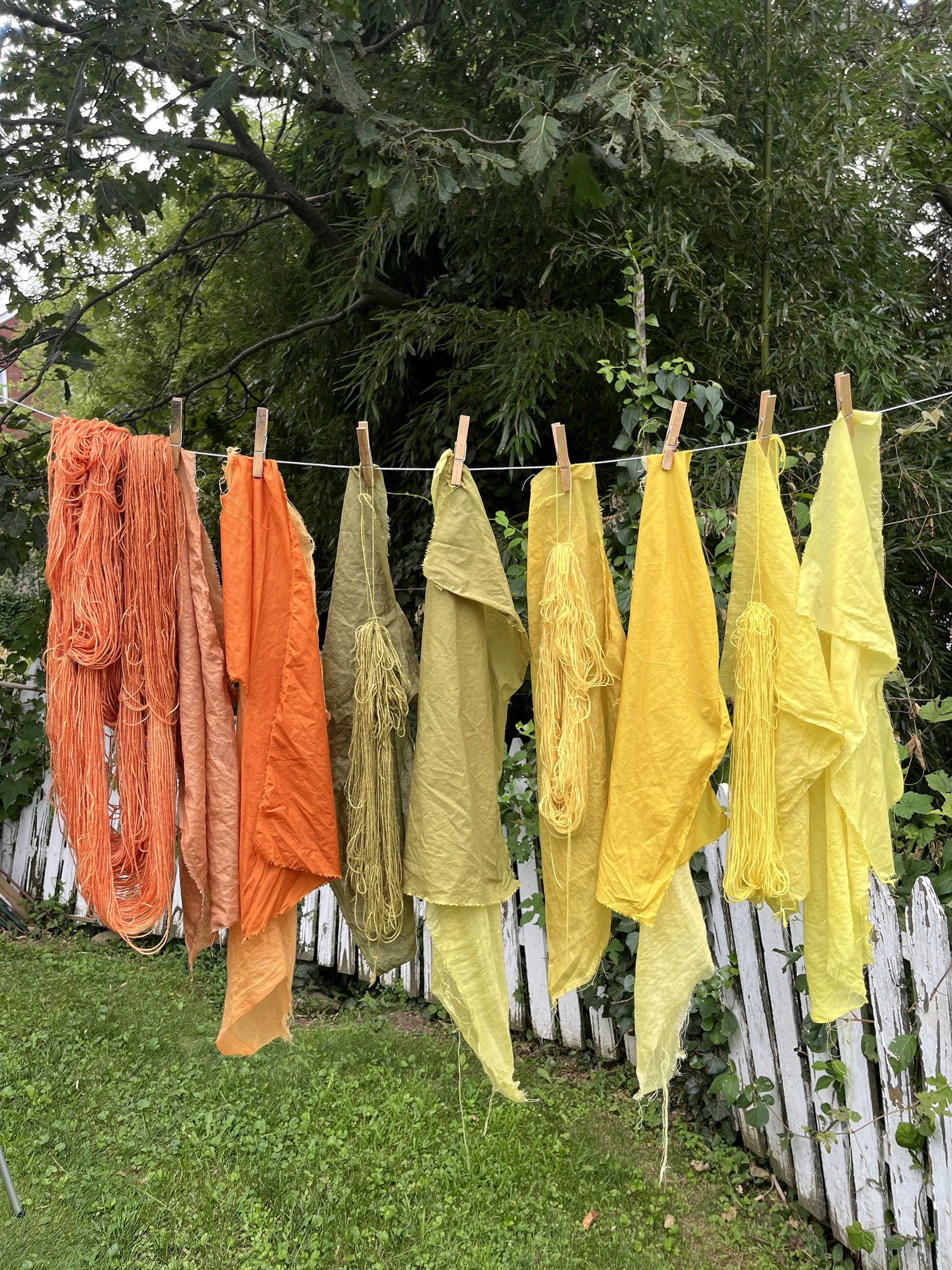
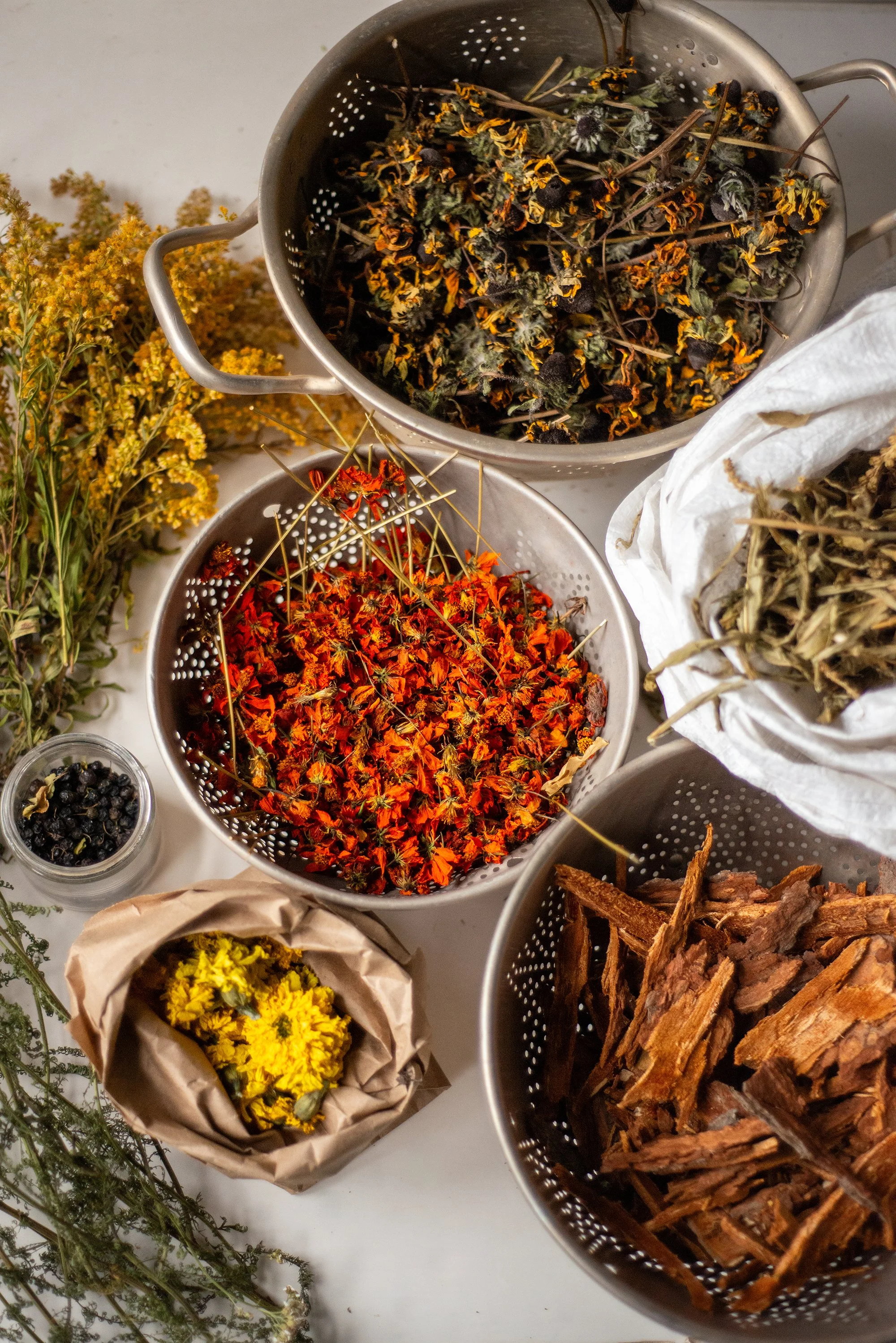
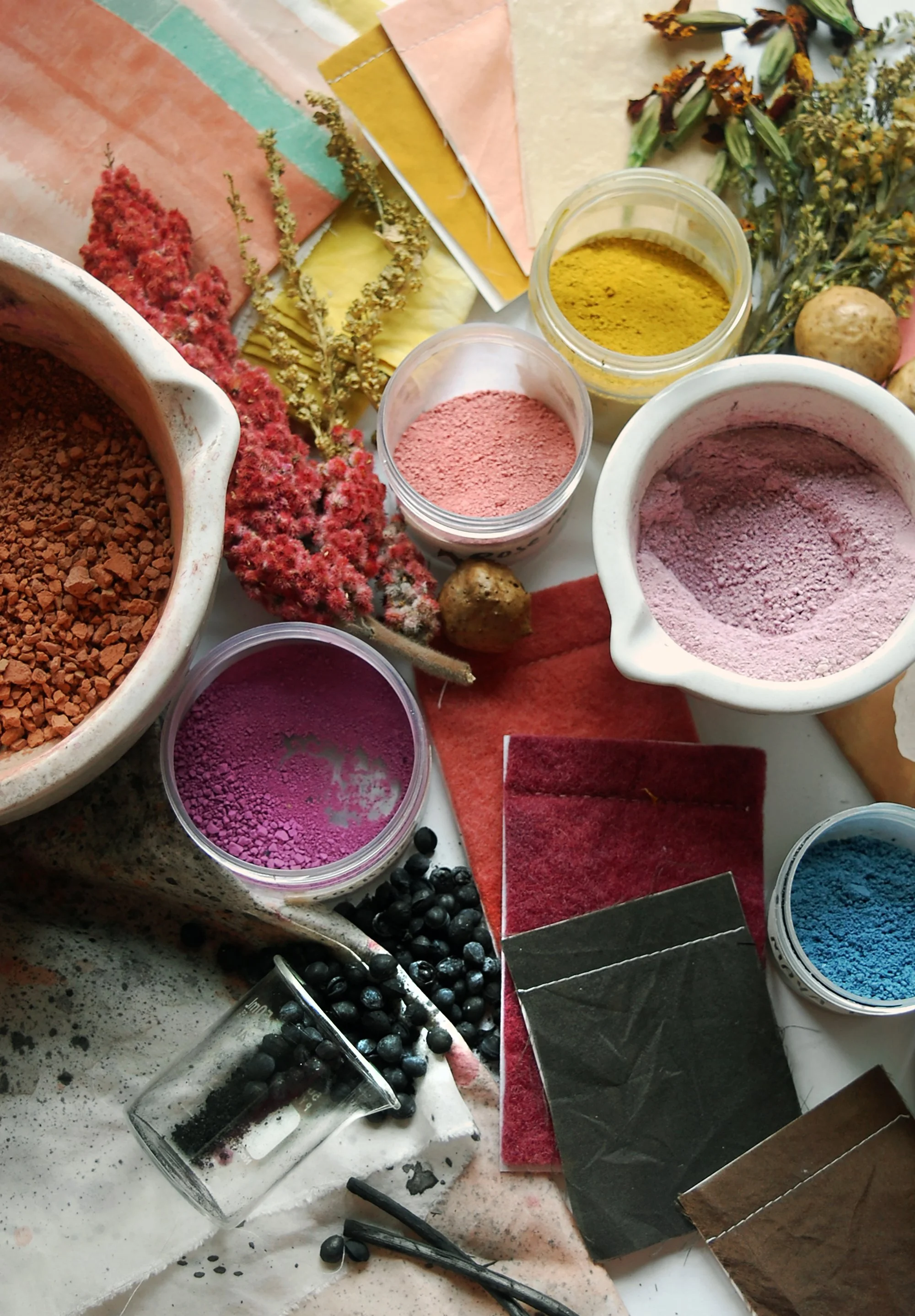
Materials or tools you most often use? Privet berries from my next door neighbor’s hedge, tansy flowers from outside my studio door, and my favorite red clay from the side of the highway. These are my “personal primaries”.
What do you hope people feel or notice when they see your work? I hope people feel curious when they see my work. I hope it brings up questions about the ecosystem that surrounds them and how humans can be in relationship to the natural world. I also hope my work is a point of grounding, like seeing something they know in their bones even if they aren’t sure why it feels that way.
The most important thing you want students to learn from your teaching? I want students to realize there are no wrong answers, only more questions. Engaging with natural materials is the most essentially human of activities. Follow your intuition and you will find what makes sense for you.
What do you notice in nature now that you might have missed before using natural materials in your craft? I look at the ground a lot, to see what is leaving stains. I squeeze berries between my fingers to see what marks they leave. I also look closely at every road cut or freshly dug hole in the ground, as if searching for a pot of gold. Color is everywhere!
Favourite weed - Tansy is quite invasive here, but I love the bright acid yellow from its flowers. Because I don’t want it to drop seeds I try to make sure I harvest all the flowers in my yard for dye and lake pigments.
Guiding principles: My guiding principles are- there are no wrong answers in the studio, work with what is abundant and easily accessible, never throw away nice paper, and how can I make things simpler?
Anything else? This work is all about connection and relationships, with your surroundings, with the natural world, with oneself, and with all the wonderful friends who share this enthusiasm.
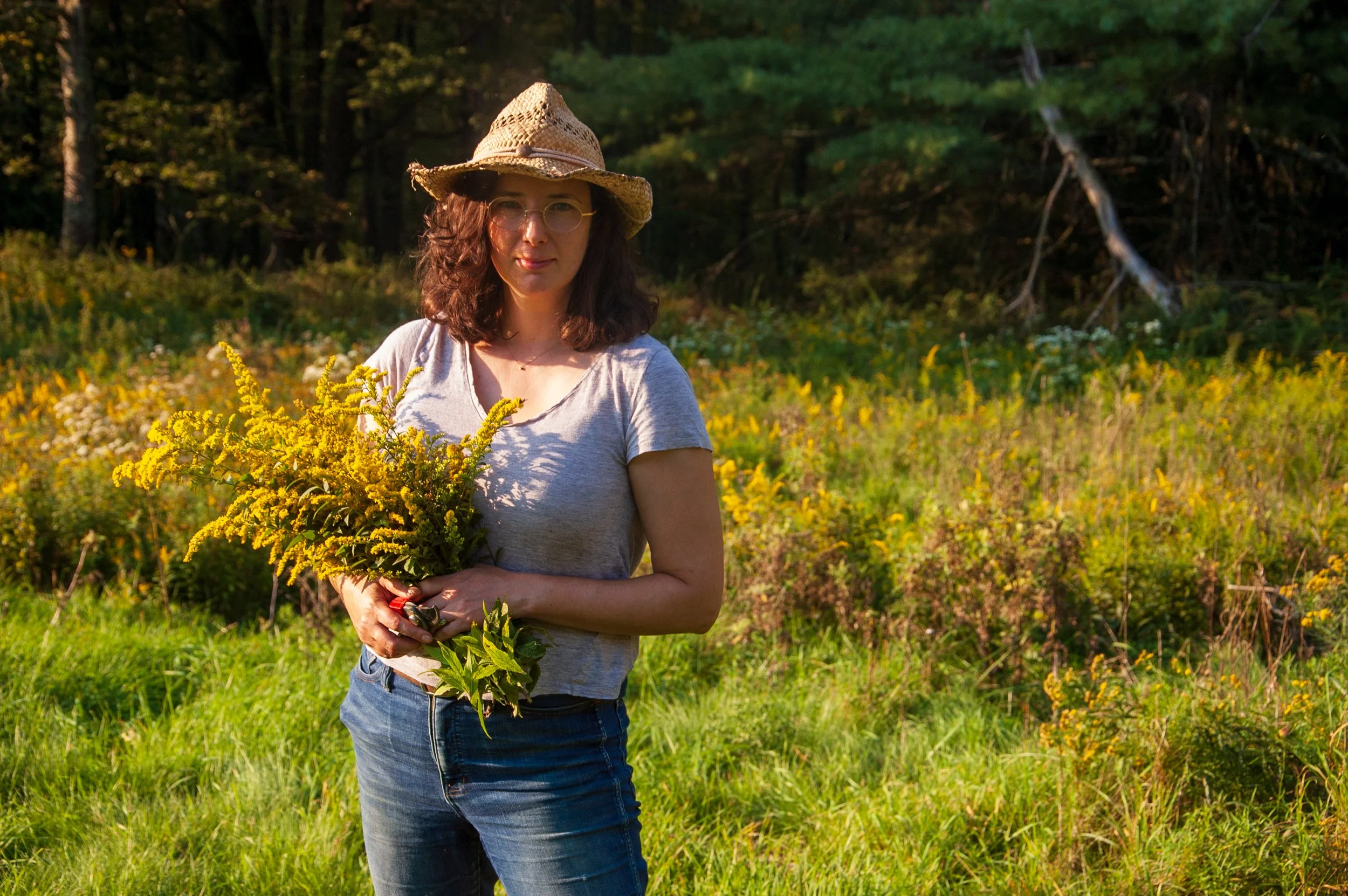
Natalie Stopka
Artist, Author, and Lake Pigment Maker.
A place that most inspires your work? Looking out the window from my studio is the Hudson River, in constant stately motion beneath the cliffs of the Palisades. The river changes with the light, weather, and season - a ceaseless reminder of the dynamism and potency of nature.
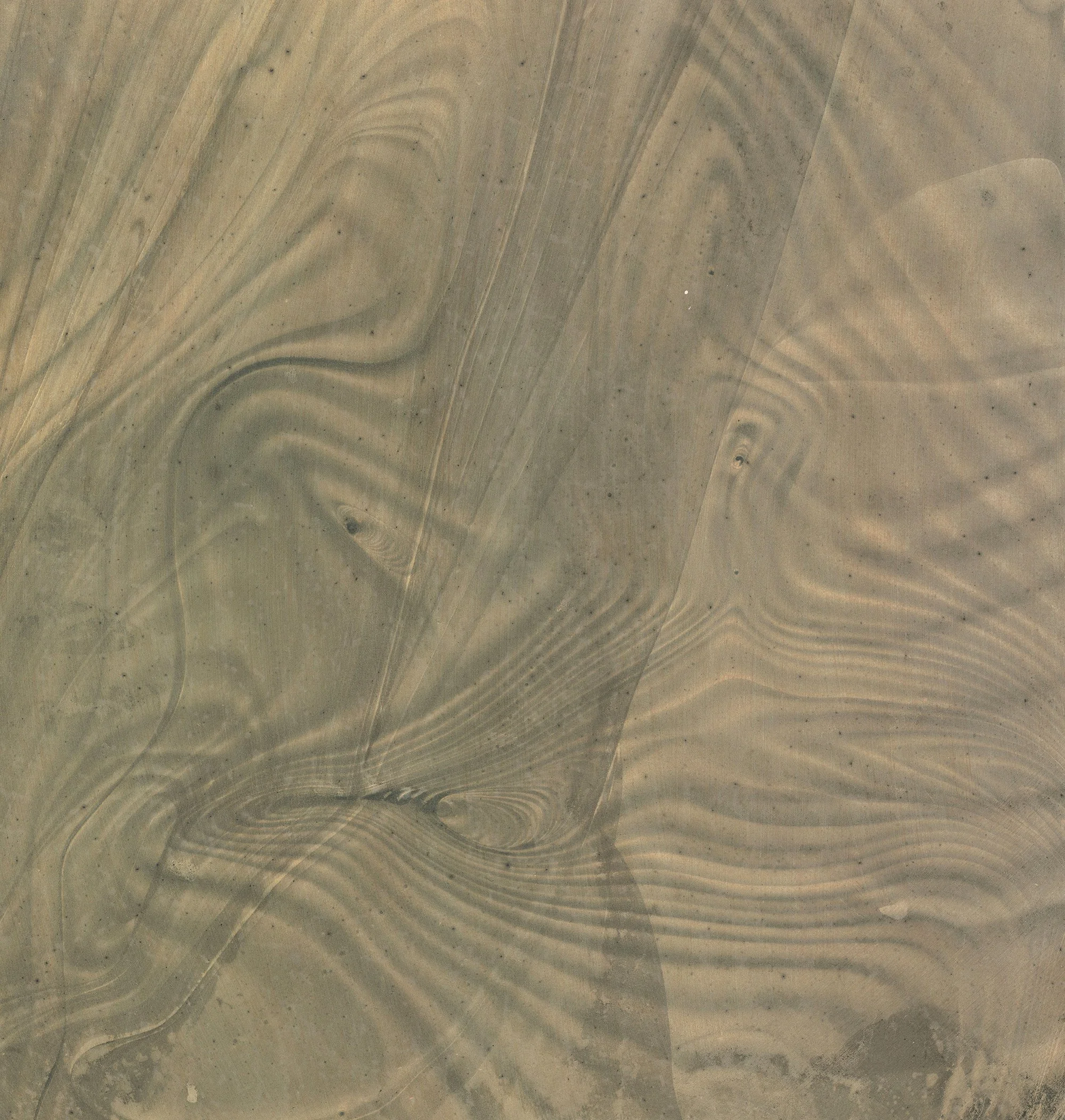
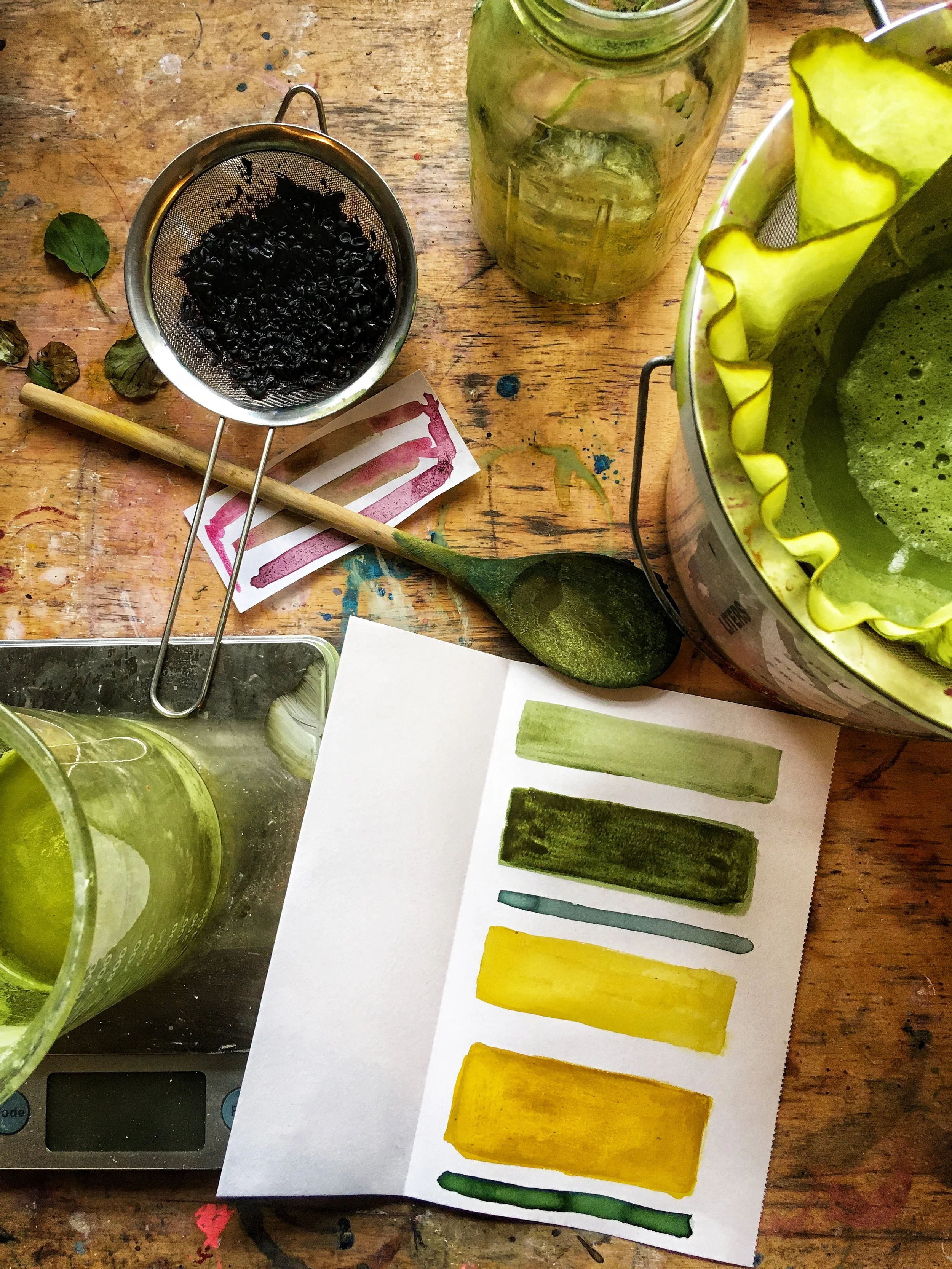
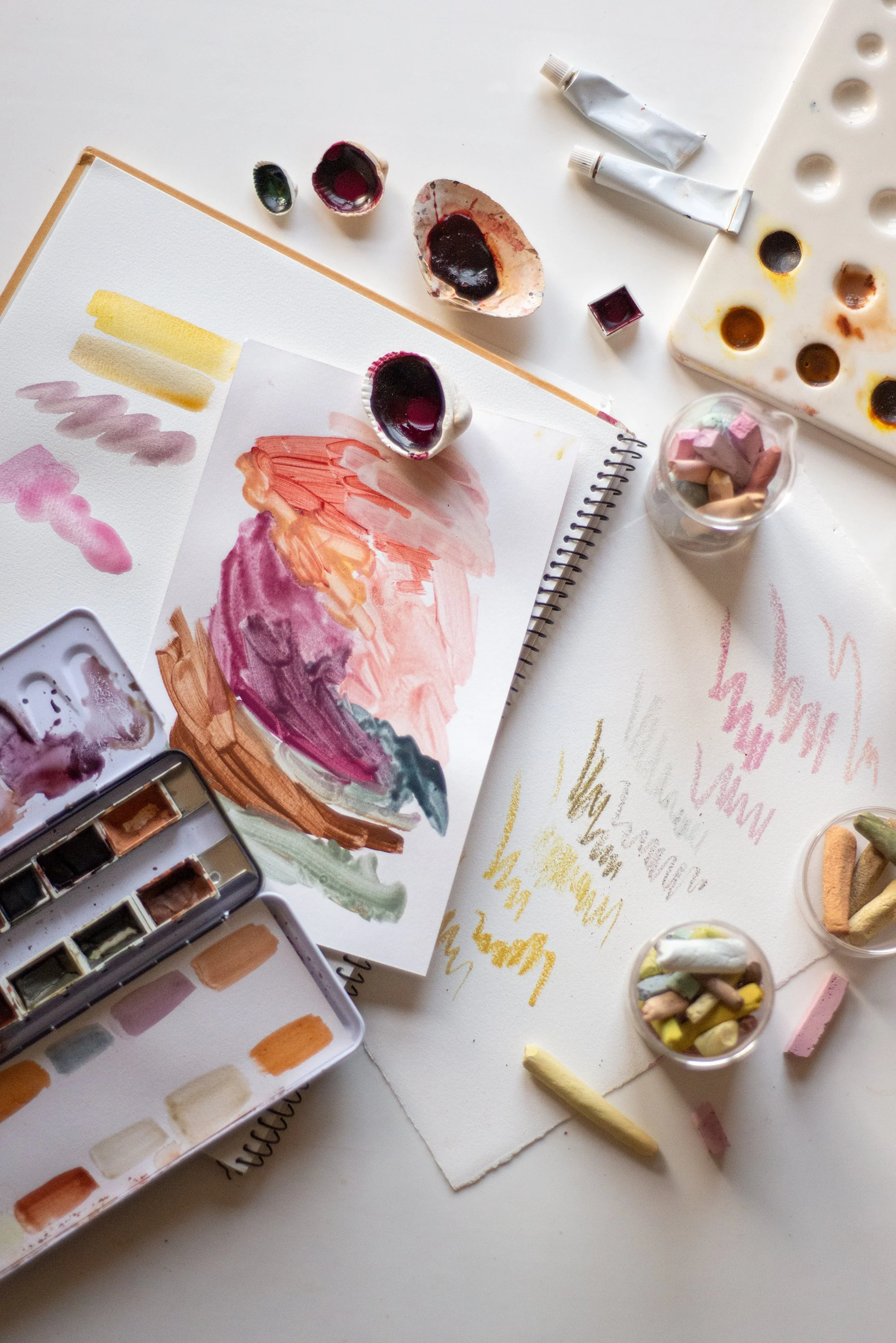
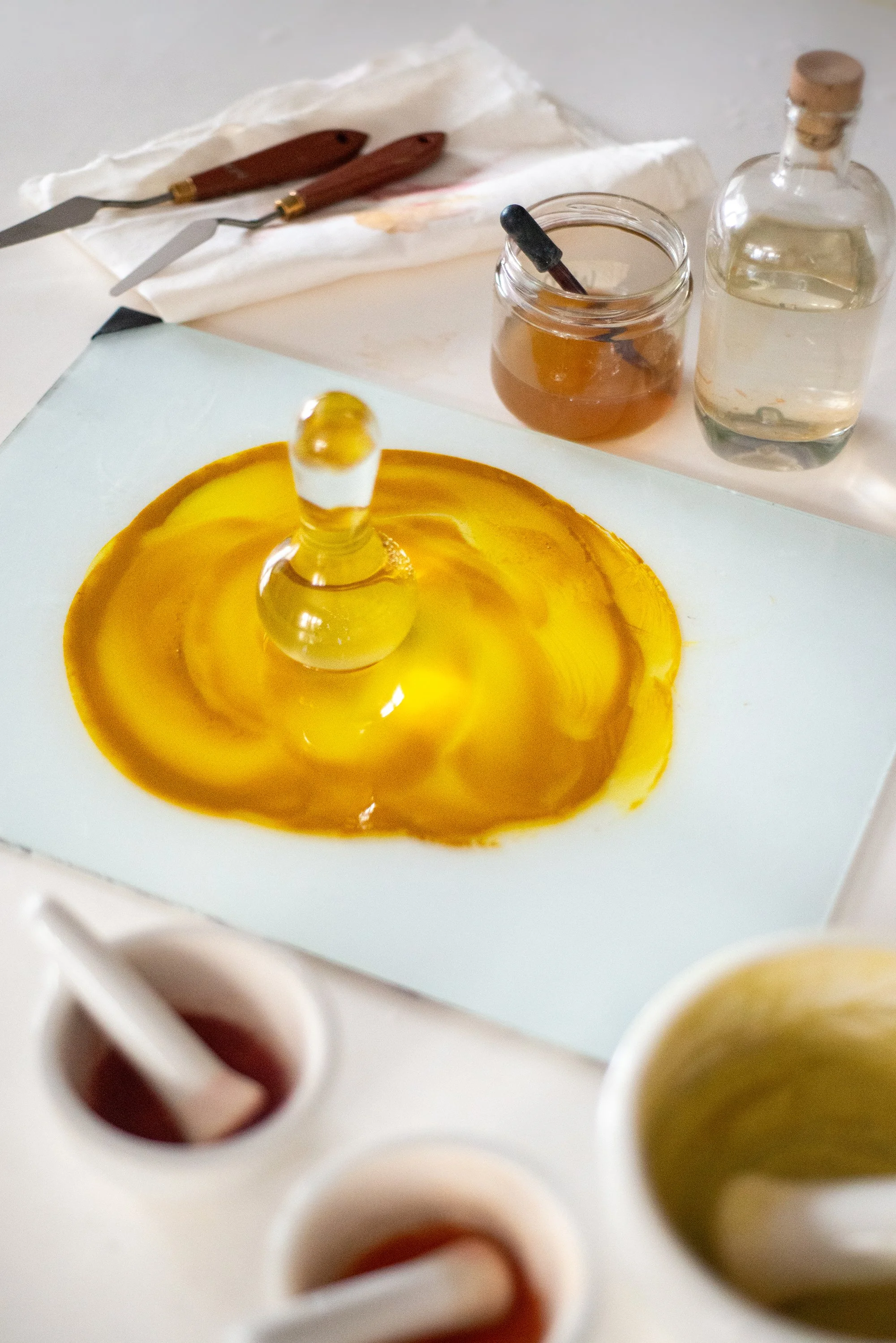
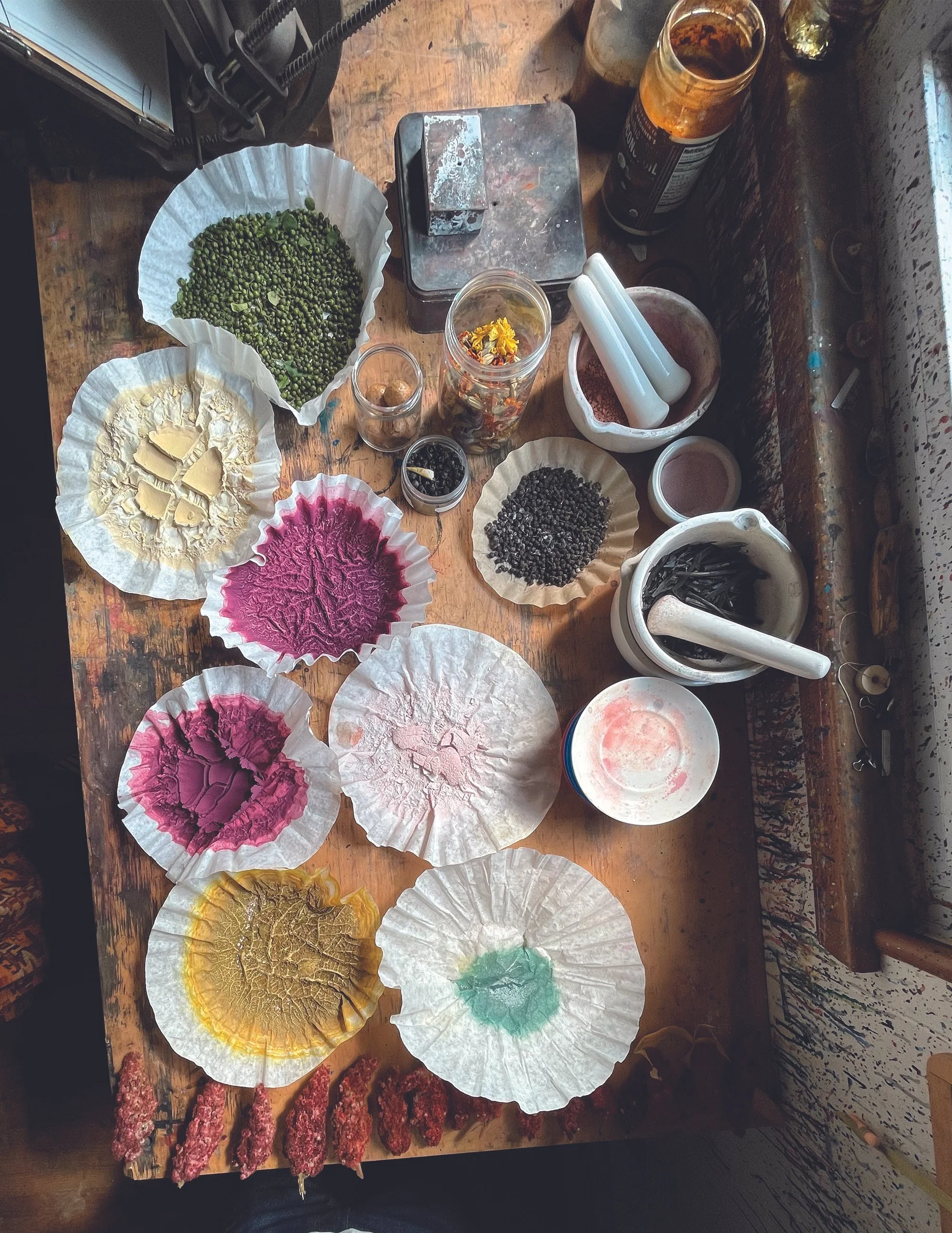
Materials or tools you most often use? Water is an invaluable tool for me! Water is the medium for growing and nourishing plants, extracting and fermenting dyes, compounding lake pigments, and even serves as the surface from which I print monotypes. Water is the architect shaping the forms of nature, whose influence can be seen in the imagery of my work.
What do you hope people feel or notice when they see your work? I hope that the subtlety of my work encourages a lingering contemplation. The perfect space for viewing would be a quiet, shaded bower or cloister.
The most important thing you want students to learn from your teaching? The materials of art and artisanry are not inert; they are alive with interactivity and potentiality. They are tied to ecological and geological networks, as well as human history and material culture.
What do you notice in nature now that you might have missed before using natural materials in your craft? The more observant I am, the more perceptive I become. This is true of colour, and of plants. I am always learning to identify new plants! Even overlooked weeds may have the potential to become fantastic studio collaborators.
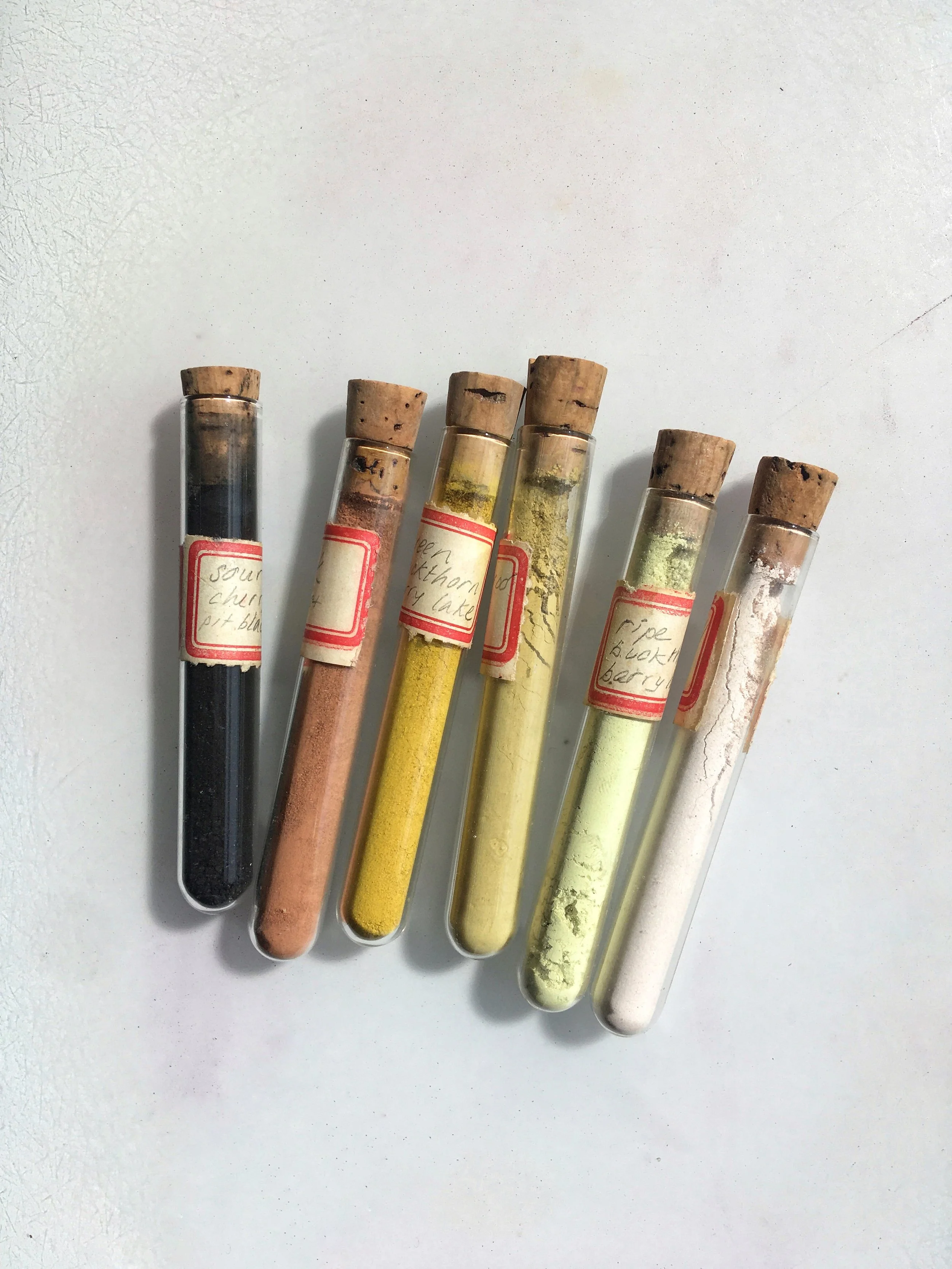
Favourite 'weed'? I’ve been enamoured of buckthorn (Rhamnus cathartica) for awhile, because it is rampantly abundant in my area and a source of many shades. Buckthorn is a great case study, intertwined with history, medicine, dye, pigment, phytochemistry, the movement of plant species, biodiversity amidst changing climate, and ethical foraging.
Guiding principles: Generosity, reciprocity, creativity, and a little humor. Attentiveness to material potentiality.
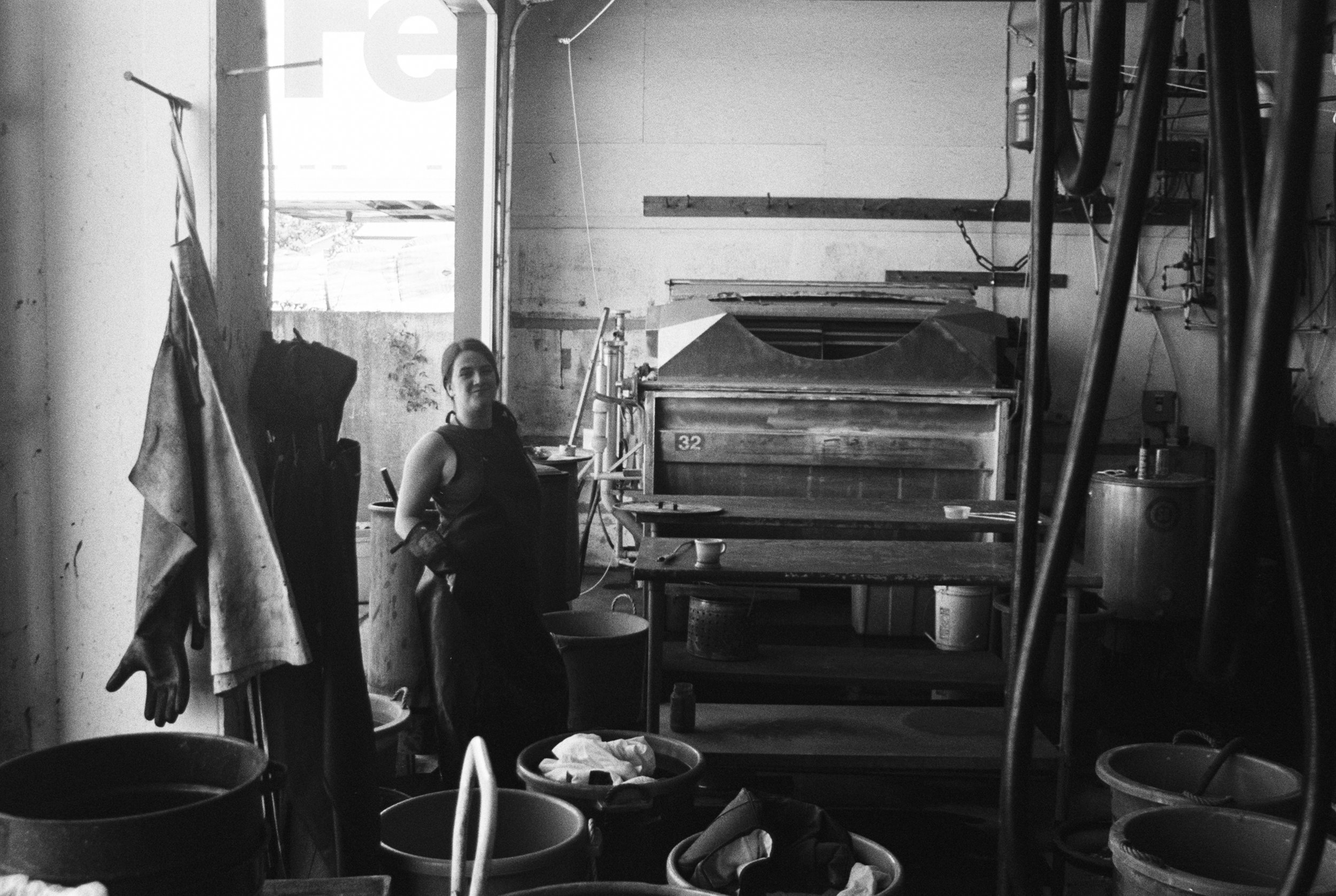
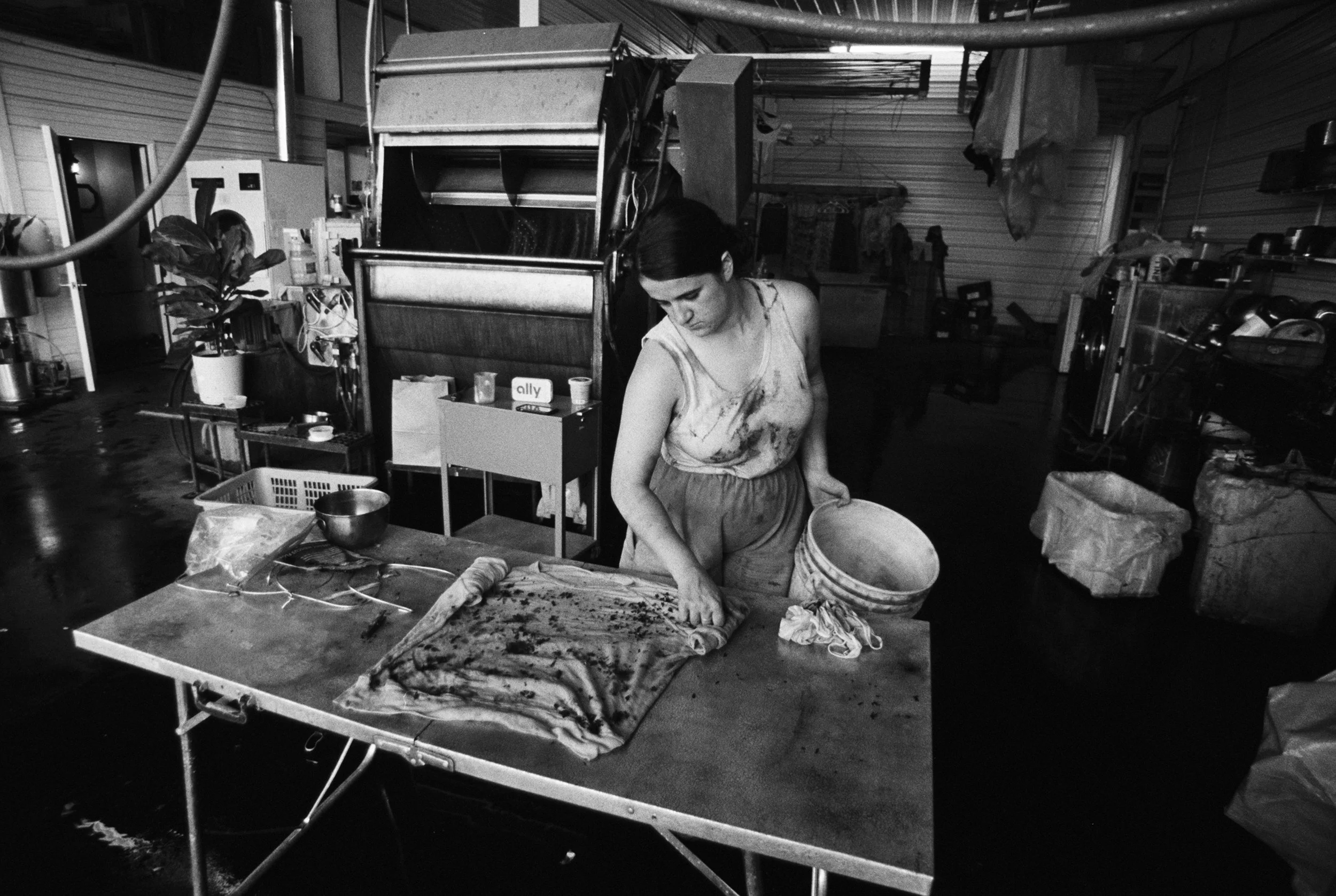
Winona Quigley
Artist and Entrepreneur
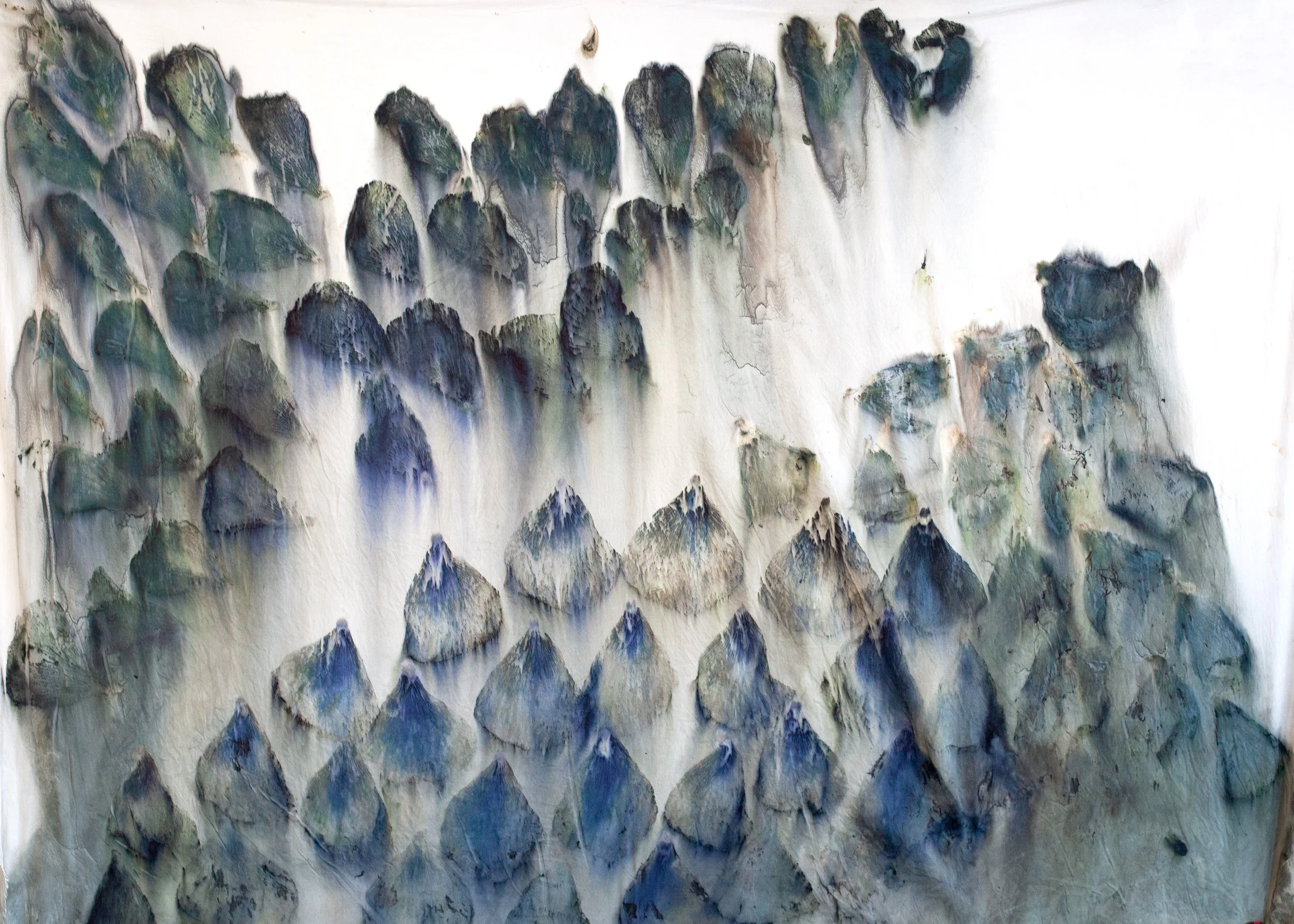
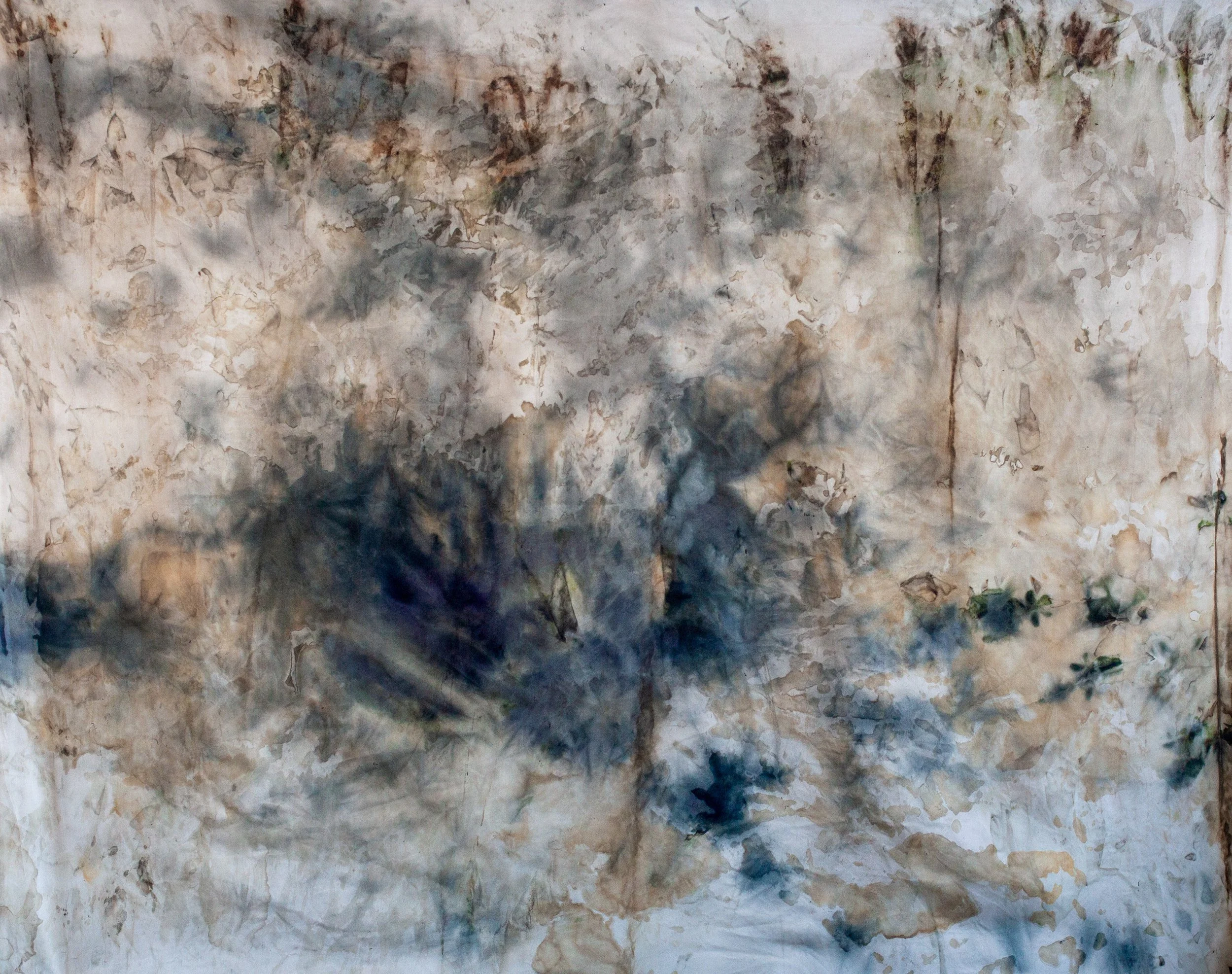
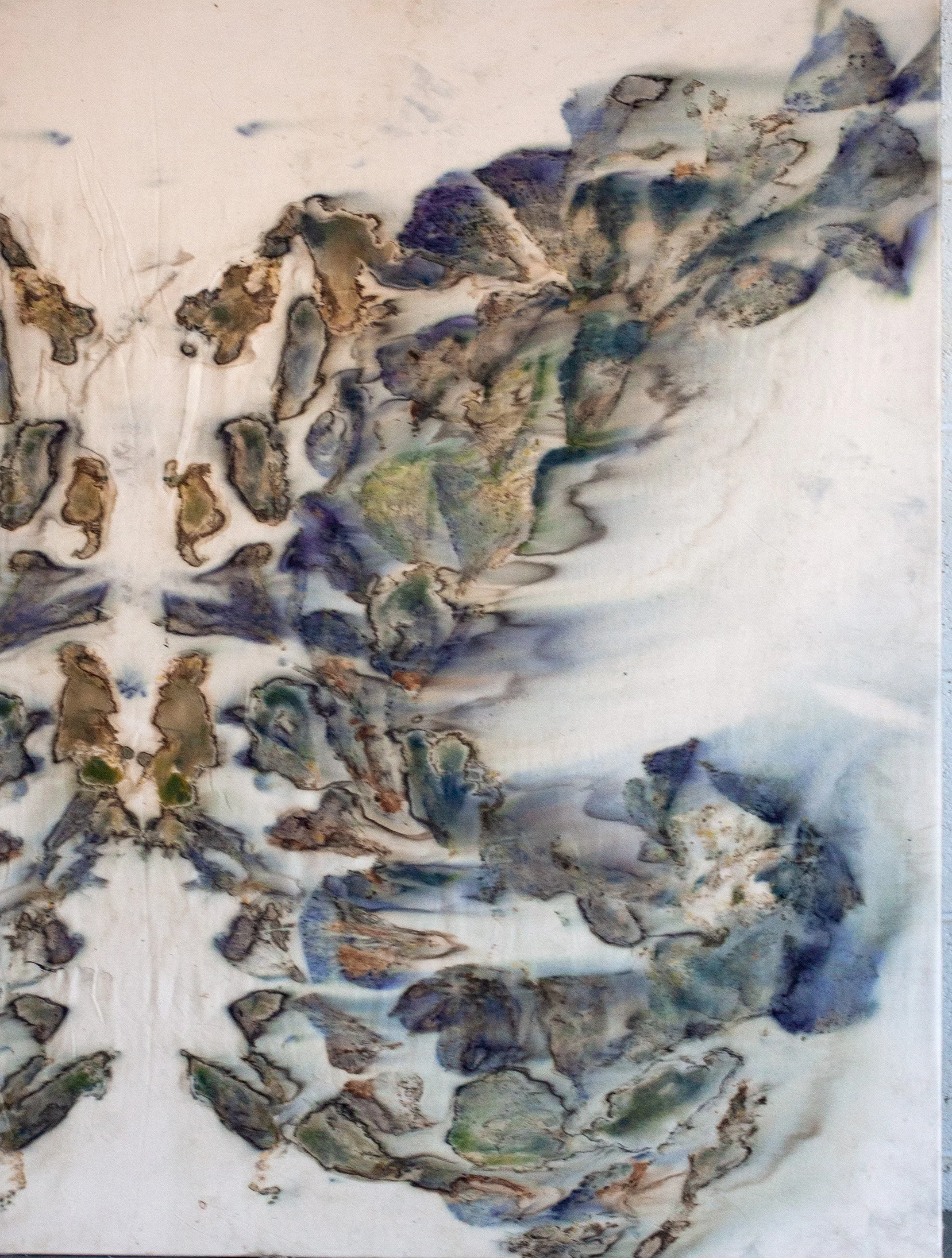
https://www.instagram.com/winonaquigley/Materials or tools you most often use: Rosemallow hibiscus is my absolute favorite dye plant to work with. My session focuses on this plant, and it has been with me since the start of my dye journey. I bought my first plant from a nursery nearly 12 years ago and I still have it in my garden. This plant drew me in because it can produce such a vibrant blue that is tough to find unless you are working with indigo. As a beginner dyer, and with a over a decade of experience, this plant is still mysterious and magic for me.
The most important thing you want students to learn from your teaching? There is no 'right' way to work with these techniques. The process I am covering combines several techniques I have learned over the years. Being open to the infinate possibilies of plant dyes can leave a lot of space for wonderful surprises, and discoveries of something that is uniquely yours.
What do you notice in nature now that you might have missed before using natural materials in your craft? That color is all around us, all the time! I used to feel like there was a brief window in the year that fresh dye plants were available in my region. It turns out that if you know where to look, color is abundant all year. I think learning to pay attention to seasonal shifts has taught me to be still and let what is available at any given time show me a range of color I didn't know I had at my fingertips.
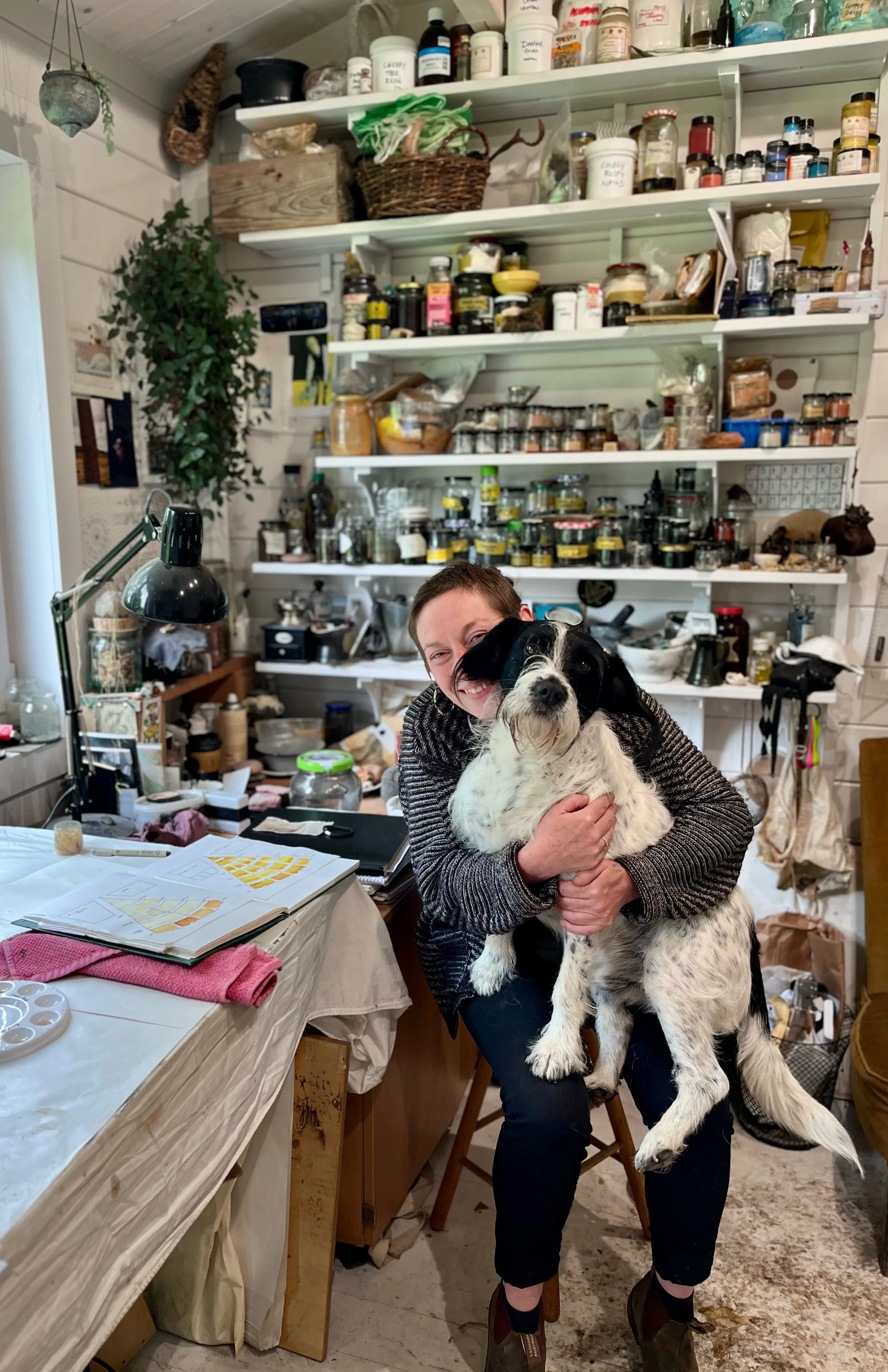
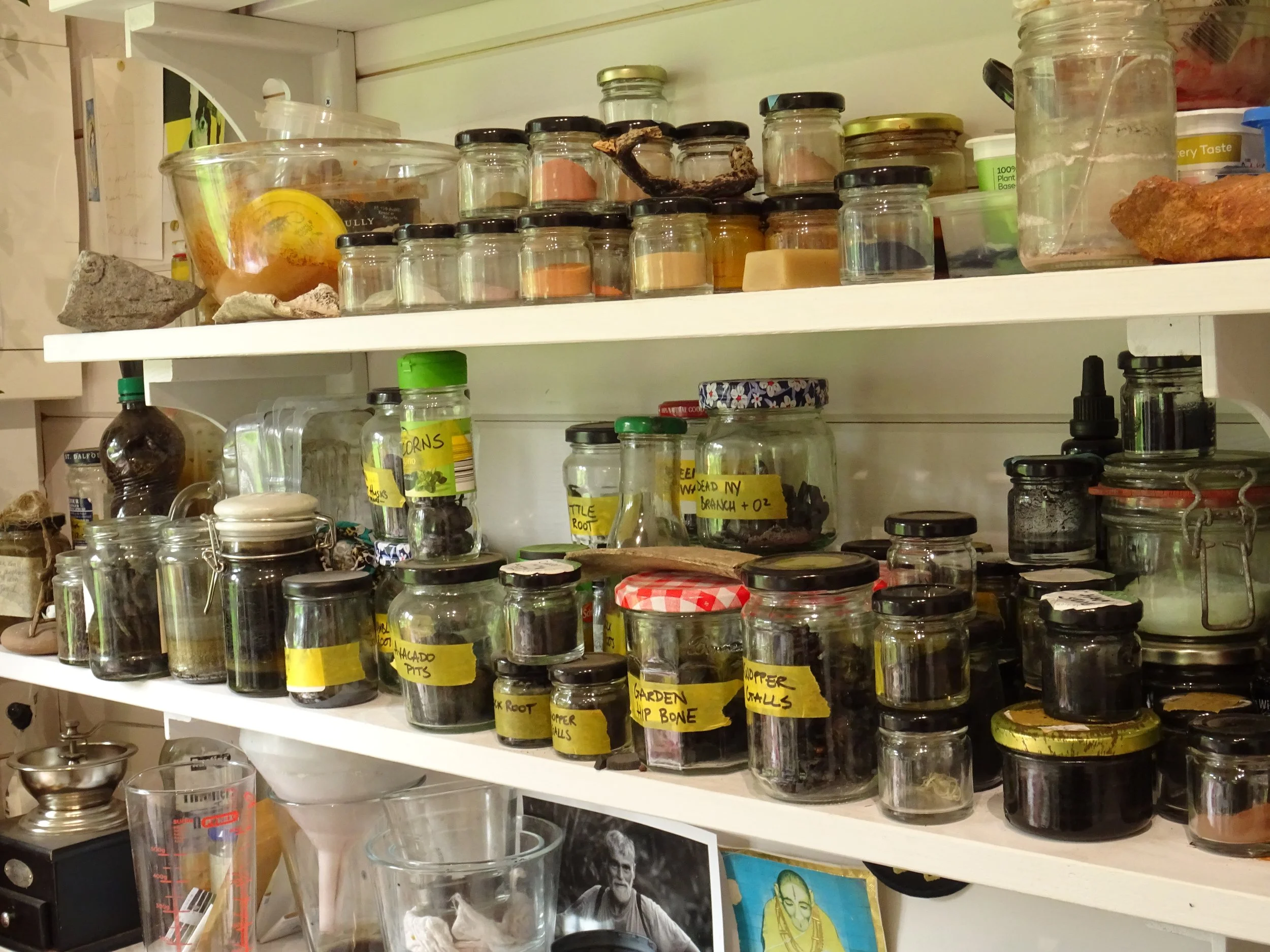

Annie Hogg
Artist
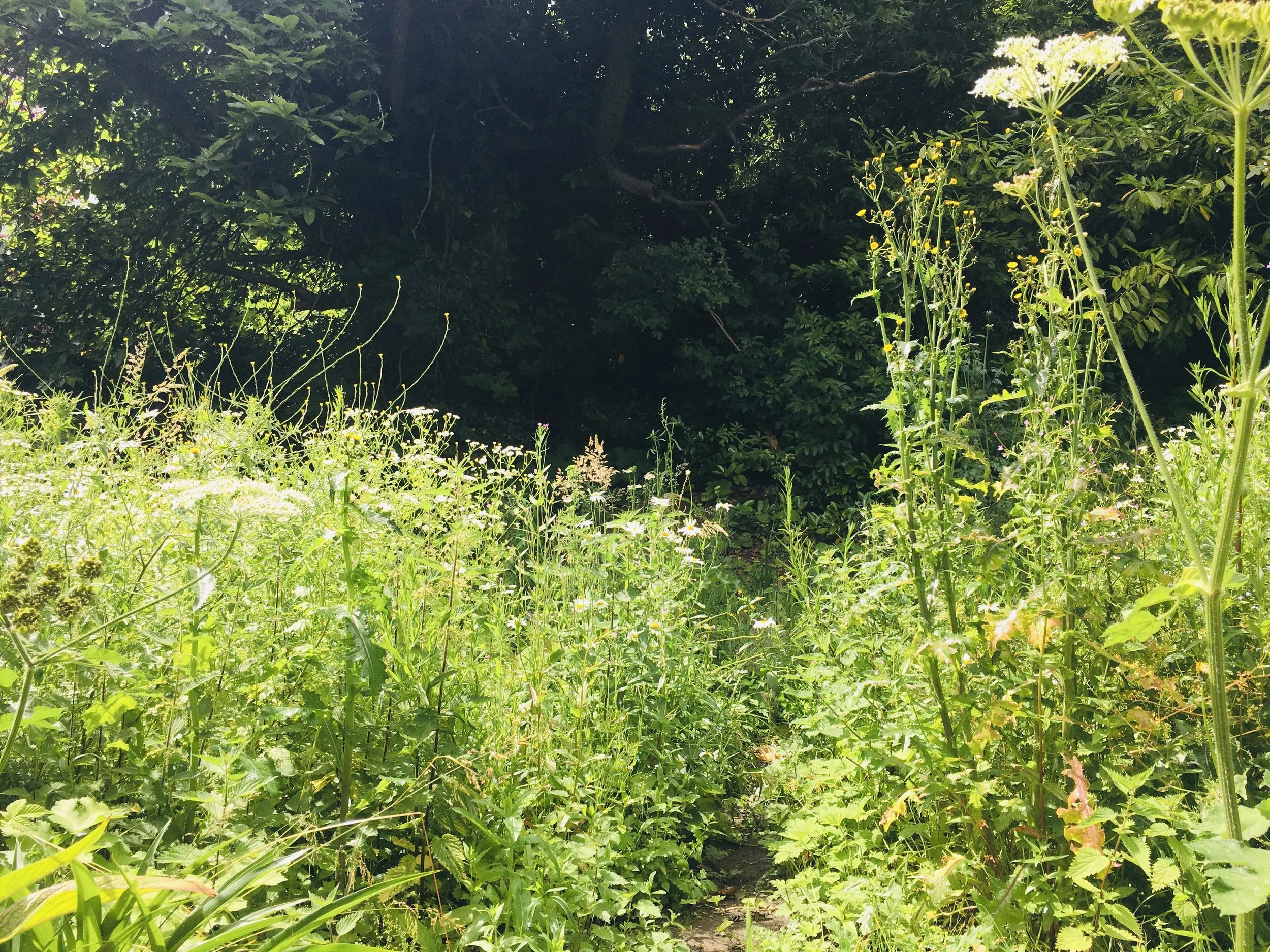
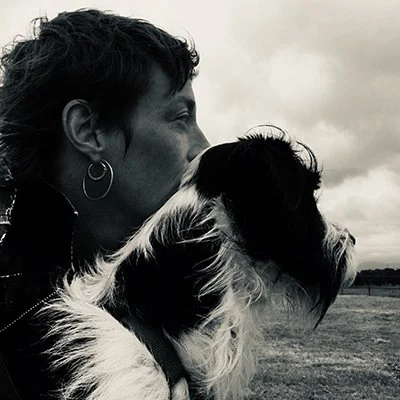
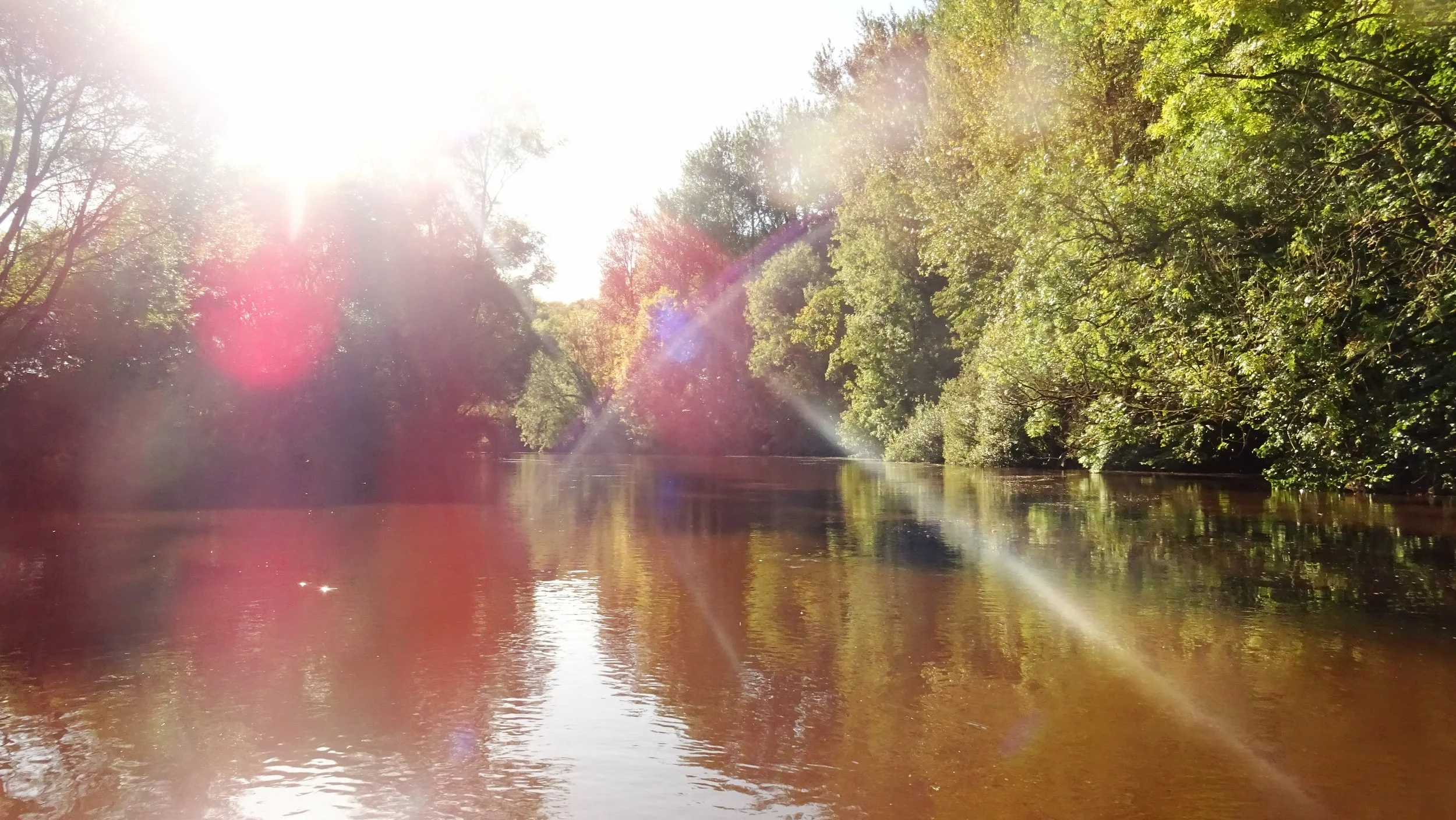
A place that most inspires your work?Daily walks with Hound Wonder along the river, through the fields and in the local woods. We forage and see colours and seasons change. It offers time to think and feel the world existing around and through.
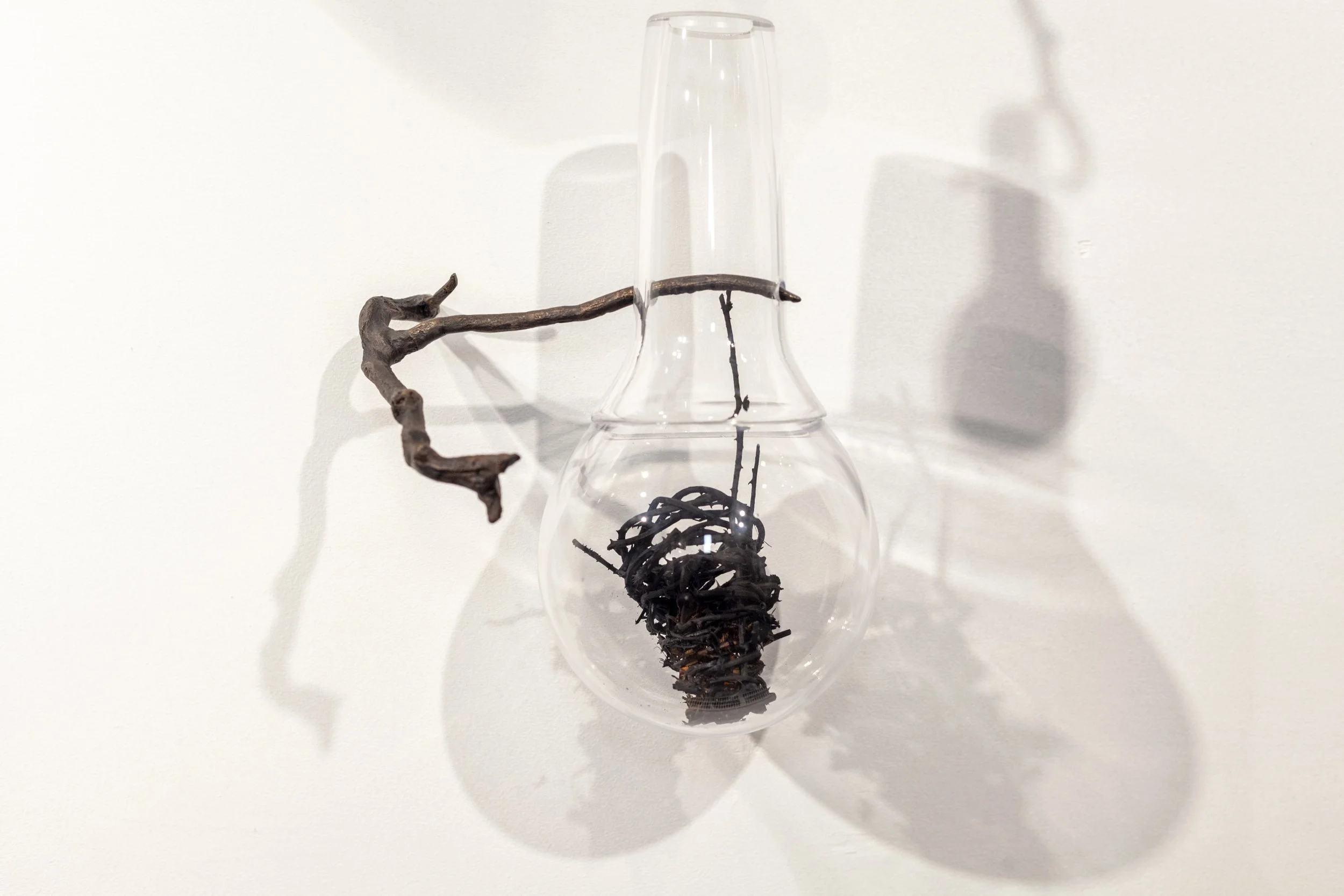
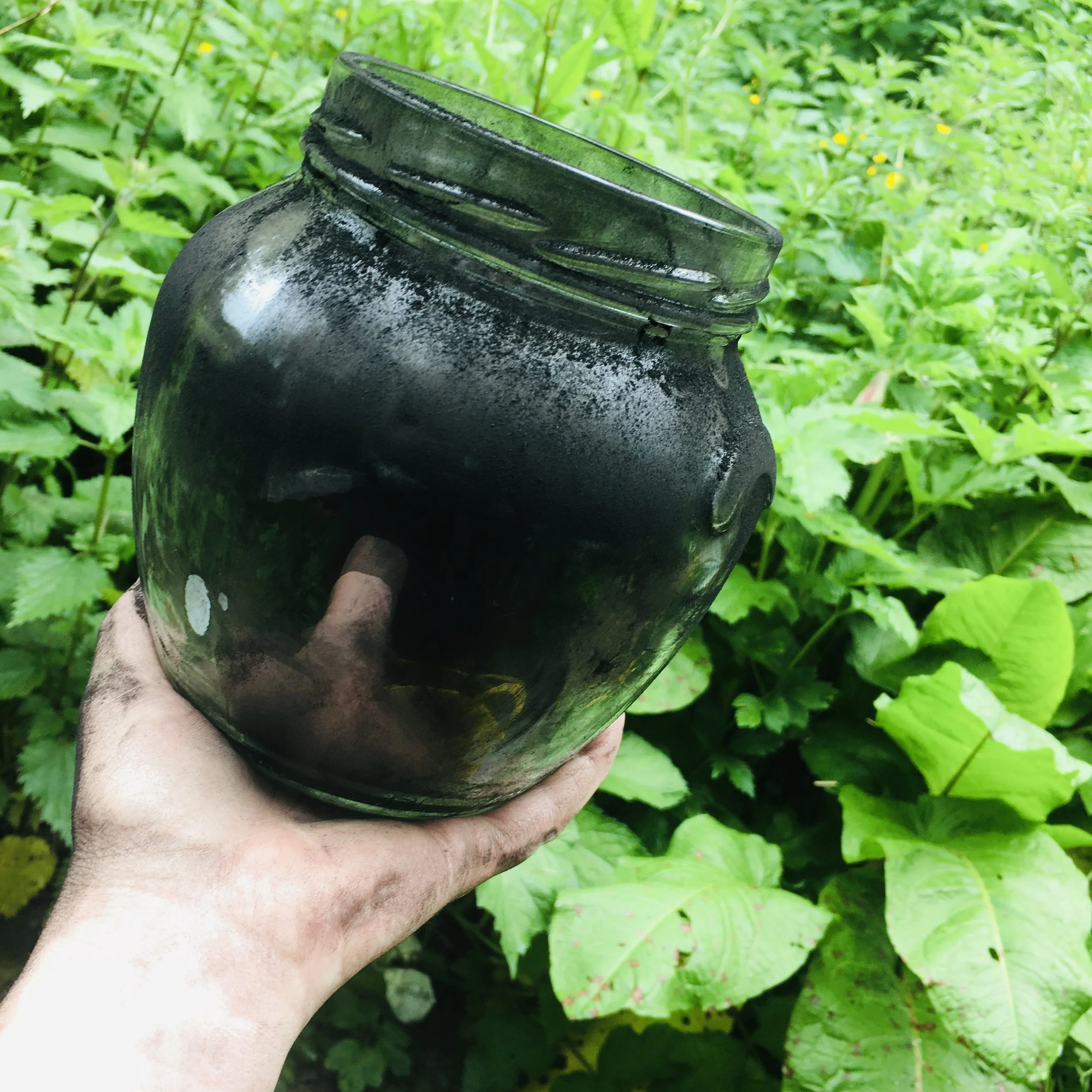
Materials or tools you most often? Fire pit. Sometimes to exchange stories with and sometimes to char. Both are important.
What do you hope people feel or notice when they see your work? To rekindle memories of childhood wonder in the more-than-human world. To spark wonder and respect at a clump of turf would be the pinnacle of success!
The most important thing you want students to learn from your teaching? To be invigorated to make their own experiments and take chances with materials. To see traditional and non traditional materials as sources of potential and innovation.
What do you notice in nature now that you might have missed before using natural materials in your craft?
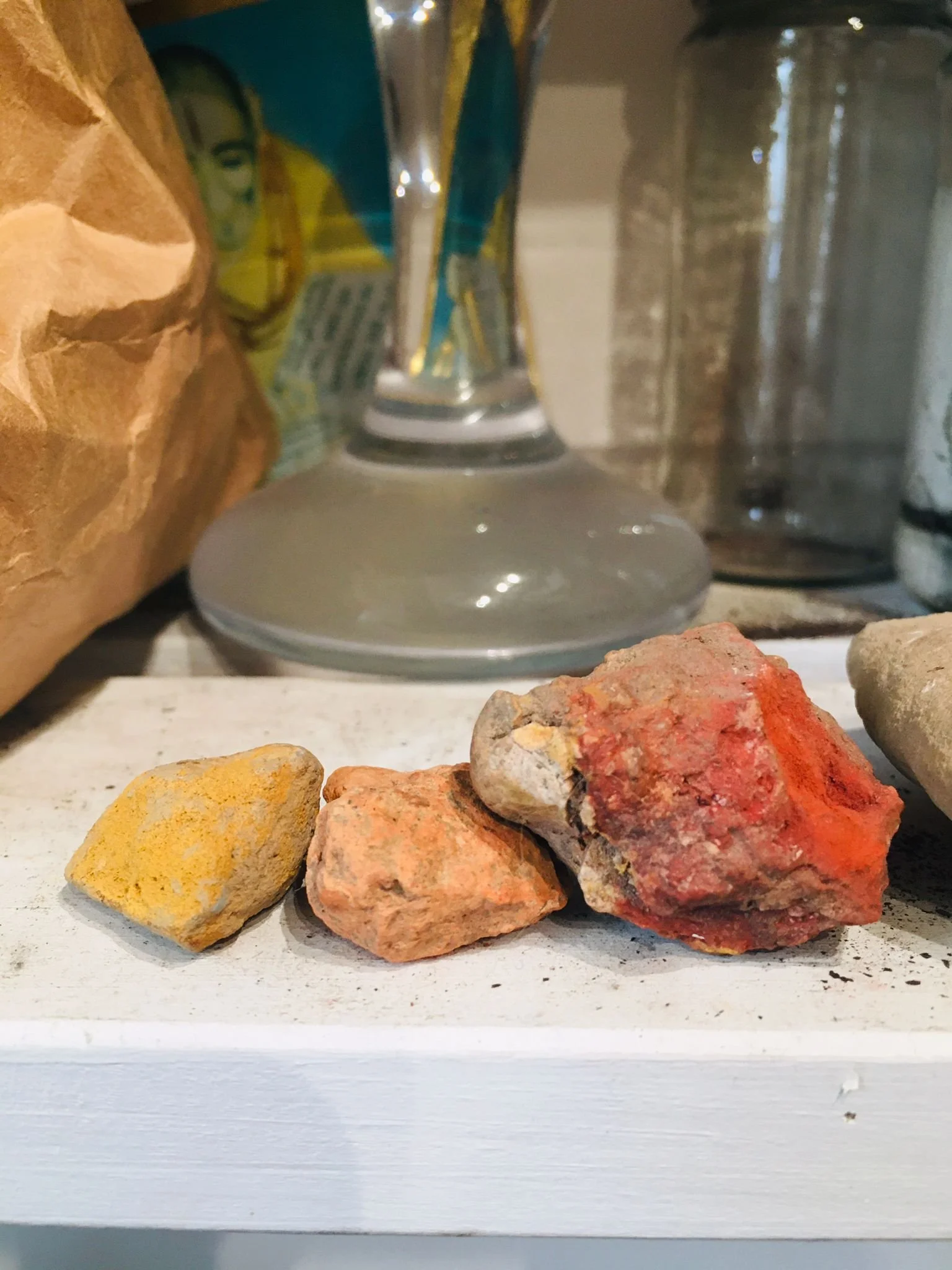
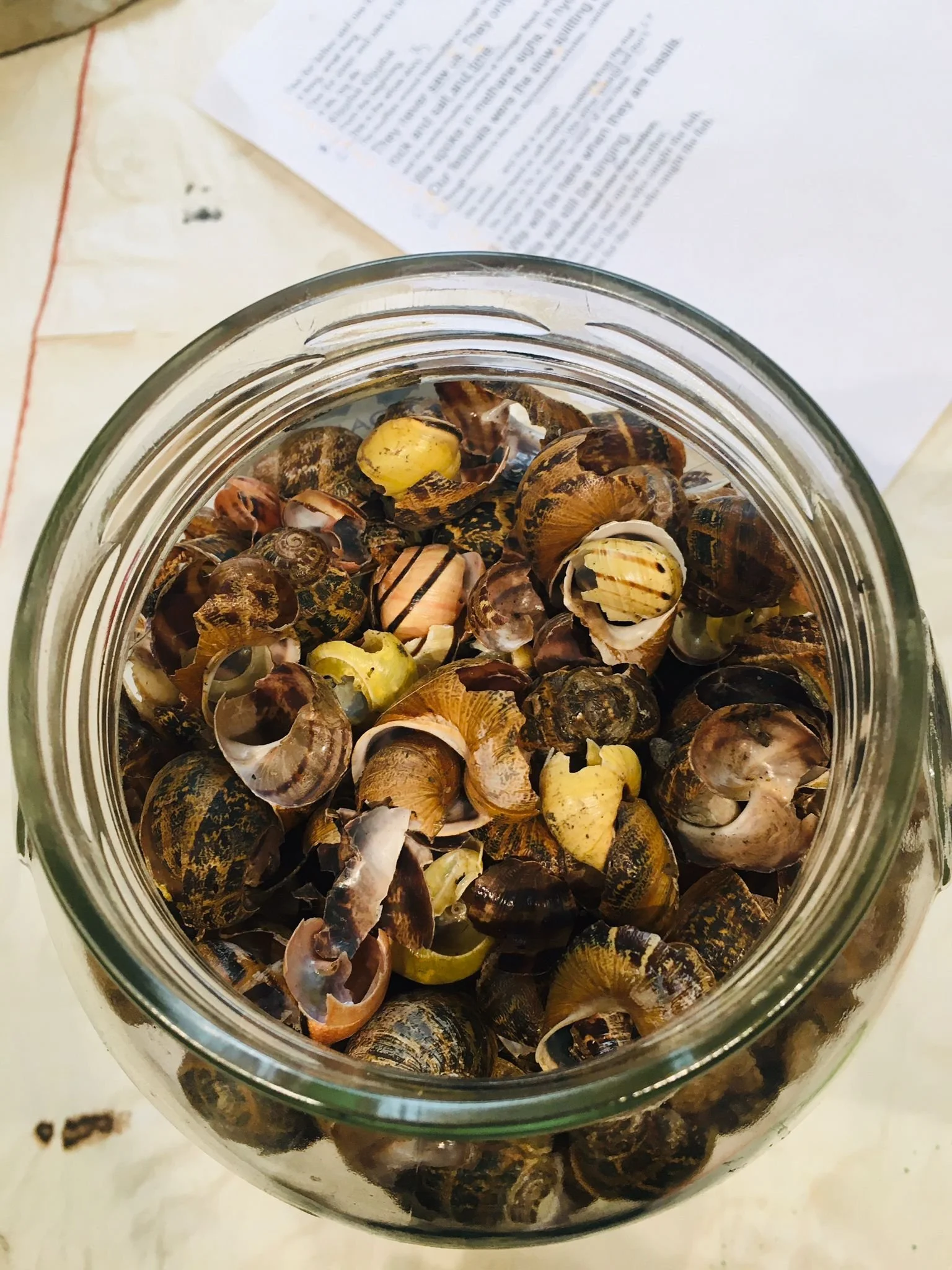
How birds hunt garden snails when they (the snails) come out of hibernation as a food source. There are spots the birds return to year after years to crack open the shells on flat stones in the woods. I collect the empty shells to make pigment and feel each year, like I am in cahoots with the birds!
Favourite 'weed'? Ivy…and docks…any umbel…yarrow too, and meadowsweet! And holly.
Guiding principles: Tread lightly. Learn to die well. See all beings as equals.
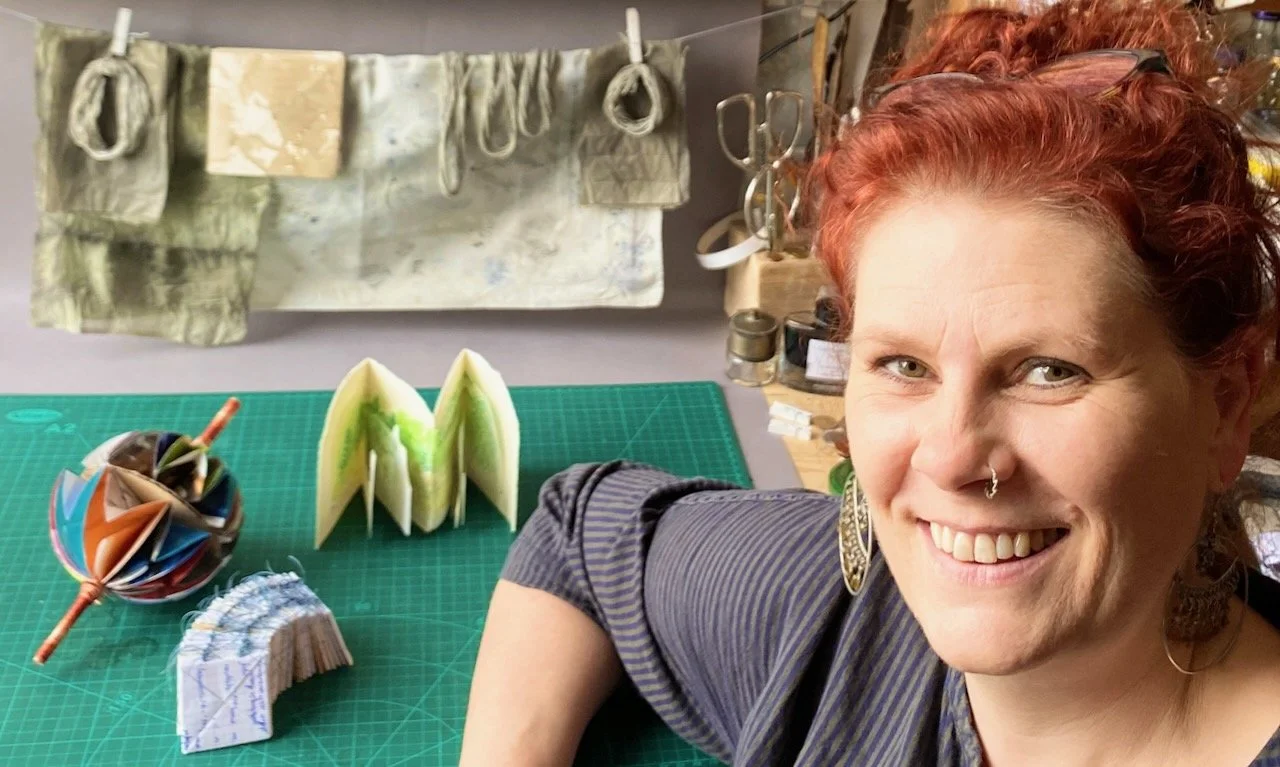
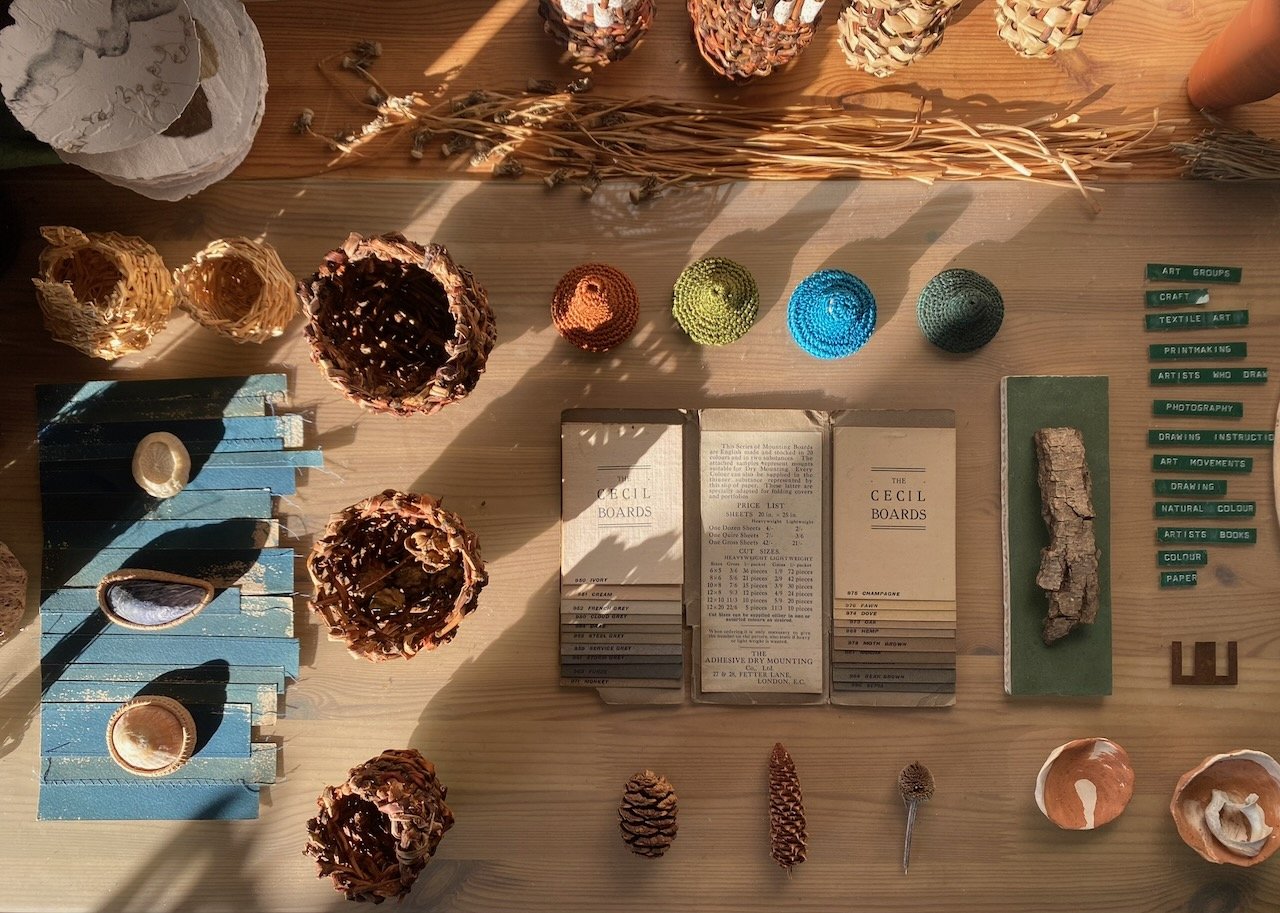
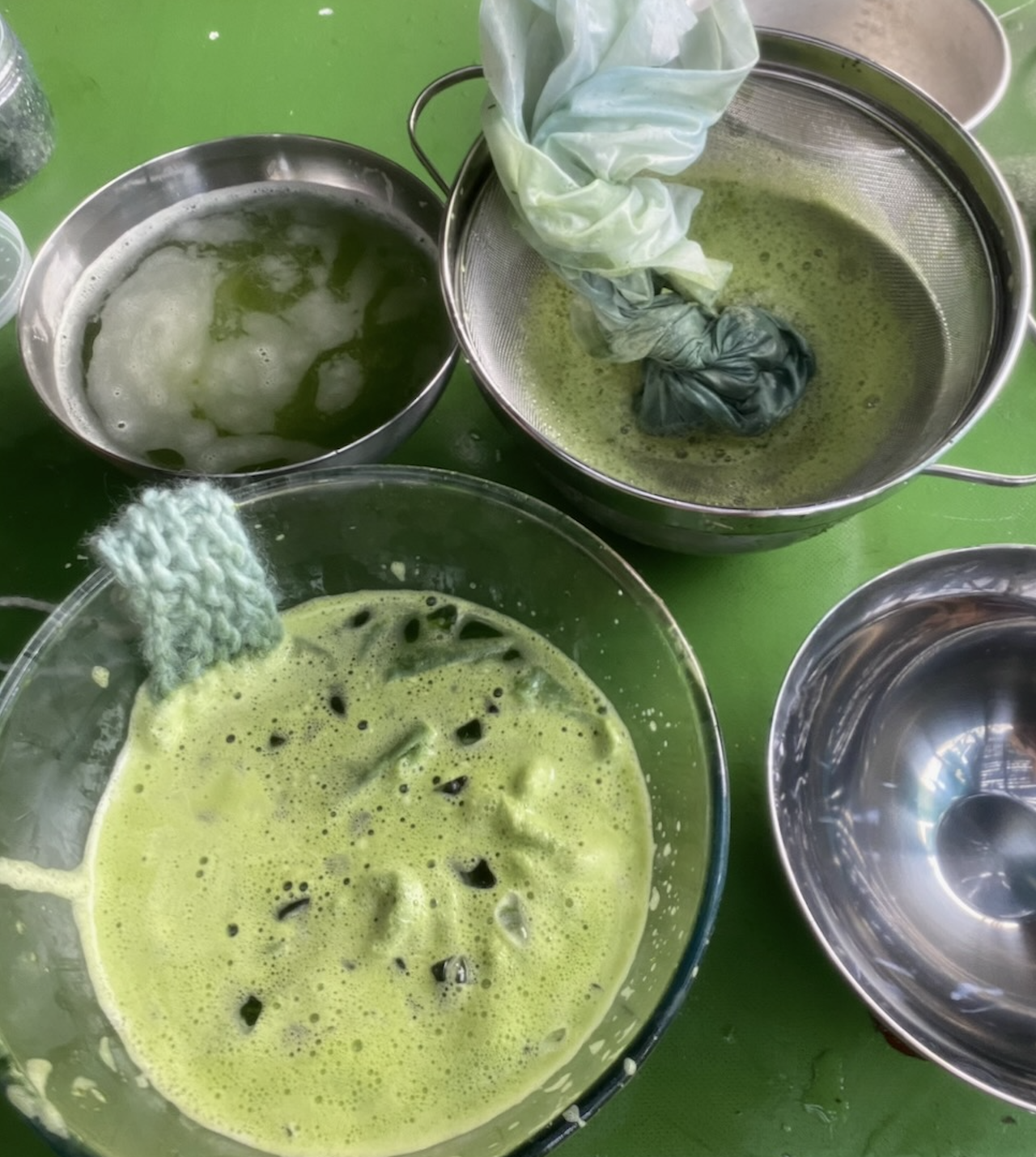
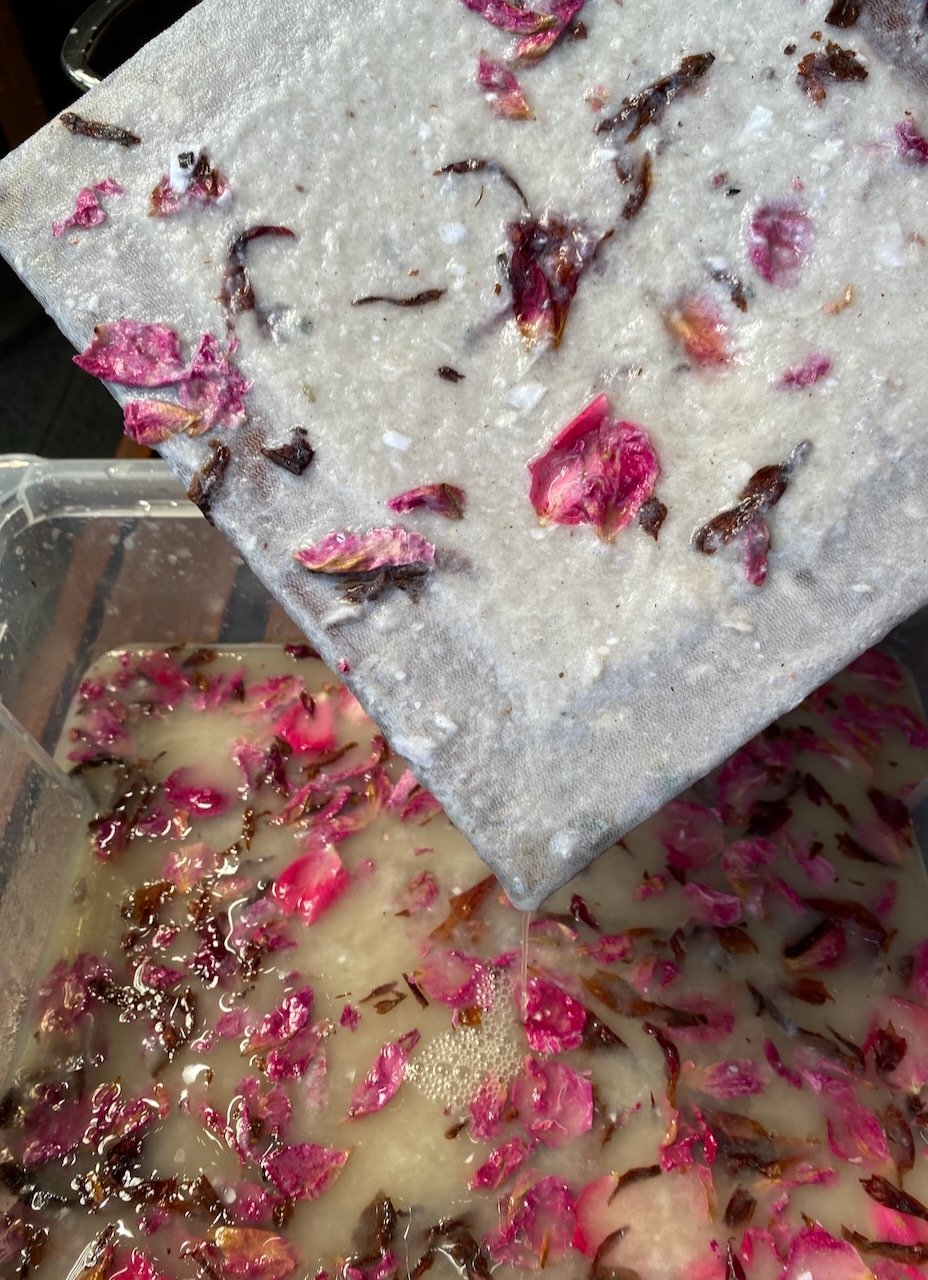
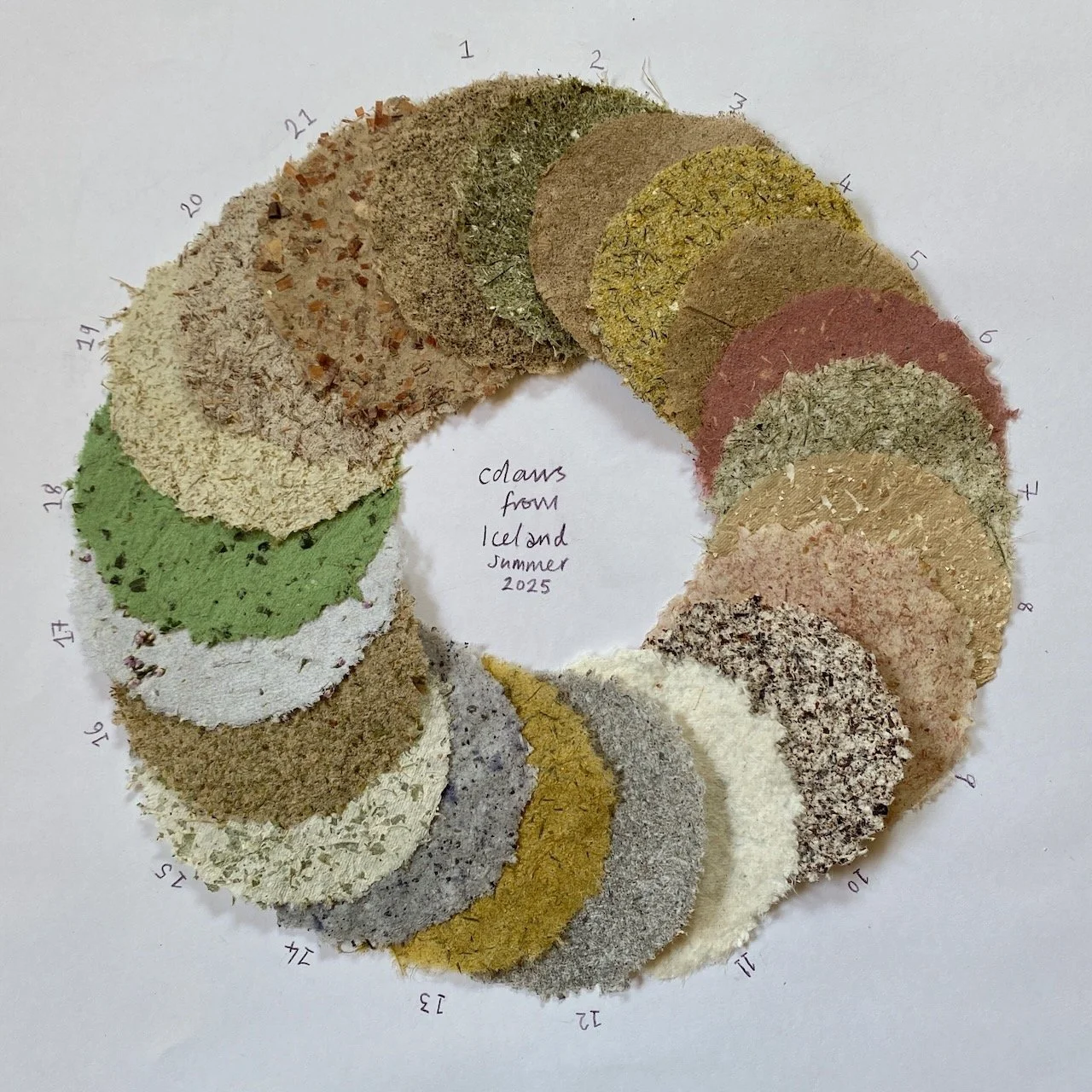
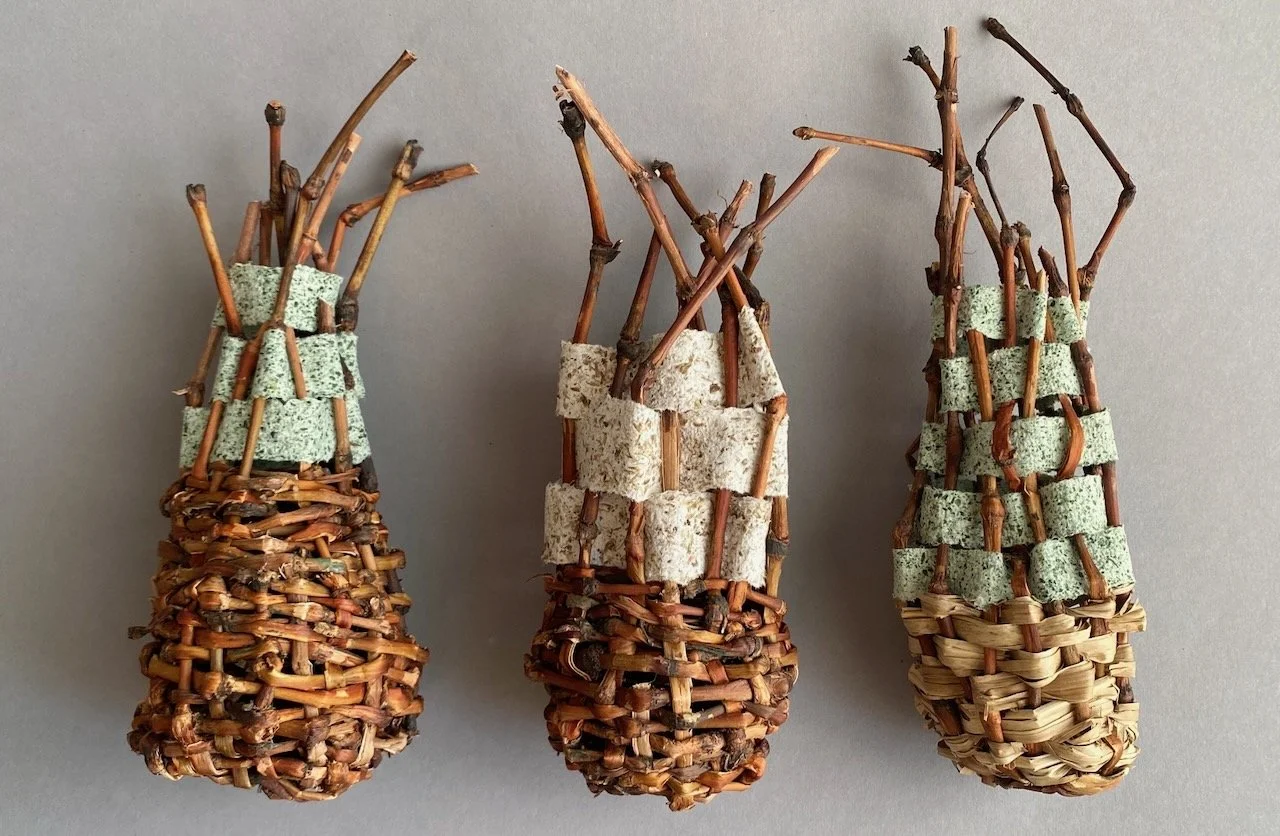
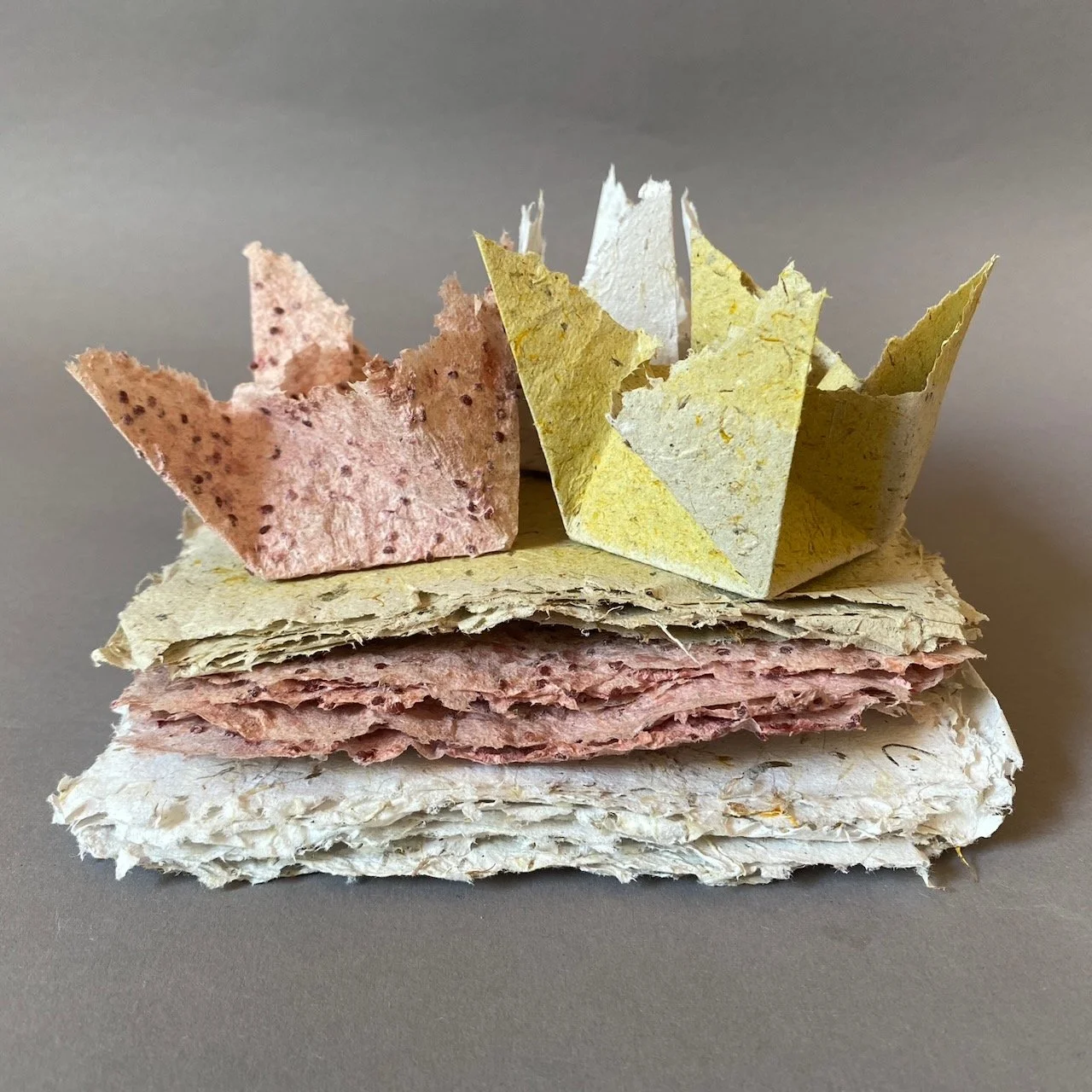
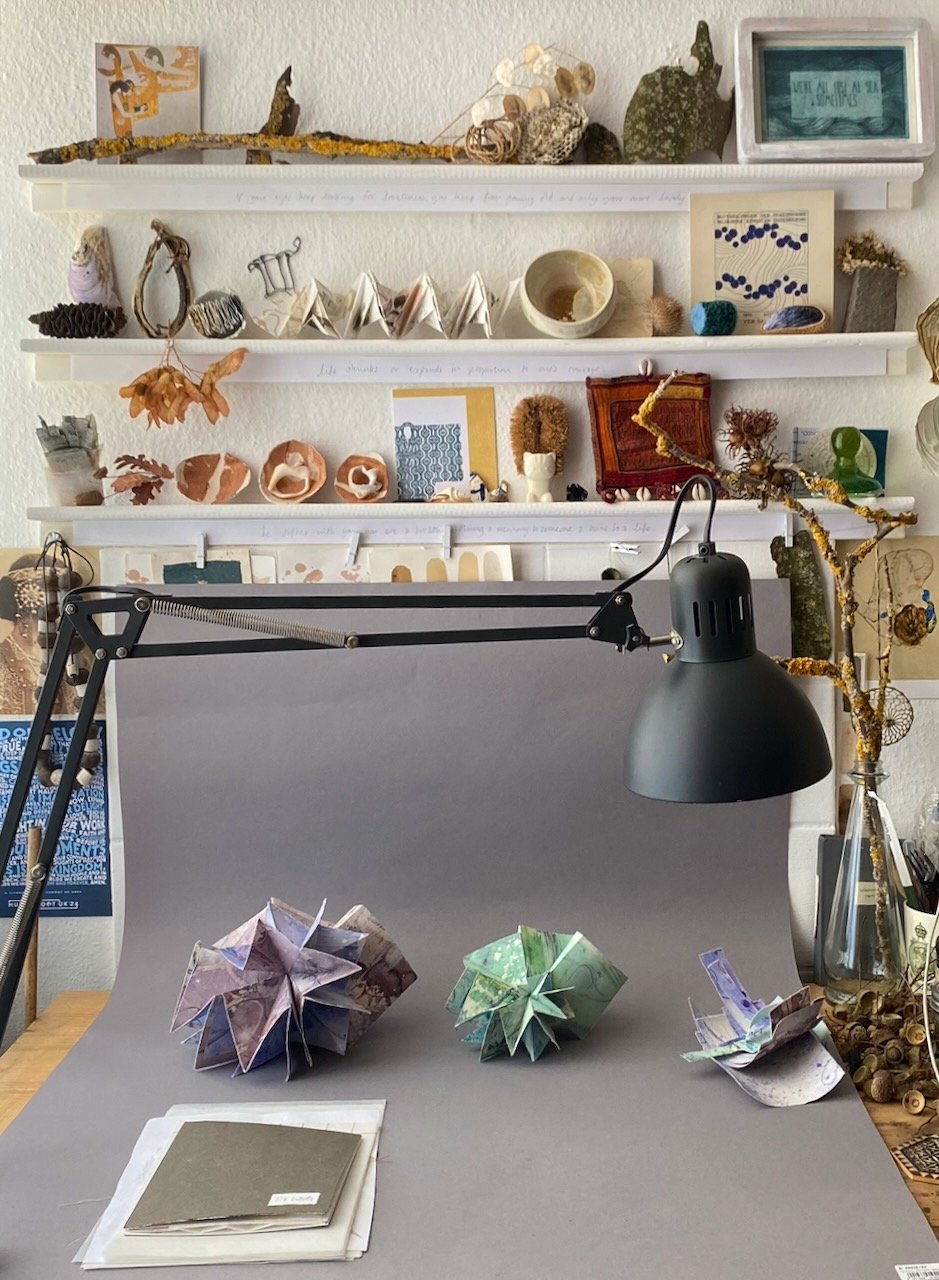
Sarah Grace Dye
Visual Artist, Paper Maker, Artists Book Maker, Drawing and Curating
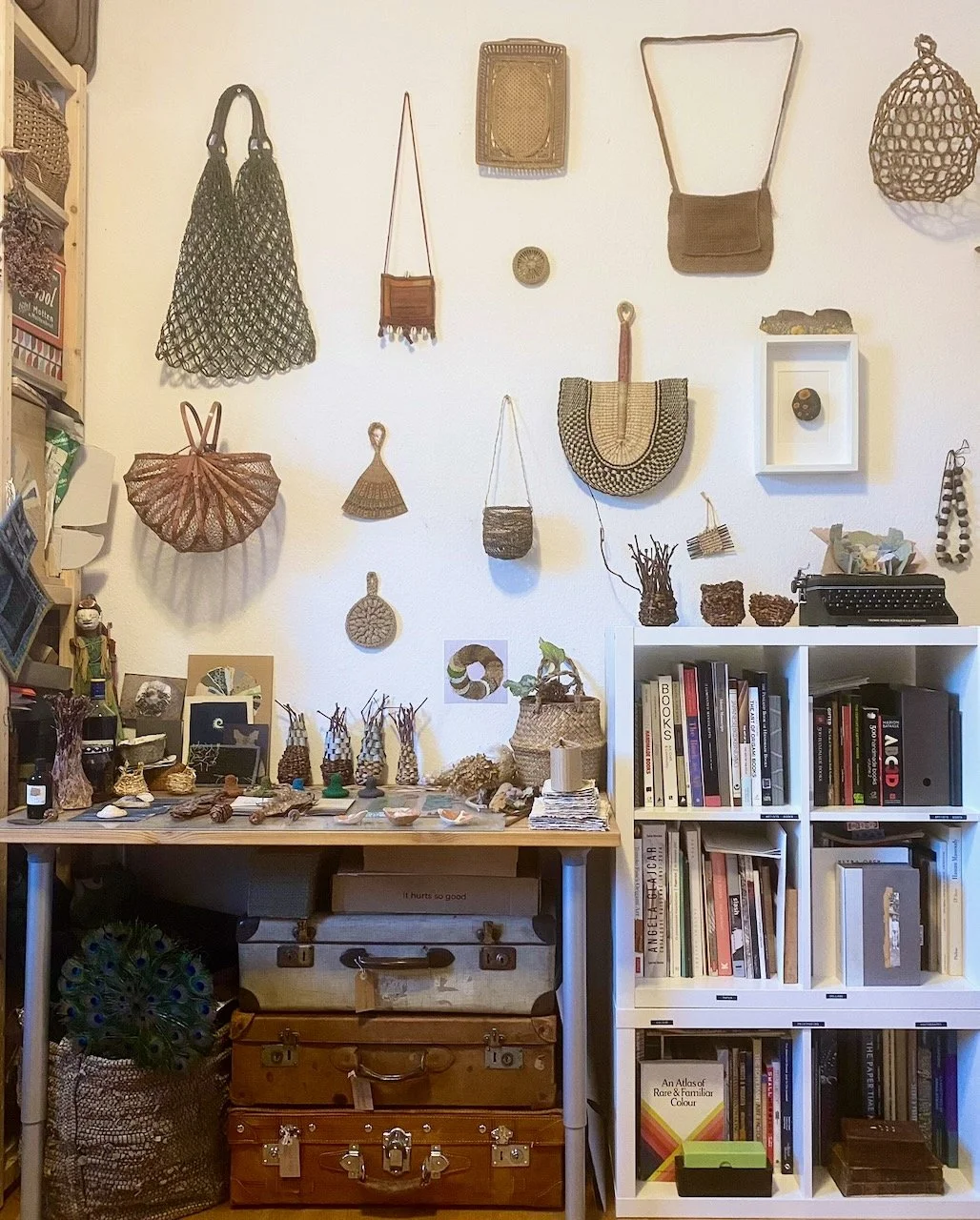
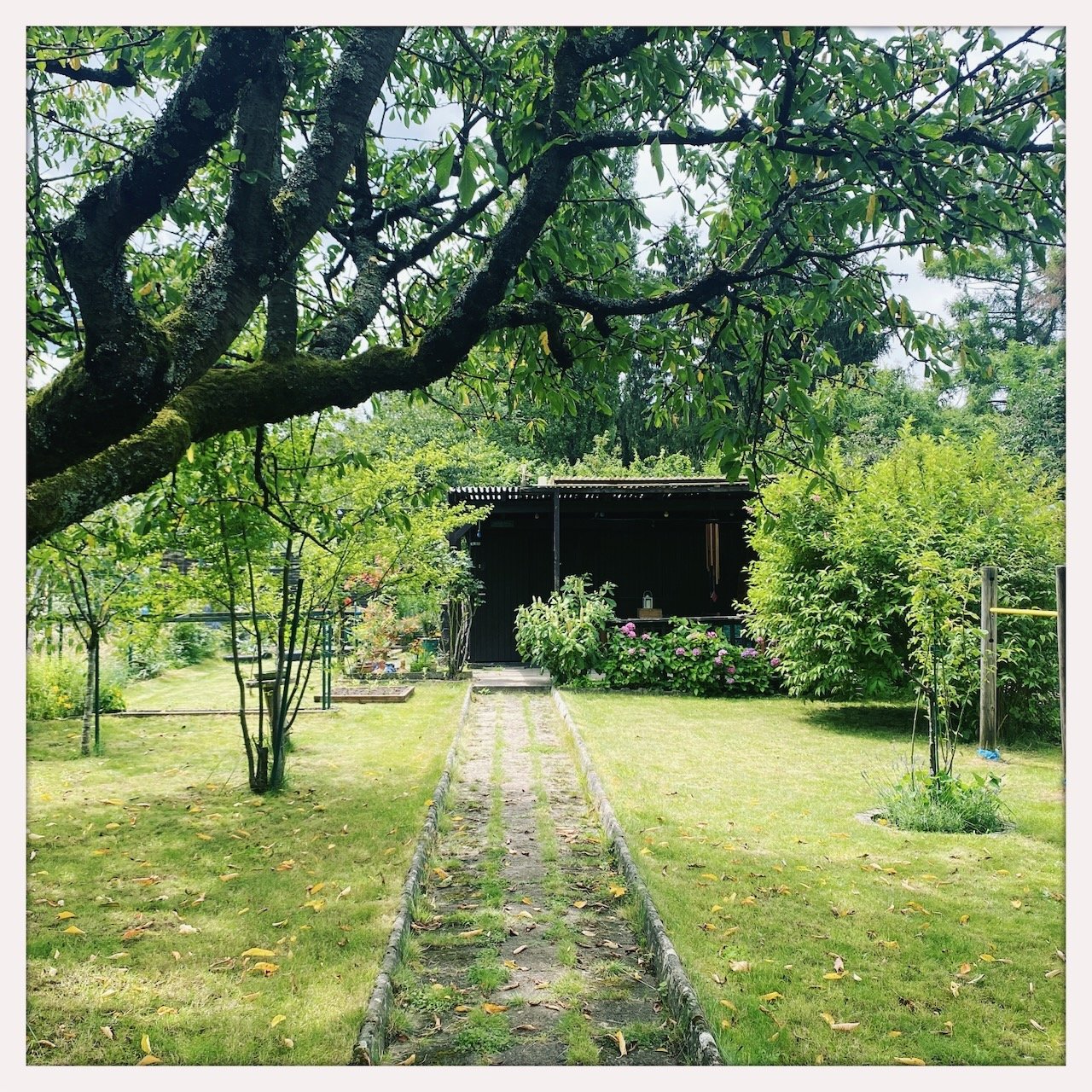
A place that most inspires your work? My garden. I love being immersed in nature and watching things grow. It’s my little piece of heaven on the edge of the busy city I live in the middle of. When I spend a day there I feel like I’ve had a mini break. It gifts me so much to work with and teaches me knew things every time I visit. The peacefulness is tangible and a regular recharge for me.
Materials or tools you most often? Rubbish and waste! If its destined for the bin send it to me… I also love my scalpel. I still have two stainless steel handles from thirty years ago at uni, they are a treasure!
What do you hope people feel or notice when they see your work? A little bit of something magical and the hint of an interesting story to be shared. Inquisitiveness as to what it might be made from because 9 times out of ten it once was rubbish someone was throwing out. I hope also my work sparks an inspiration to create.
The most important thing you want students to learn from your teaching? To be playful. Playing with no strings attached is the best place to discover exciting and new things. Don’t be precious, always question everything, and every ‘failure’ is an opportunity to develop something else.
What do you notice in nature now that you might have missed before using natural materials in your craft? Utter magic everywhere. How useful EVERYTHING can be if we just explore and imagine. The infinite textures and colours that are whispering to me from every angle. How much the natural world has infiltrated our cities all by itself.
Favourite 'weed'? Nettles for paper, dye and beautiful inks.
Guiding principles: Reuse and repurpose as much as possible, everything has a value to give. Use things well and leave behind little. I don’t believe in failure it is simply a learning tool and a moment to create something else with new knowledge to help along the way. Never take myself too seriously and PLAY always!
Anything else? Never stop learning and exploring. The older I get the more I realise there is to learn!
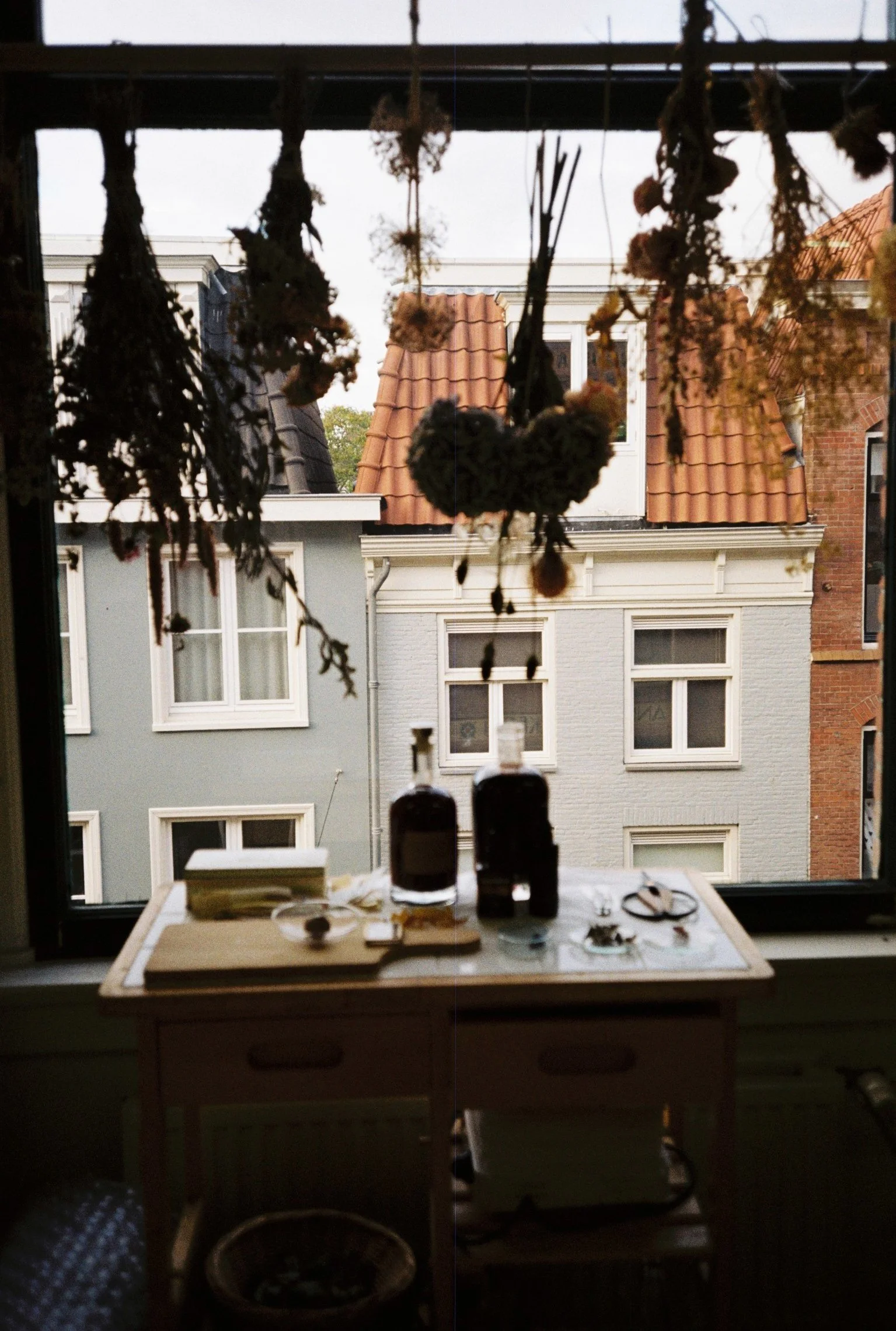
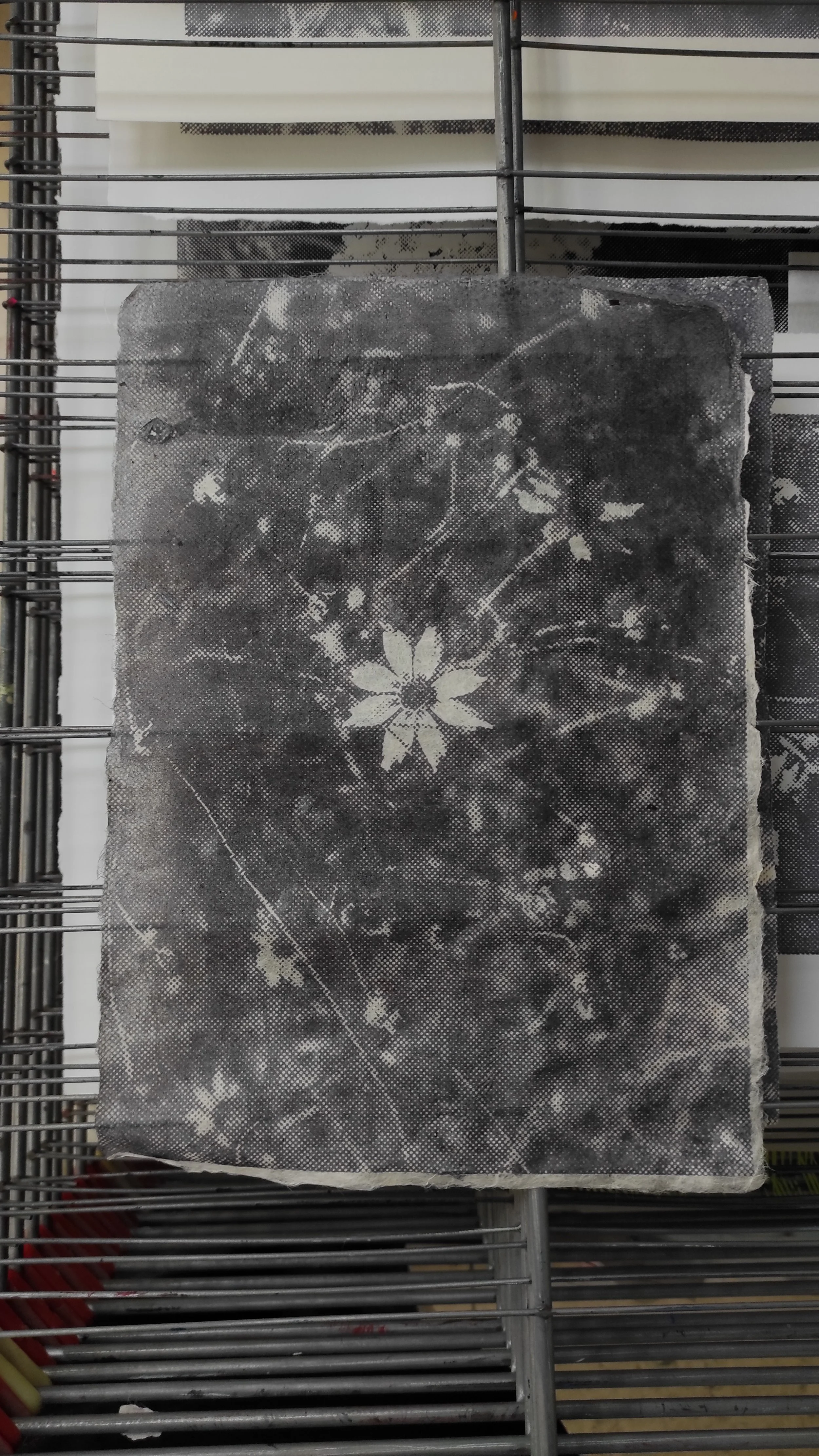
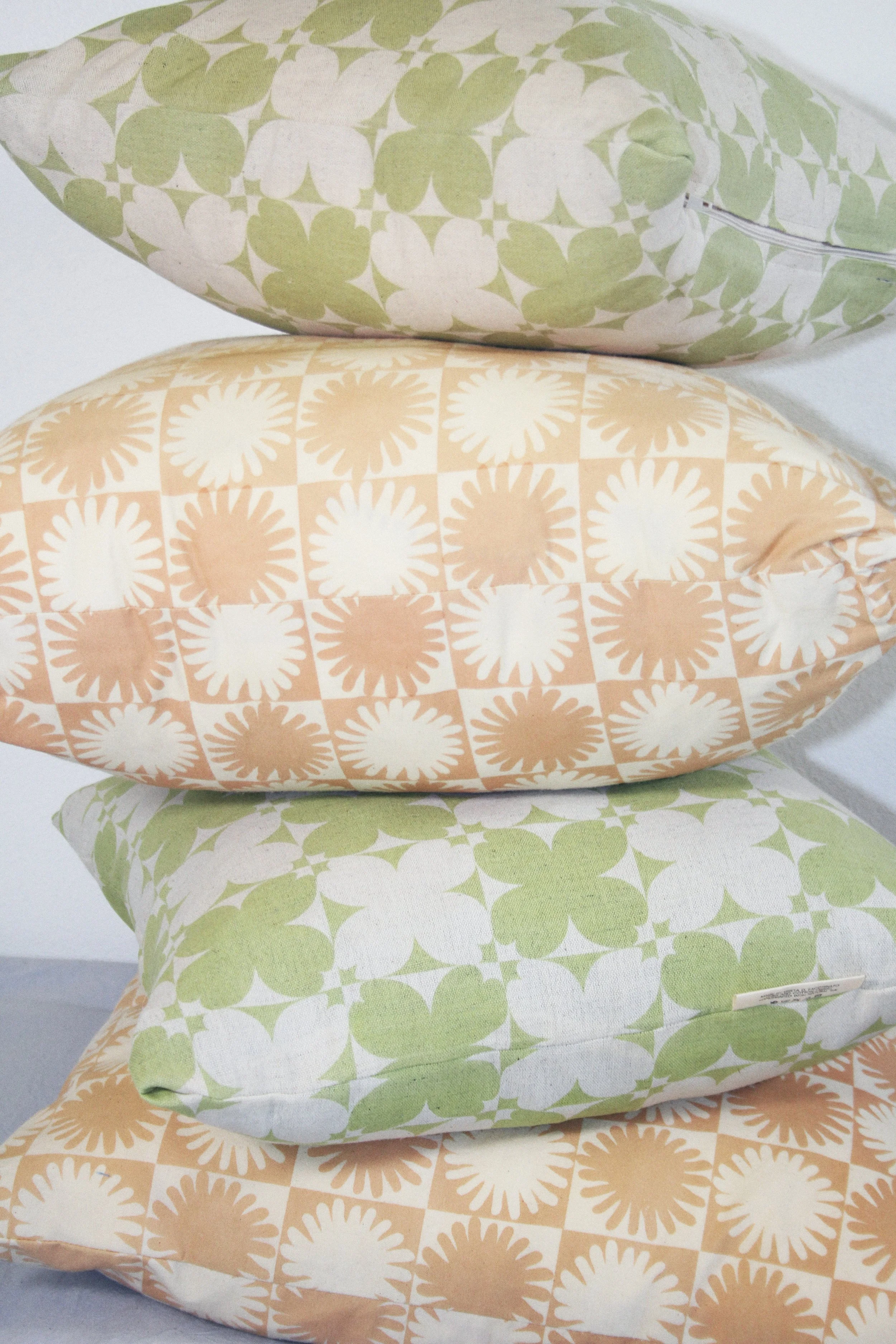
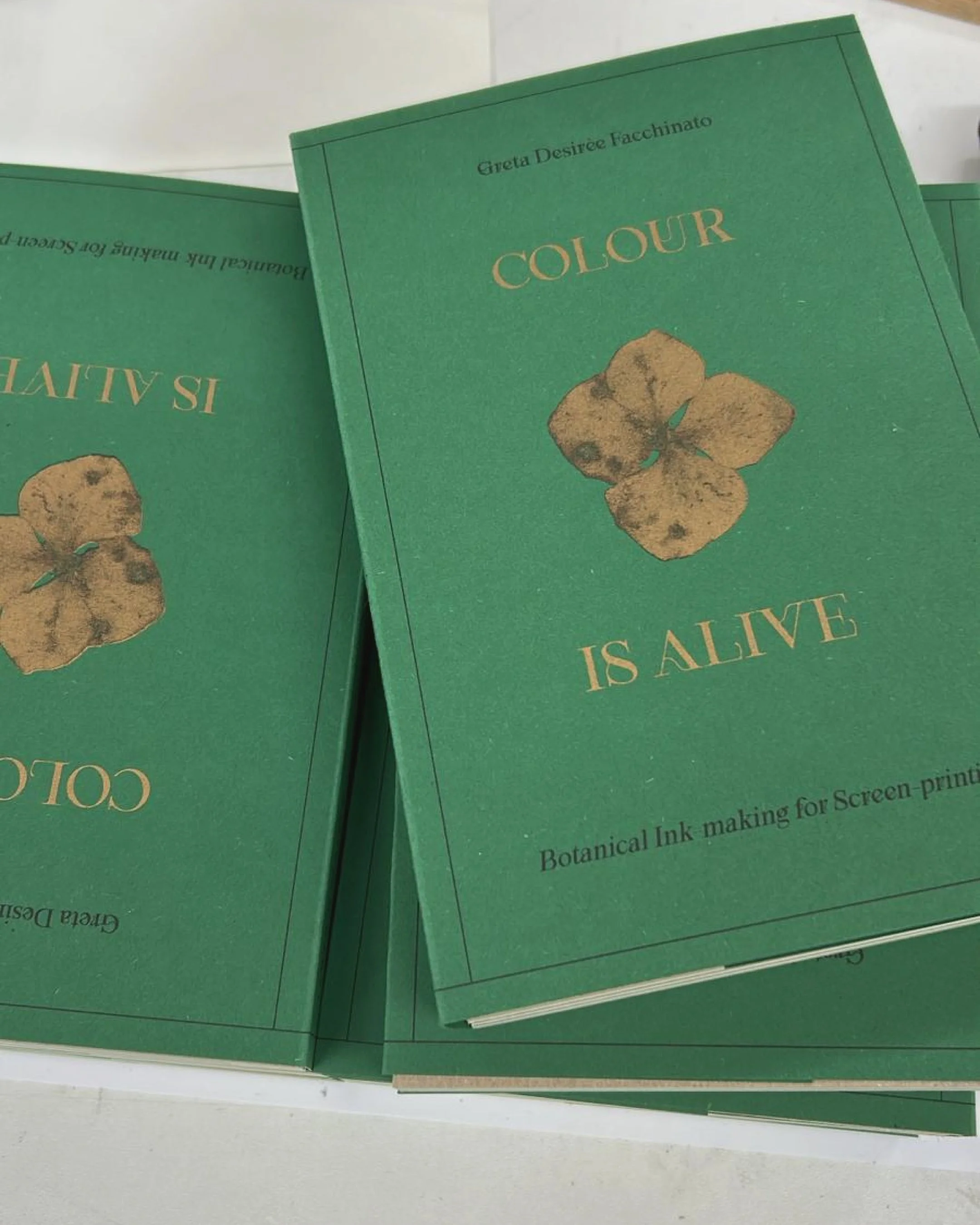
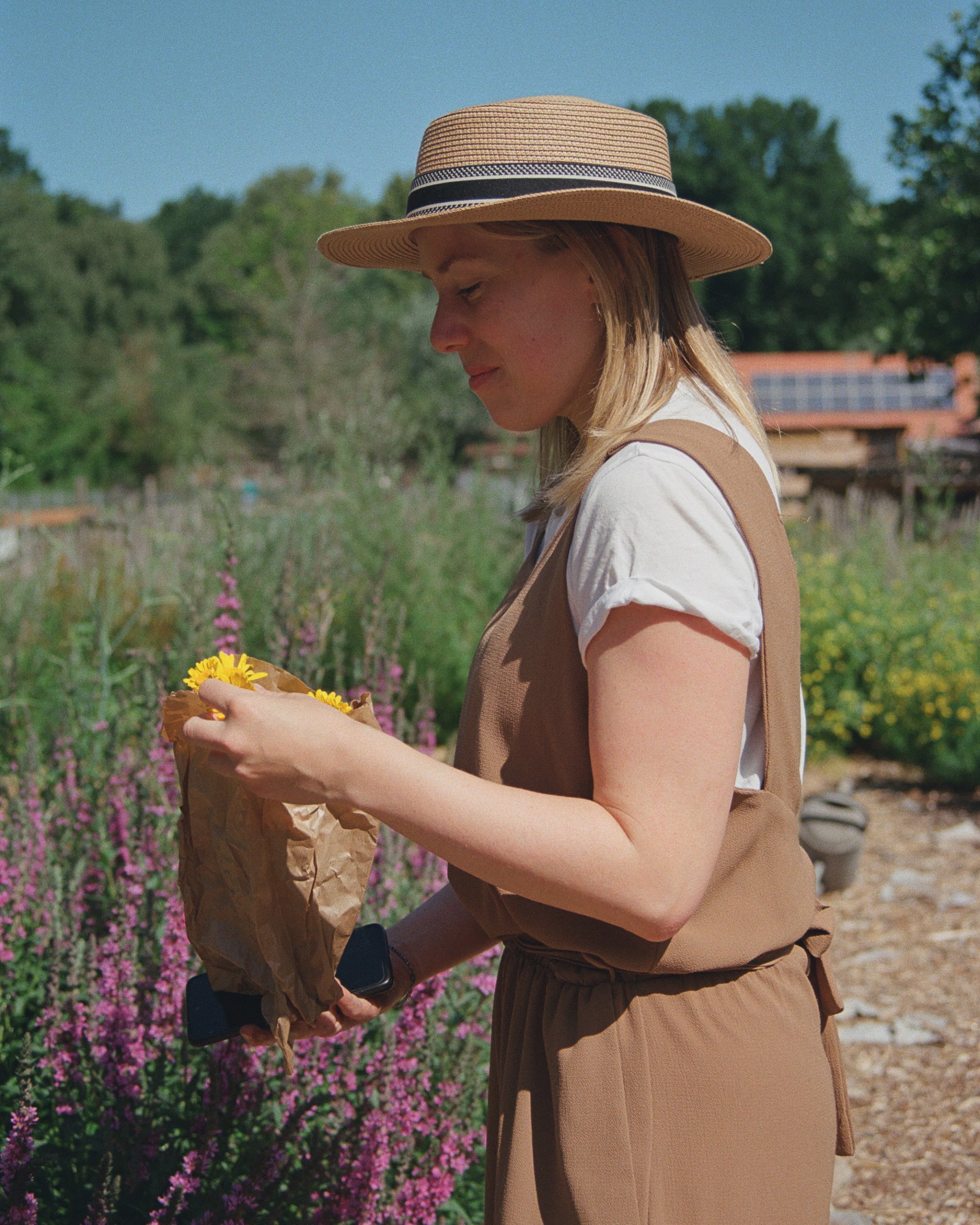
Greta Facchinato
Multidisciplinary artist, designer, and researcher; author of Colour is Alive
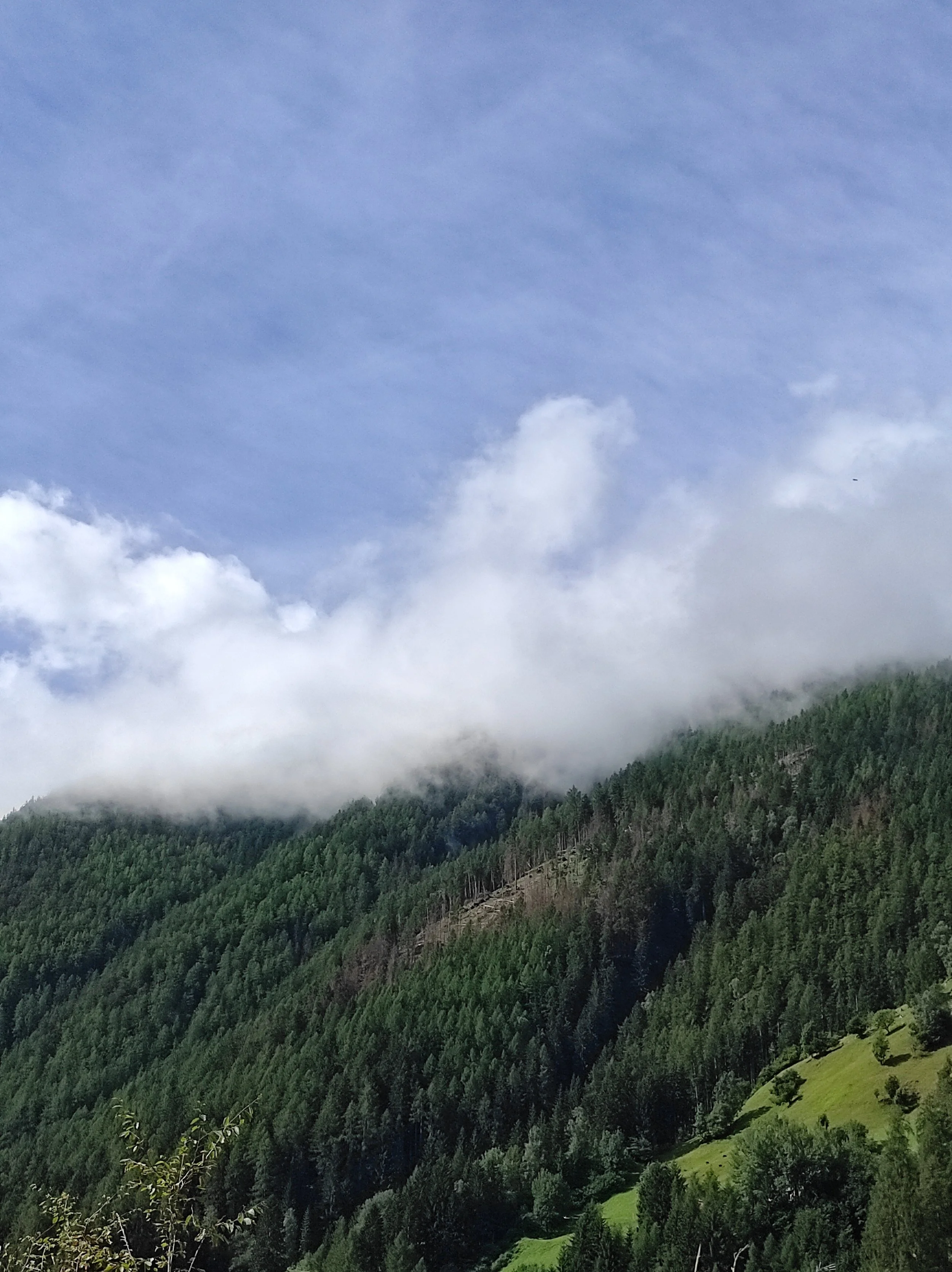
A place that most inspires your work? Being outdoors, especially walking in the woods. I am deeply fascinated by what in Italian we call sottobosco — the subtle, often hidden layer of life beneath the trees. The forests in Italy, in the hills close to home or in the Italian Alps, as well as the natural dunes along the North Sea in The Netherlands.
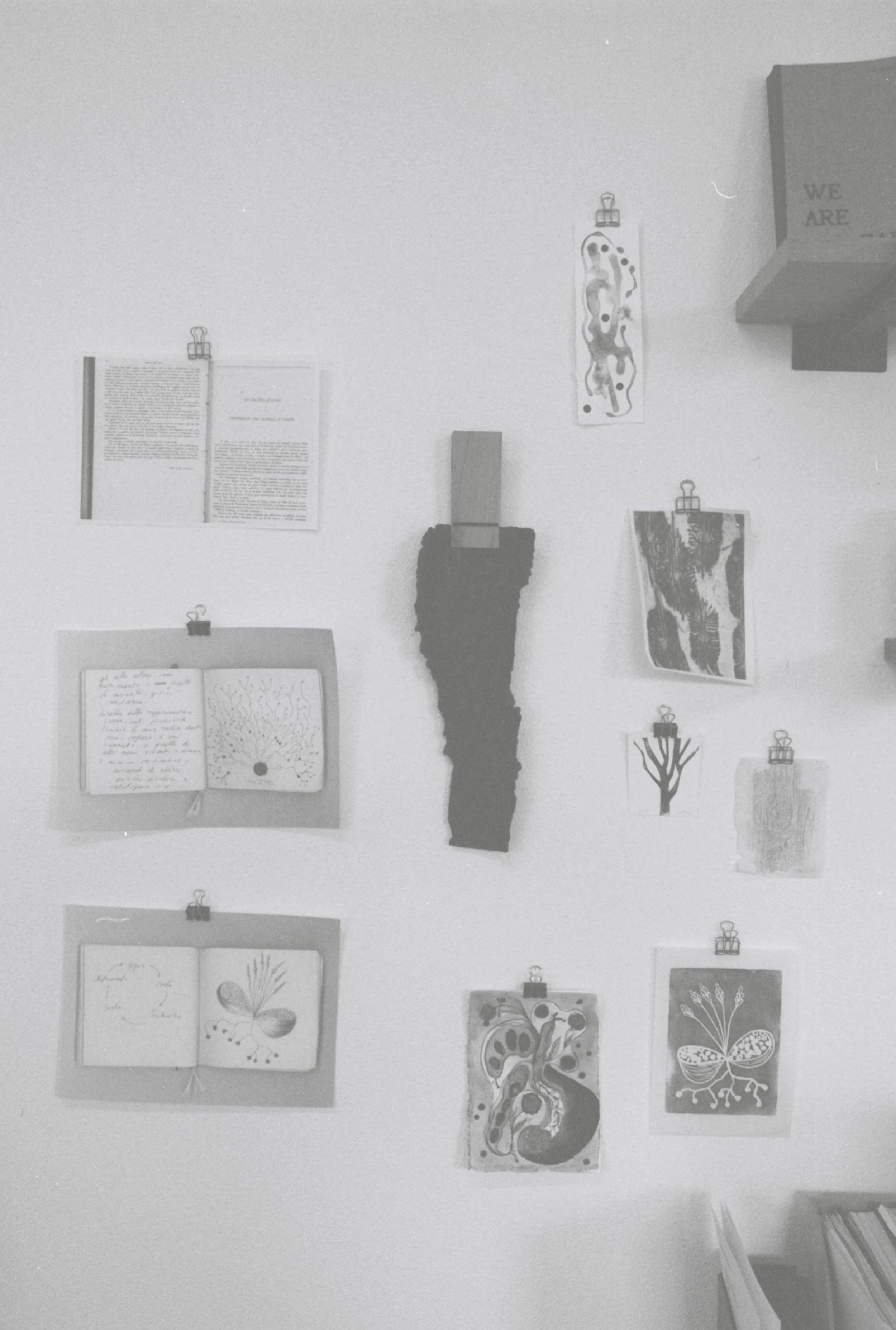
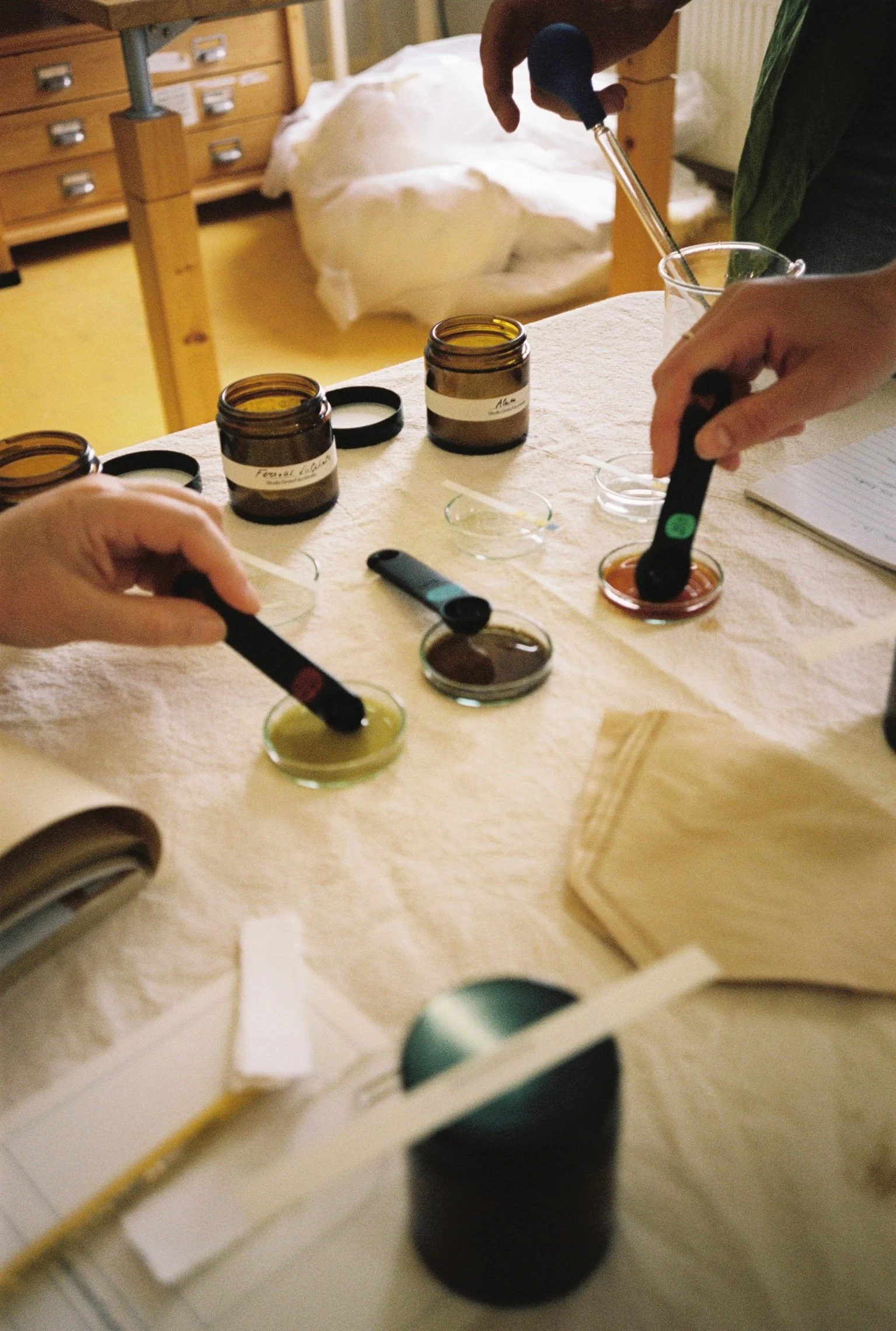
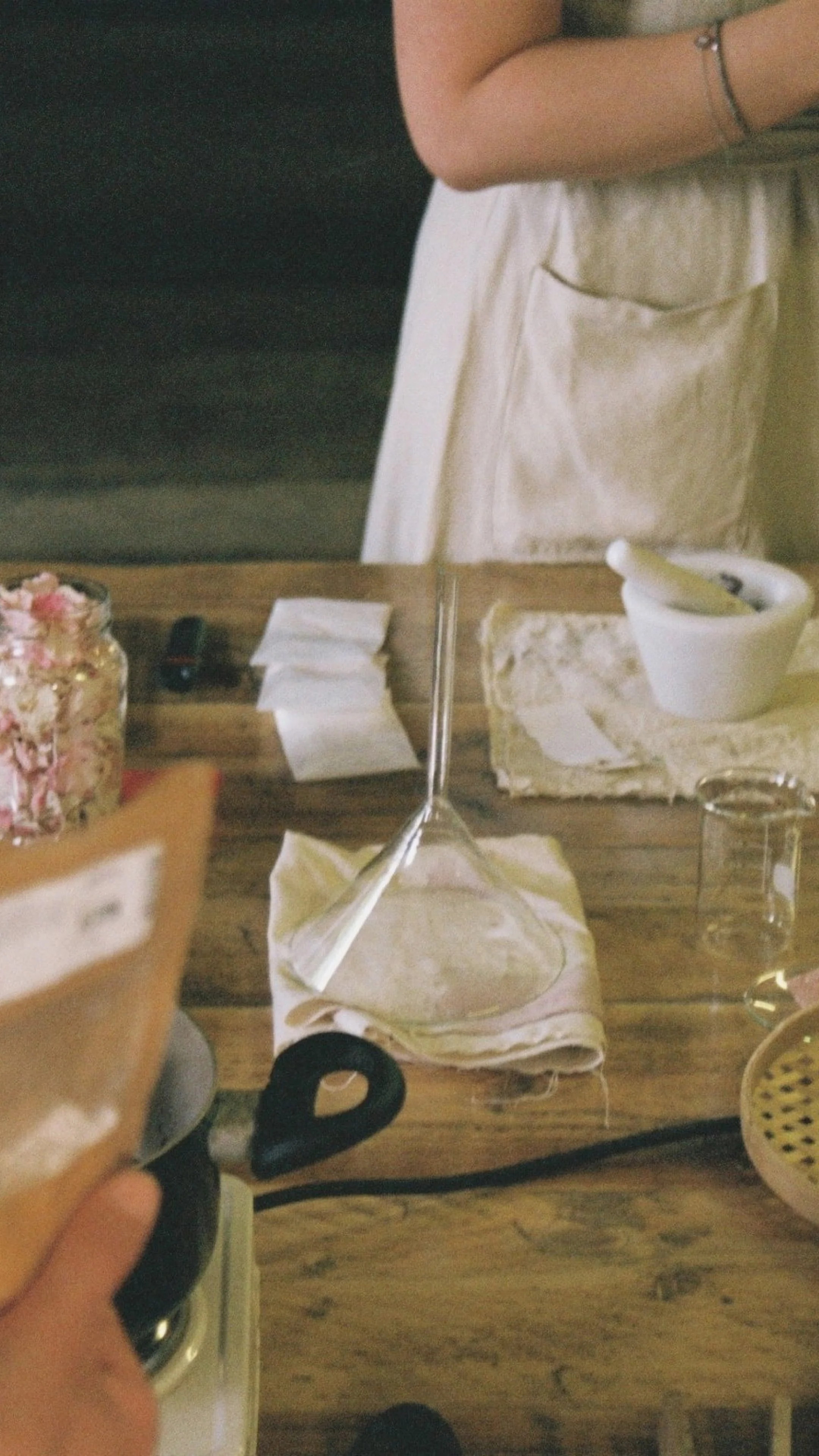
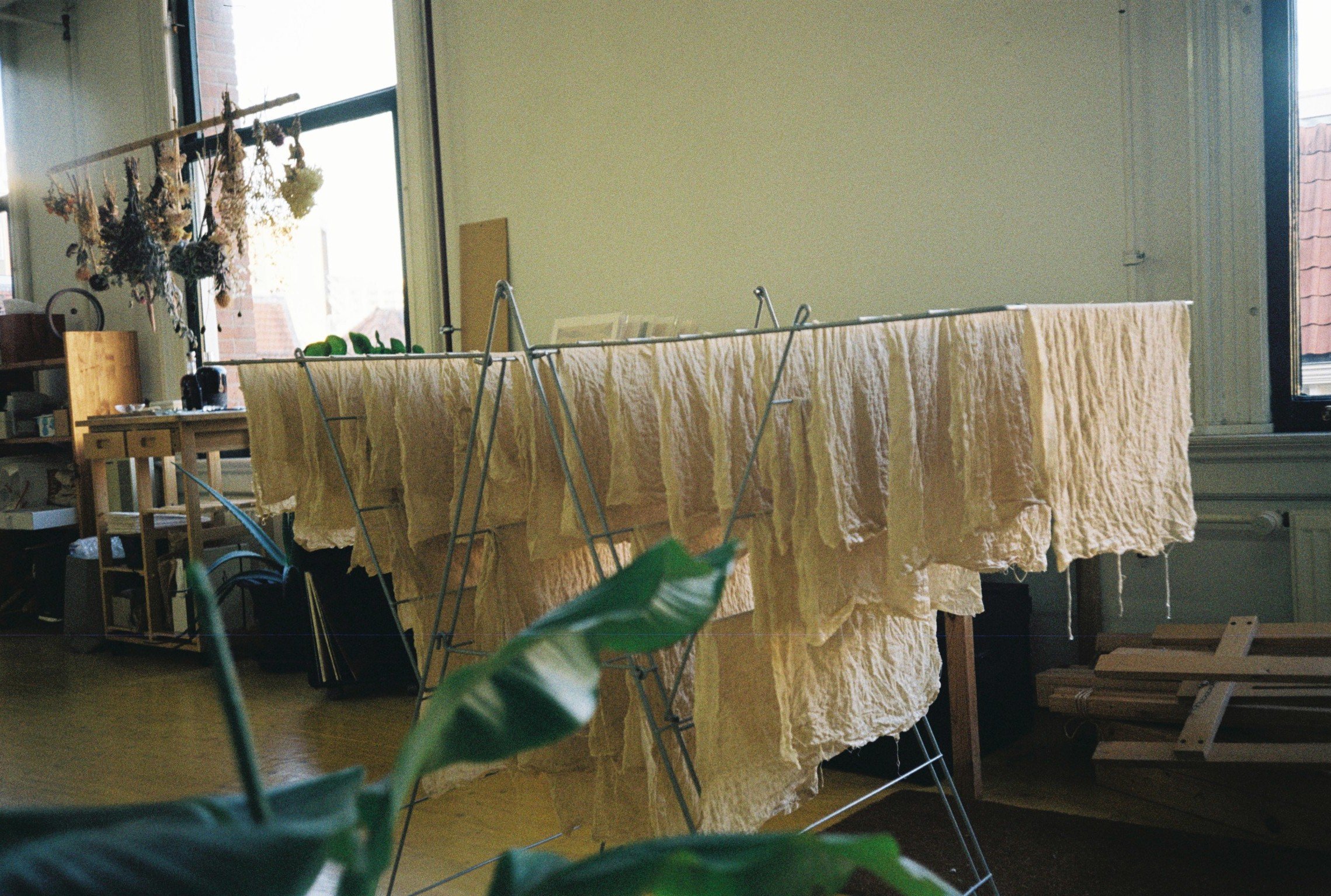
Materials or tools you most often use? Hands are my favourite tools — my way of sensing, gathering, and understanding materials. I work with cellulose textiles and plant-based papers, natural inks, pencil and ink pen, notebooks, and collected natural elements such as stones, wood, and shells. Botanical archives and books are also an important source of inspiration.
What do you hope people feel or notice when they see your work? I hope my work invites reflection and a sense of warmth — a quiet relationship with what surrounds us. An invitation into awareness of our ecosystem, in all its forms of life.
The most important thing you want students to learn from your teaching? To keep experimenting, and to develop a connection with their immediate environment by learning to work with it. To bring playfulness into their practice, alongside attentiveness — to listen through all the senses, not only to look. To be patient, to work with what is available, and to get to know the forms of life that can become both material and companion. And to reconnect with a childlike gaze — the one that, when I was young, led me to collect berries and make “potions”.
What do you notice in nature now that you might have missed before using natural materials in your
craft? I notice that I recognise more plants, and feel more clearly that we are part of the same ecosystem. I
feel that I think with my environment, rather than against it.
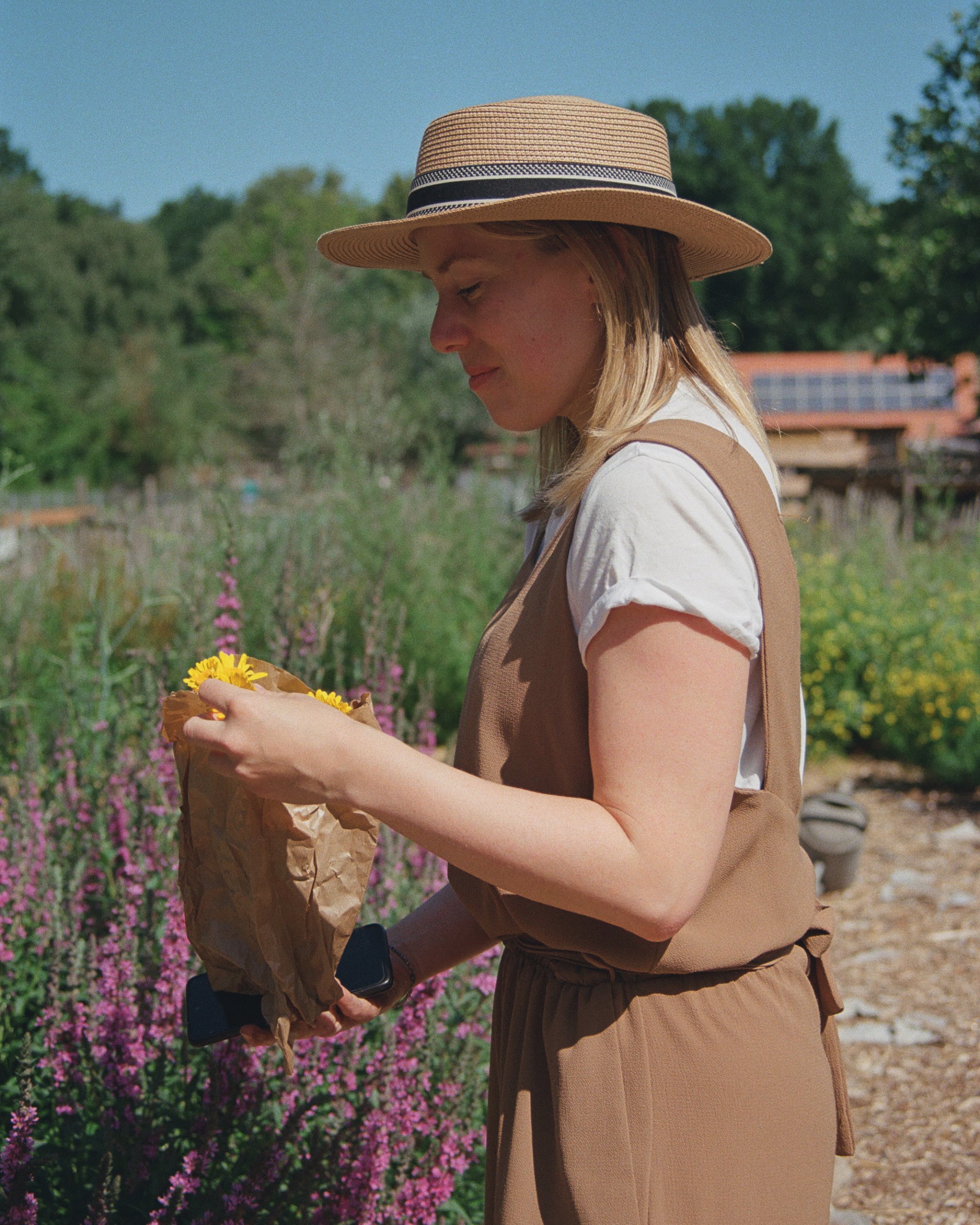
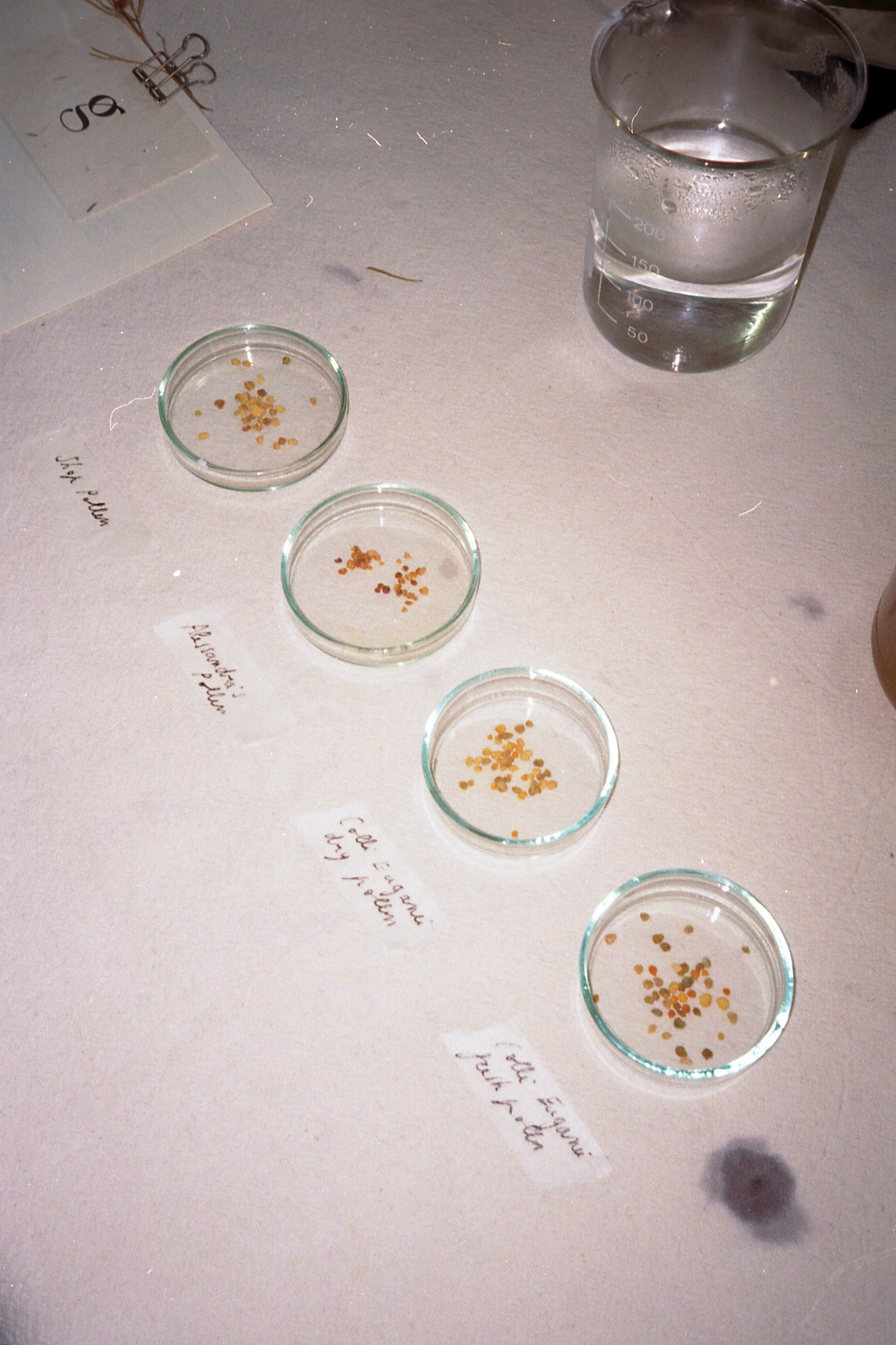
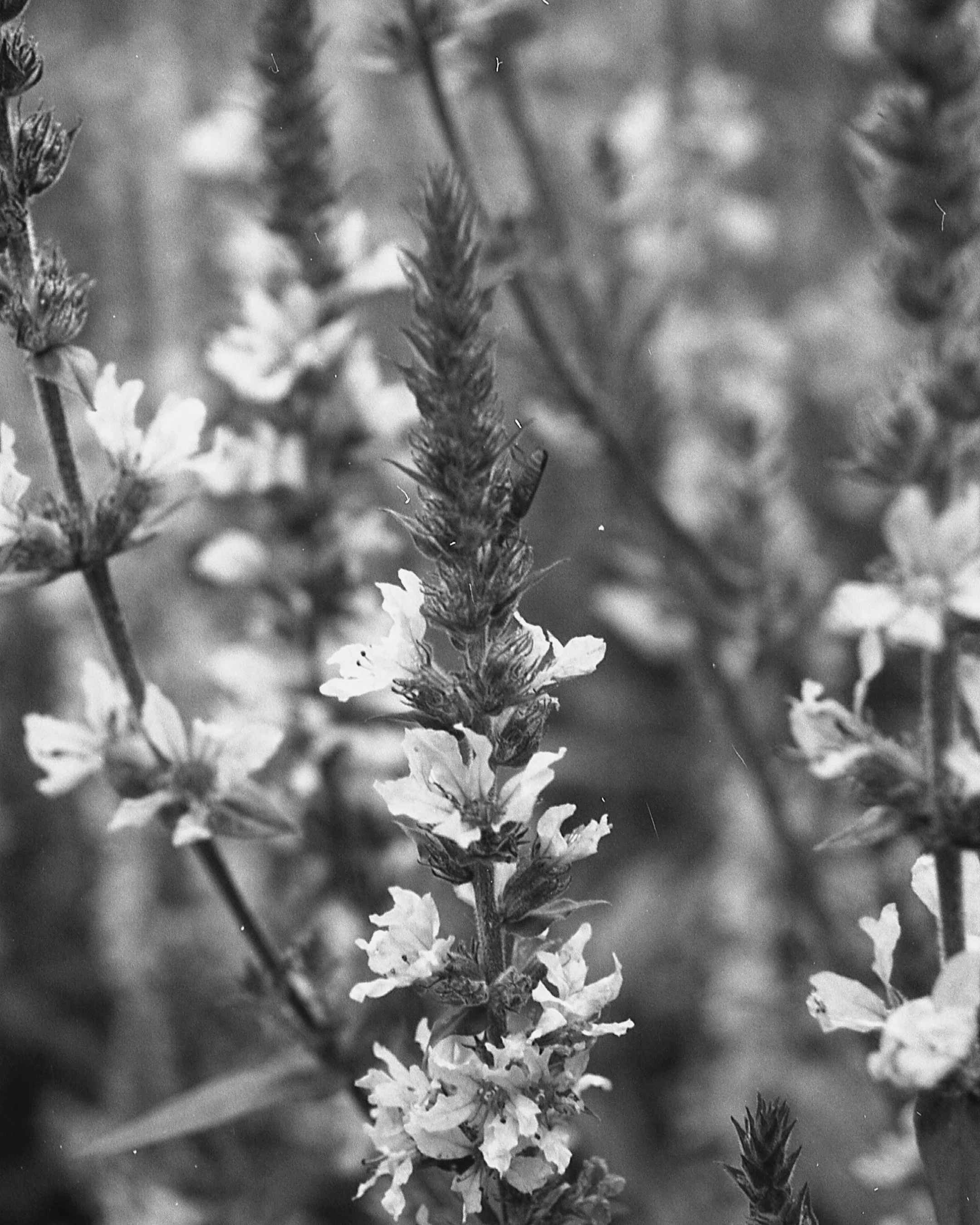
Favourite 'weed'? Many — I don’t think I have a single favourite, as I enjoy working with what is local and abundant. In the Netherlands, Purple loosetrife (Lythrum salicaria) and wild mustard (Sinapis arvensis) are both present and generous. Wild mustard is one of the first plants to bloom, bringing yellow into canals and forest paths in early spring. In Italy, I feel close to Oxeye daisy (Leucanthemum vulgare) and Dandelion (Taraxacum officinale ), which remind me of my youth, of spring beginning, and of bees collecting pollen in the garden.
Guiding principles: Plants can speak to us, if we listen. Collecting and foraging, interconnection and reciprocity, intuition and material knowledge. The animacy of materials, and the living — and dying — nature of artworks. Regeneration and ecological awareness.
Anything else? Grateful to be part of this space, sharing my research and connecting with a network of skilled teachers, artists, and practitioners!