Natural Paint Making
Online Demonstrations From Spring 2027
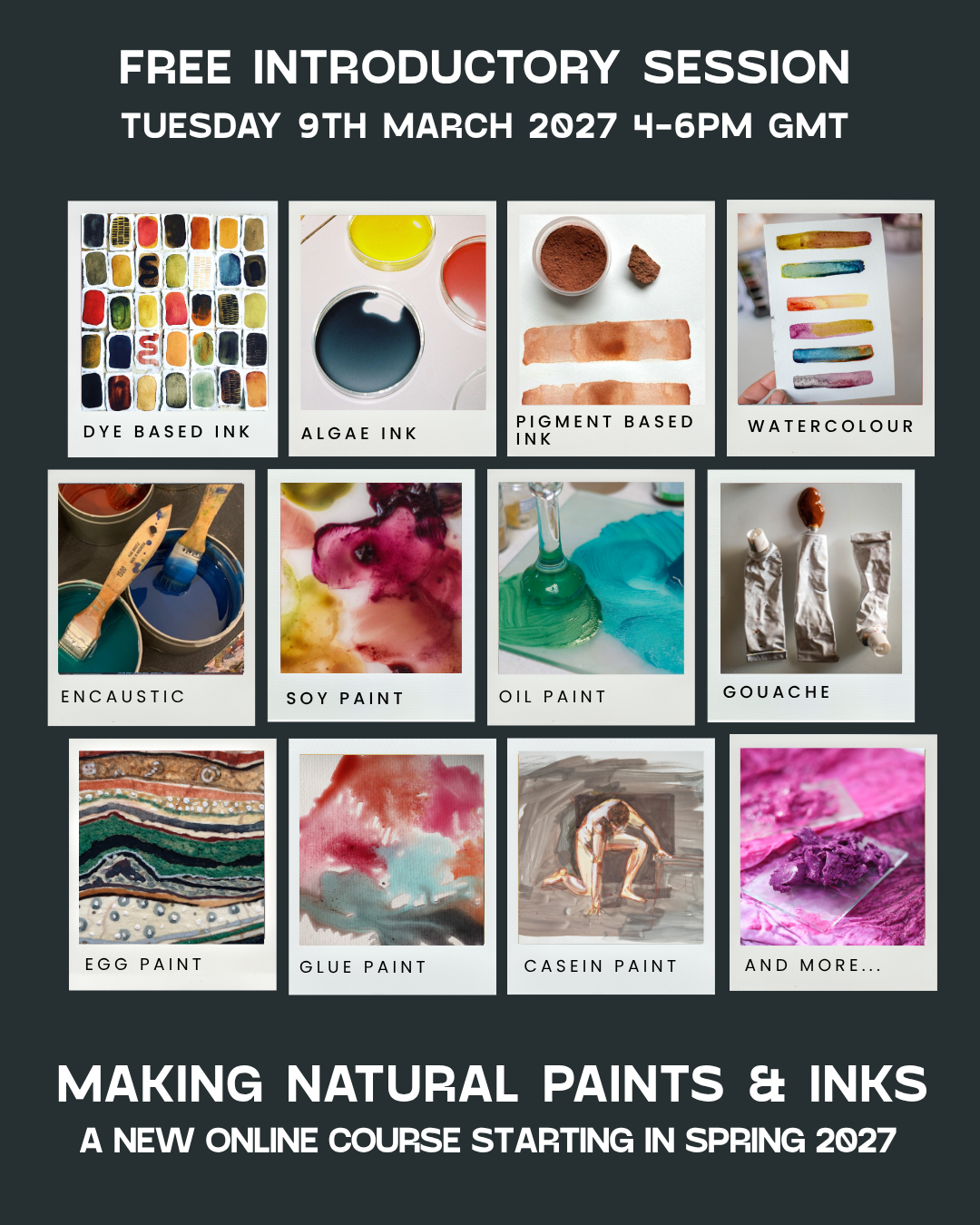
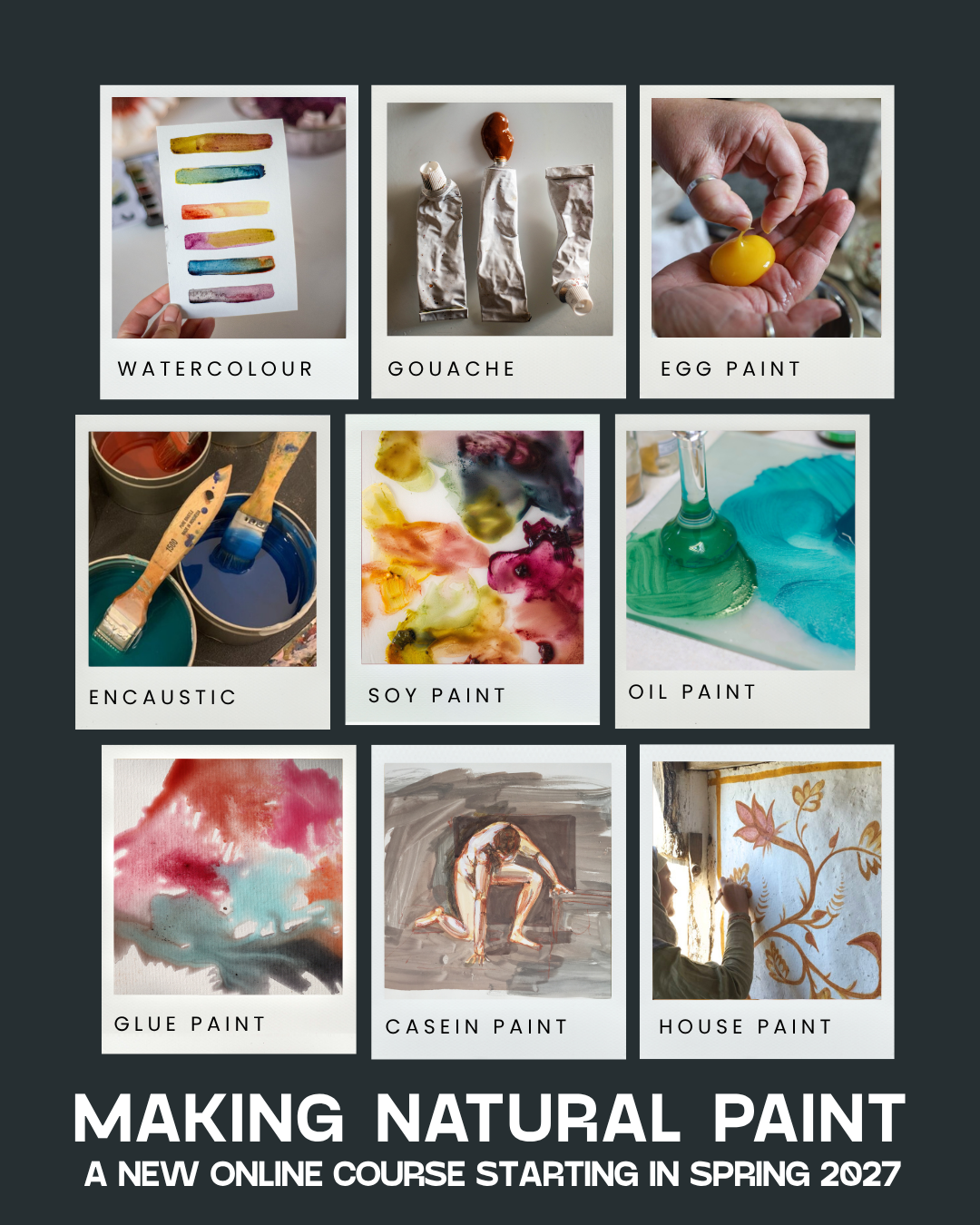
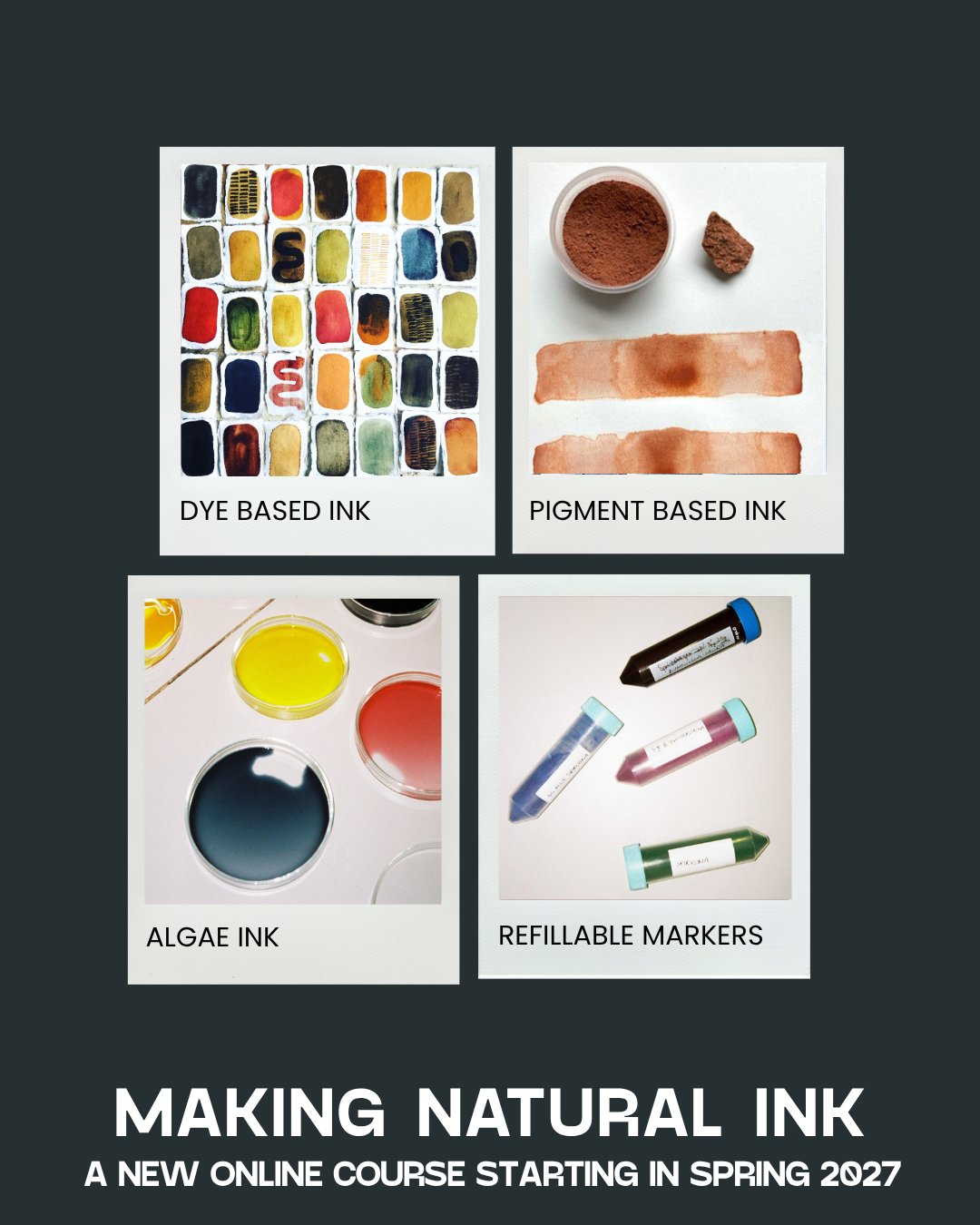
Join us for a series of demonstrations sharing how to make natural paints for paper, as well as canvas, wood panels, leather, plaster, and other surfaces.
Each session will cover a different approach to paint making using botanical and earth based colour with natural binders. Swatching and sampling throughout the course, so you can compare the different recipes side by side.
With Natalie Stopka, Caroline Ross, Lucy Mayes, Caroline Nicolay & Elise Wagner
Join the ‘Inks & Paints’ Introductory Session
Join 1o live demonstrations
Access 24 hours of teaching live or recorded
Specialist sessions with 5 different teachers
10 Printable Handouts
Live Follow-up Session 3 months later.
Access to recordings for one year from the end of the course
-
-
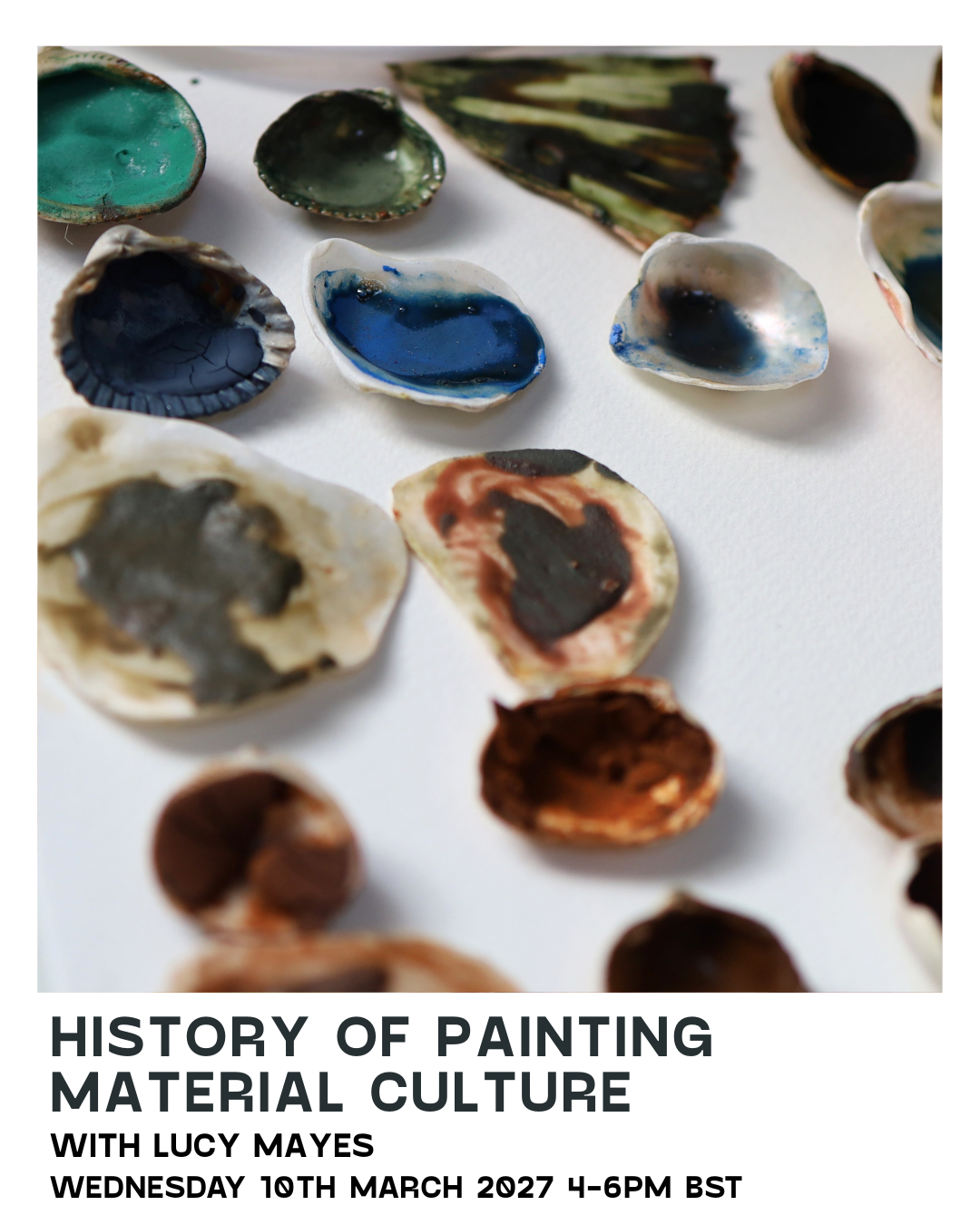
History of Painting Material Culture
With Lucy Mayes
The material culture of painting within a timeline of technological development. How artists have historically selected, prepared, combined and manipulated materials, and how changing technologies, materials and processes have shaped painting practice. Key developments will include animal glues, egg tempera, gum arabic, drying oils, natural resins, oil-resin mixtures, pigments, fillers, extenders and additives.
Wednesday 10th March 2027, 4-6pm GMT
With Lucy Mayes
The material culture of painting within a timeline of technological development. How artists have historically selected, prepared, combined and manipulated materials, and how changing technologies, materials and processes have shaped painting practice. Key developments will include animal glues, egg tempera, gum arabic, drying oils, natural resins, oil-resin mixtures, pigments, fillers, extenders and additives.
Wednesday 10th March 2027, 4-6pm GMT
-
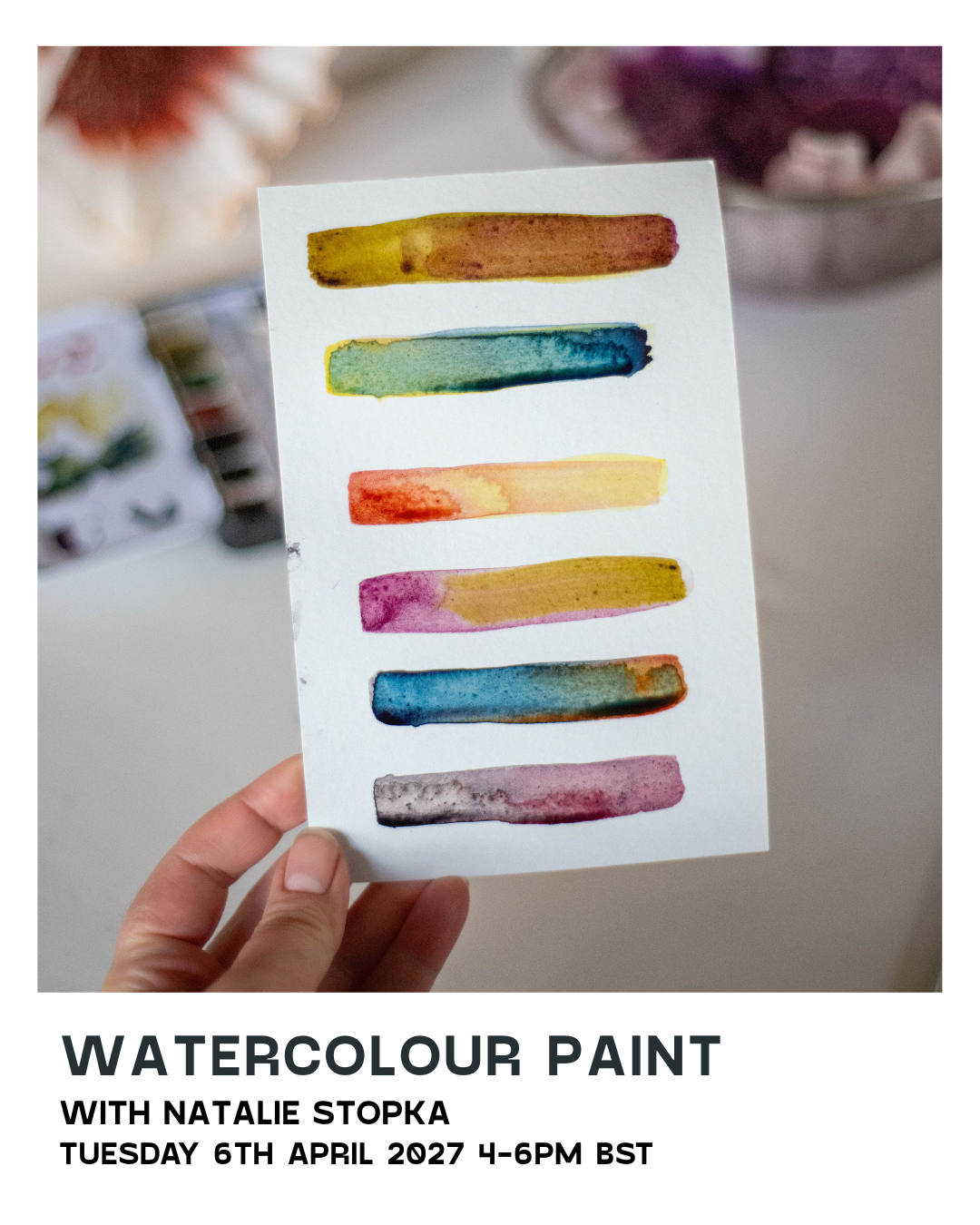
Watercolour and Gouache Paint
With Natalie Stopka
Imagine the artist’s apprentice of centuries past, stooped over a stone slab, slowly mulling vibrant pigment in sticky binder. This effort of dispersing color particles in an adhesive binder produces smooth and creamy paint. In this session, we’ll step into that tradition to focus on translucent watercolor and opaque gouache bound together with natural sap, appropriate for paint pans or tubes.
Tuesday 6th April 4-6pm GMT
With Natalie Stopka
Imagine the artist’s apprentice of centuries past, stooped over a stone slab, slowly mulling vibrant pigment in sticky binder. This effort of dispersing color particles in an adhesive binder produces smooth and creamy paint. In this session, we’ll step into that tradition to focus on translucent watercolor and opaque gouache bound together with natural sap, appropriate for paint pans or tubes.
Tuesday 6th April 4-6pm GMT
-
Egg Paints and Vegan Alternatives
With Caroline Ross
Several beautiful, versatile paints can be made from eggs, including tempera from yolks and glair from whites. We will look at the traditional and novel uses of both egg and vegan alternatives in this session, learn which surfaces and uses they have most affinity with, and test their finished lustre, opacity, coverage, water and wear resistance, and ability to be diluted or layered.
Tuesday 13th April 2027, 4-6 GMT
With Caroline Ross
Several beautiful, versatile paints can be made from eggs, including tempera from yolks and glair from whites. We will look at the traditional and novel uses of both egg and vegan alternatives in this session, learn which surfaces and uses they have most affinity with, and test their finished lustre, opacity, coverage, water and wear resistance, and ability to be diluted or layered.
Tuesday 13th April 2027, 4-6 GMT
-
Soy Paint
With Natalie Stopka
Homemade soya milk is a powerful natural binder and sealant for works on paper, fabric, and leather. It functions as a flexible, water-resistant polymer film that can even withstand laundering and light abrasion. Learn to process fresh soya milk from homegrown or purchased soya beans, then concoct paints using earth pigments, lake pigments, and indigo.
Tuesday 20th April 2027, 4-6 GMT
With Natalie Stopka
Homemade soya milk is a powerful natural binder and sealant for works on paper, fabric, and leather. It functions as a flexible, water-resistant polymer film that can even withstand laundering and light abrasion. Learn to process fresh soya milk from homegrown or purchased soya beans, then concoct paints using earth pigments, lake pigments, and indigo.
Tuesday 20th April 2027, 4-6 GMT
-
Glue Paint
With Lucy Mayes
This session explores animal glues as traditional and versatile painting and adhesive materials. We will look at their history, chemistry and preparation, and consider how different types of glue behave when used across a range of substrates and applications.
Tuesday 27th April 2027, 4-6 GMT
With Lucy Mayes
This session explores animal glues as traditional and versatile painting and adhesive materials. We will look at their history, chemistry and preparation, and consider how different types of glue behave when used across a range of substrates and applications.
Tuesday 27th April 2027, 4-6 GMT
-
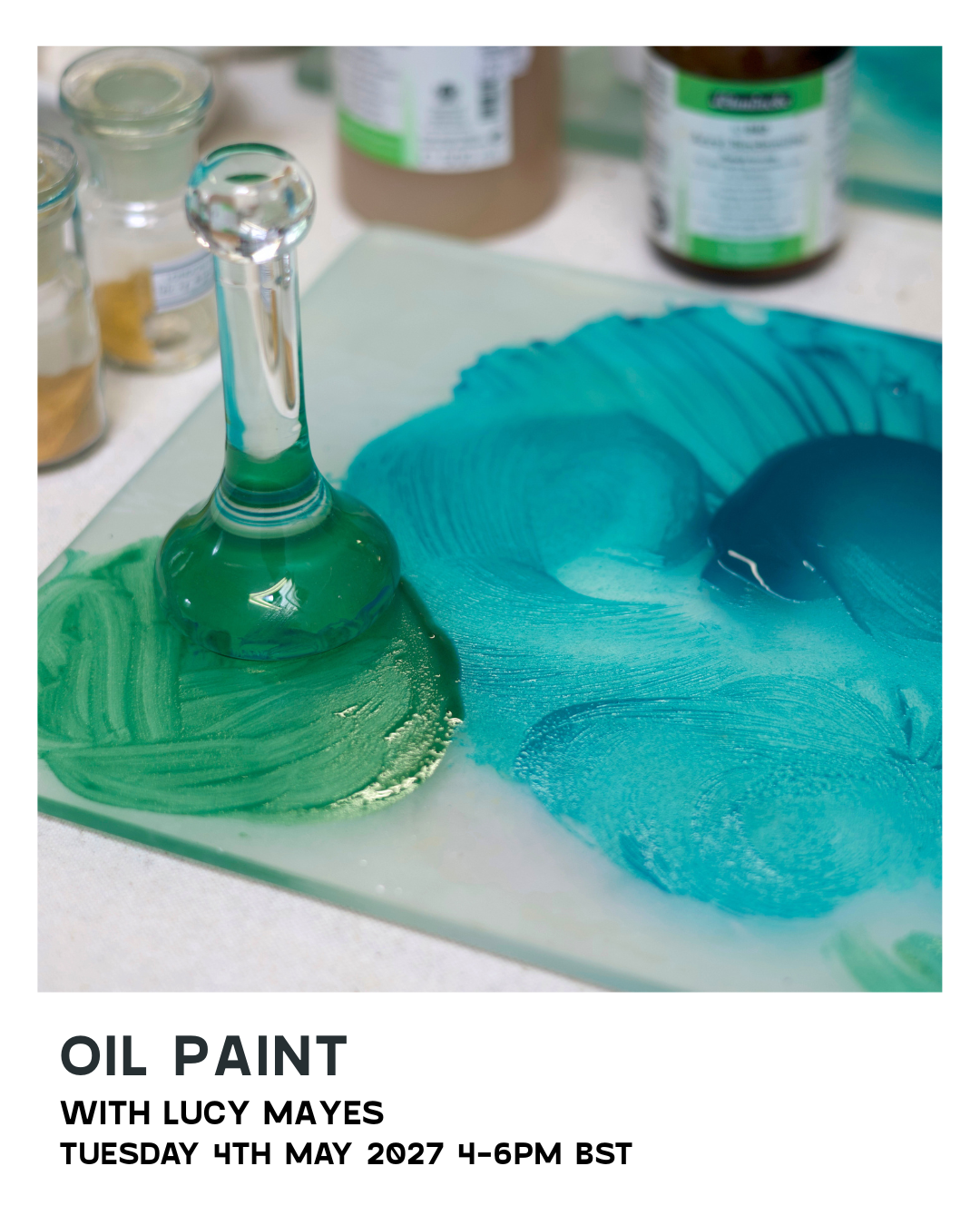
Oil Paint
With Lucy Mayes
This session explores oil paints and traditional oil-based painting materials, focusing on the preparation, properties and practical use of oil as a paint binder. We will look at the history and material composition of oil paints, considering how different oils, pigments and additives influence the behaviour and appearance of the finished paint.
Tuesday 4th May 2027 4-6 BST
With Lucy Mayes
This session explores oil paints and traditional oil-based painting materials, focusing on the preparation, properties and practical use of oil as a paint binder. We will look at the history and material composition of oil paints, considering how different oils, pigments and additives influence the behaviour and appearance of the finished paint.
Tuesday 4th May 2027 4-6 BST
-
Casein Paint
With Caroline Ross
Casein (milk protein) paints have been loved through history for being versatile, cheap to make in quantity, long last and hard-wearing. They make bright, vibrant paints, suitable for sketching, murals, painting on paper, plaster, wood and other surfaces. We will cover how to make the medium both from curdling organic skimmed milk ourselves, and from ready-made cottage cheese (soft curd cheese) and household ammonia.
Tuesday 11th May 2027, 4-6 BST
With Caroline Ross
Casein (milk protein) paints have been loved through history for being versatile, cheap to make in quantity, long last and hard-wearing. They make bright, vibrant paints, suitable for sketching, murals, painting on paper, plaster, wood and other surfaces. We will cover how to make the medium both from curdling organic skimmed milk ourselves, and from ready-made cottage cheese (soft curd cheese) and household ammonia.
Tuesday 11th May 2027, 4-6 BST
-
Architectural Paint
With Caroline Nicolay
Natural traditional paints for interior and exterior surfaces. Paint recipes, examples and demonstrations. The role of paint in buildings, what was historically used and where, the impact of modern plastic-based paints on houses, human health and the environment.
Safely preparing surfaces for repainting, what to consider before choosing a natural paint and which ones can you buy off the shelf if needed.
Tuesday 18th May 2027 4-6 BST
With Caroline Nicolay
Natural traditional paints for interior and exterior surfaces. Paint recipes, examples and demonstrations. The role of paint in buildings, what was historically used and where, the impact of modern plastic-based paints on houses, human health and the environment.
Safely preparing surfaces for repainting, what to consider before choosing a natural paint and which ones can you buy off the shelf if needed.
Tuesday 18th May 2027 4-6 BST
-
Making Encaustic Medium & Mixing Colour from Dry Pigments
With Elise Wagner
Color behaves differently in wax. Pigments that may appear dense, flat, or familiar in another medium can become luminous, translucent, earthy, or unexpectedly intense when suspended in encaustic.
In this online workshop, artist and educator Elise Wagner takes students through the process from the very beginning: making encaustic medium, the foundation of encaustic paint, and then transforming that medium into color using dry artist pigments.
Tuesday 25th May 2027 4-6 BST
With Elise Wagner
Color behaves differently in wax. Pigments that may appear dense, flat, or familiar in another medium can become luminous, translucent, earthy, or unexpectedly intense when suspended in encaustic.
In this online workshop, artist and educator Elise Wagner takes students through the process from the very beginning: making encaustic medium, the foundation of encaustic paint, and then transforming that medium into color using dry artist pigments.
Tuesday 25th May 2027 4-6 BST
-
Experimental Approaches
With Lucy Mayes
This session explores experimental approaches to the paint materials covered throughout the course, considering how animal glue paints, oil paints, resin-oil mixes and gum arabic emulsions, egg & vegan paint alternatives can be combined, layered and manipulated.
Tuesday 1st June 2027 4-6 BST
With Lucy Mayes
This session explores experimental approaches to the paint materials covered throughout the course, considering how animal glue paints, oil paints, resin-oil mixes and gum arabic emulsions, egg & vegan paint alternatives can be combined, layered and manipulated.
Tuesday 1st June 2027 4-6 BST
-
-
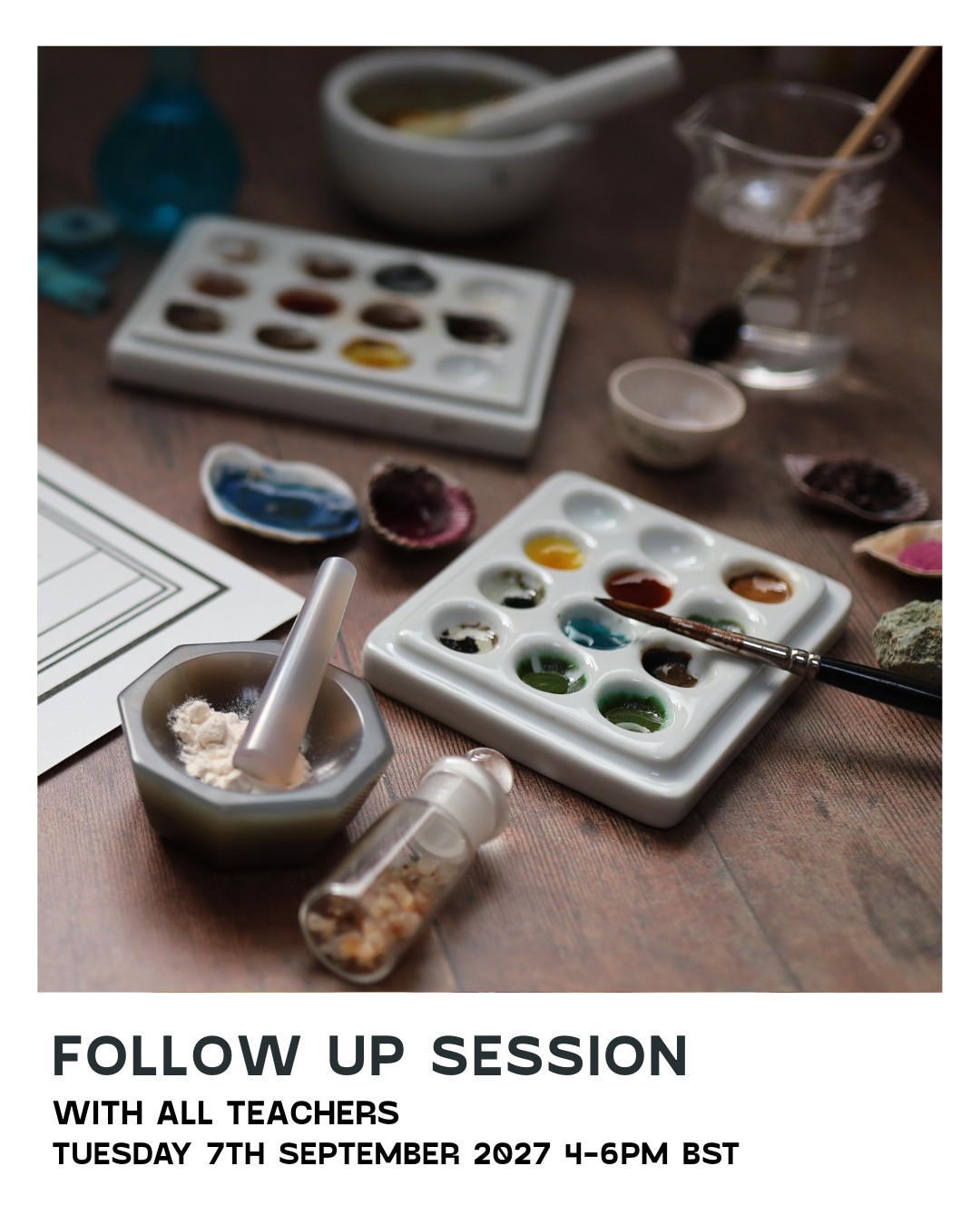
Follow Up Session
A two hour session for all the group members to reflect on their experiences with paint and ink making, share work, and ask questions.
This session is for both Ink and Paint Making Programme Members
Tuesday 7th September 2027, 4-6pm GMT
A two hour session for all the group members to reflect on their experiences with paint and ink making, share work, and ask questions.
This session is for both Ink and Paint Making Programme Members
Tuesday 7th September 2027, 4-6pm GMT
-
Meet the Team
-
![]()
Natalie Stopka
Natalie Stopka is an artist and educator focused on the material history of color and sustainable studio practice. She captures material and elemental interactions in her collaborative, experimental art practice. Her drawings and prints incorporate plant dyes and historical pigments, which provide a seasonally evolving vocabulary of texture and color. Natalie’s freelance studio and dye garden are located in Yonkers, New York. She holds a BFA from the Rhode Island School of Design and MFA from the University of New Mexico, Albuquerque.
-
![]()
Caroline Ross
Caroline Ross is an artist, writer and teacher living by the sea in Bournemouth. Her debut book ‘Found and Ground: A Practical Guide to Making your own Foraged Paints’ was published by Search Press in June 2023. She is writing the follow up about ancient and foraged drawing materials, ‘Drawn From the Wild’ to be published spring 2025. Using what nature provides and repurposing what humans discard are a large part of her practice. After the rooks have feasted on the riverbank, the empty mussel shells become paint palettes. The seasonally moulted flight feathers of local swans and geese become quill pens and brushes. Chalk dug out from their setts by badgers is left in piles in the woods, where she gathers it and take it home to make gouache. Caroline makes paints from foraged earth pigments from around the UK, and art tools and inks from natural, wild, and found materials such as oak galls, rusty nails, elderberries, bay leaves and cherry tree gum. The natural fluctuations of materials and the botanical ink stains or ochre paints forming prepared grounds on paper, all suggest forms with which she works.
-
![]()
Elise Wagner
Elise Wagner is an internationally exhibiting encaustic painter, printmaker, educator, and creator of PrintWax, an innovative encaustic collagraph process that expands the possibilities of wax as a printmaking medium.
Originally from Jersey City, New Jersey, Wagner is based in Astoria, Oregon, where her studio at Pier 11 hovers over the Columbia River. For more than three decades, she has worked with beeswax, resin, pigment, oil, and printmaking processes, developing richly layered surfaces that explore geology, mapping, water, atmospheric phenomena, and the relationship between human experience and the natural world.
Wagner has taught encaustic painting and printmaking nationally and internationally and currently teaches workshops from her Pier 11 studio, which also hosts workshops for visiting and local artists. Her work has been supported by numerous grants and awards, including the Pollock-Krasner Foundation and the Ford Family Foundation.
Her approach to teaching emphasizes understanding your materials from the ground up. By learning to make the medium and colors themselves, students gain greater freedom to experiment, troubleshoot, and develop a palette and visual language that are distinctly their own.
-
![]()
Lucy Mayes
Lucy Mayes is an artist and pigment maker & researcher working in London and Hampshire. Her work as ‘London Pigment’ uses urban waste stream materials to make recycled pigment. Her practice is centred on the use of unusual, surprising or esoteric raw materials to make colour as a way of documenting events or ‘happenings’. Verdigris made from copper wire stripped from burnt-out mopeds, soot and ash from park fires and construction rubble have all been used in her work to make new pigments. Her colour-making practice centres on creating sustainable pigments from anthropocene waste streams. She works in the capacity of pigment/colour consultant and has worked with Neptune Interiors Ltd, Jaguar Land Rover, Royal Cornwall Museum, V&A, Kew Gardens on pigment projects. She previously worked as product developer and pigment specialist at renowned colourman L.Cornelissen & Son where she developed their historical pigment archive. She teaches pigment making at institutions nationally and hopes to re-orientate our connections to colour; through the creation of intimate relationships with matter formed through embodied making.
-
![]()
Carolyn Sweeney
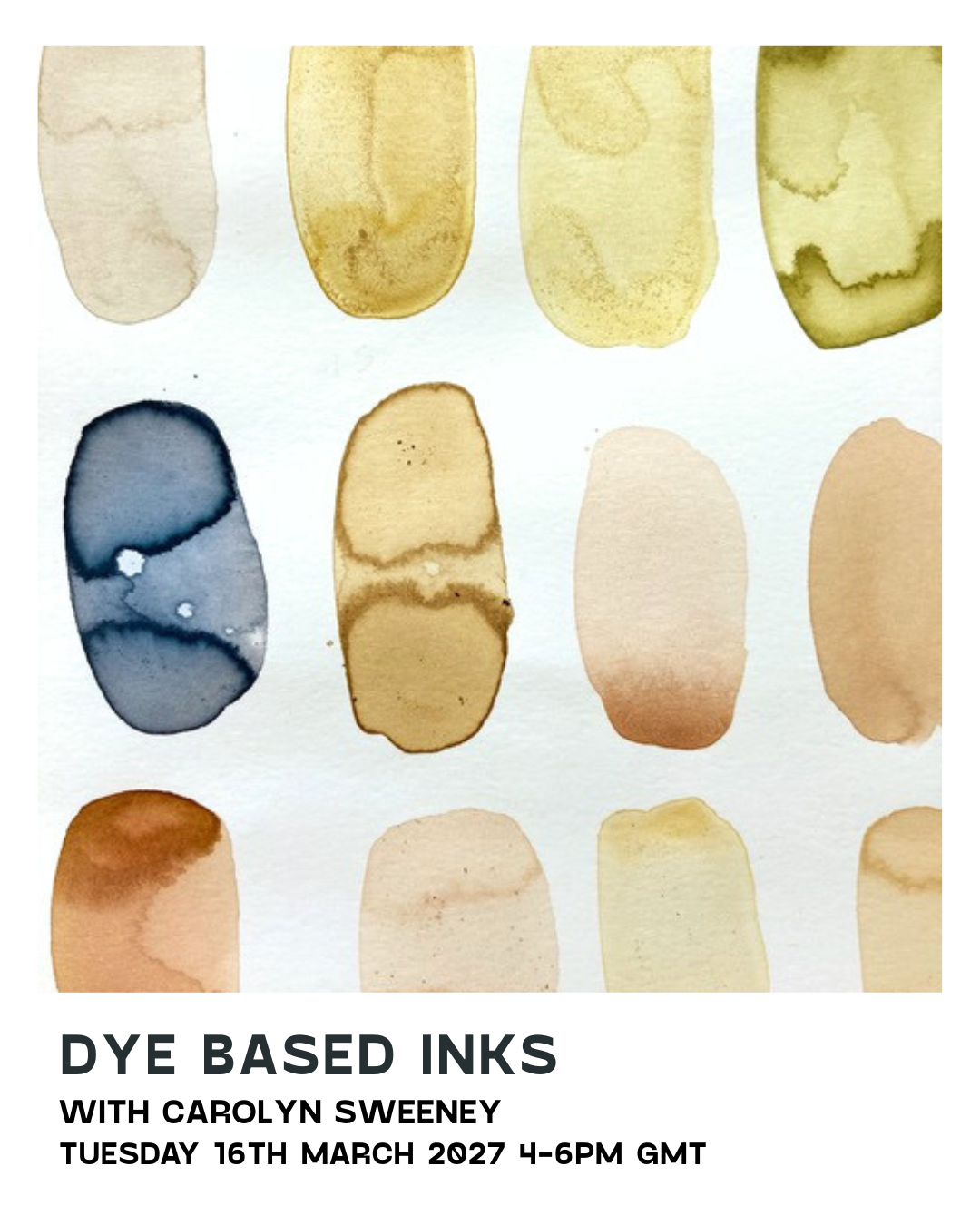
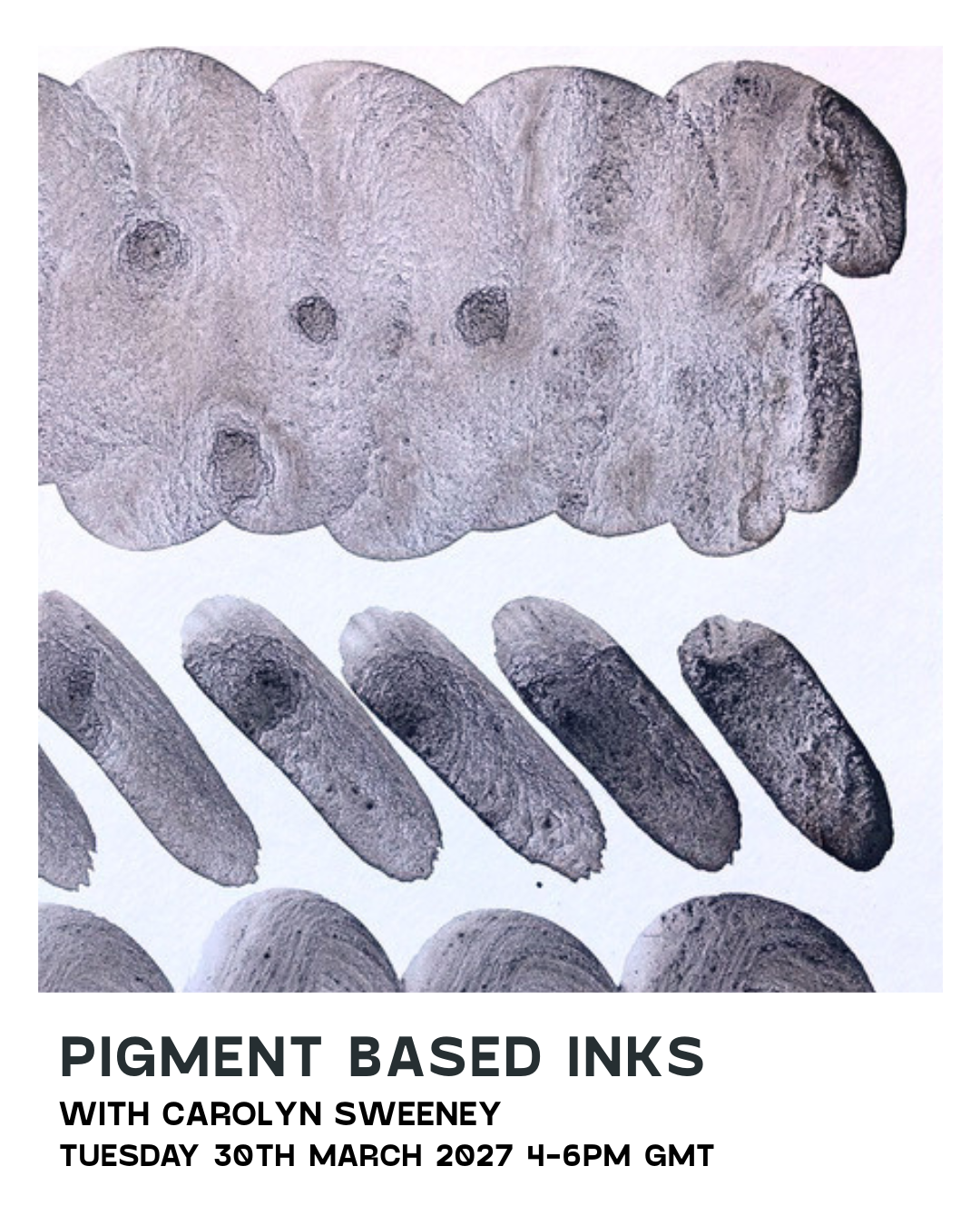
Carolyn Sweeney is an artist and art teacher based in Portland, Oregon. She uses mineral and botanical color on paper, mostly foraged from public roadways and the compost piles of neighbors. Carolyn has a BA in Fine Art from Whitman College and later studied textiles at Oregon College of Art and Craft. It was in the midst learning to weave and spin that Carolyn first encountered natural color, using natural dyes for her textile projects. After having a child she went back to working on paper, and started making botanical inks from her natural dye plants. From there she discovered mineral pigments and making her own watercolor paints. She now uses a variety of handmade artist materials- watercolors, lake pigments, pastels, egg temperas, soy wax crayons, and others that defy neat categories. She is also a beginning papermaker, and paper nerd.
Carolyn’s own art practice seeks to center these natural materials as co-creators, finding inspiration in the relationships between humans, plants, and the very earth beneath our feet.
-
![Greta Desireèe Facchinato in The Garden of Colors, July 2023. Photography by Maryse Aalbers]()
Greta Facchinato
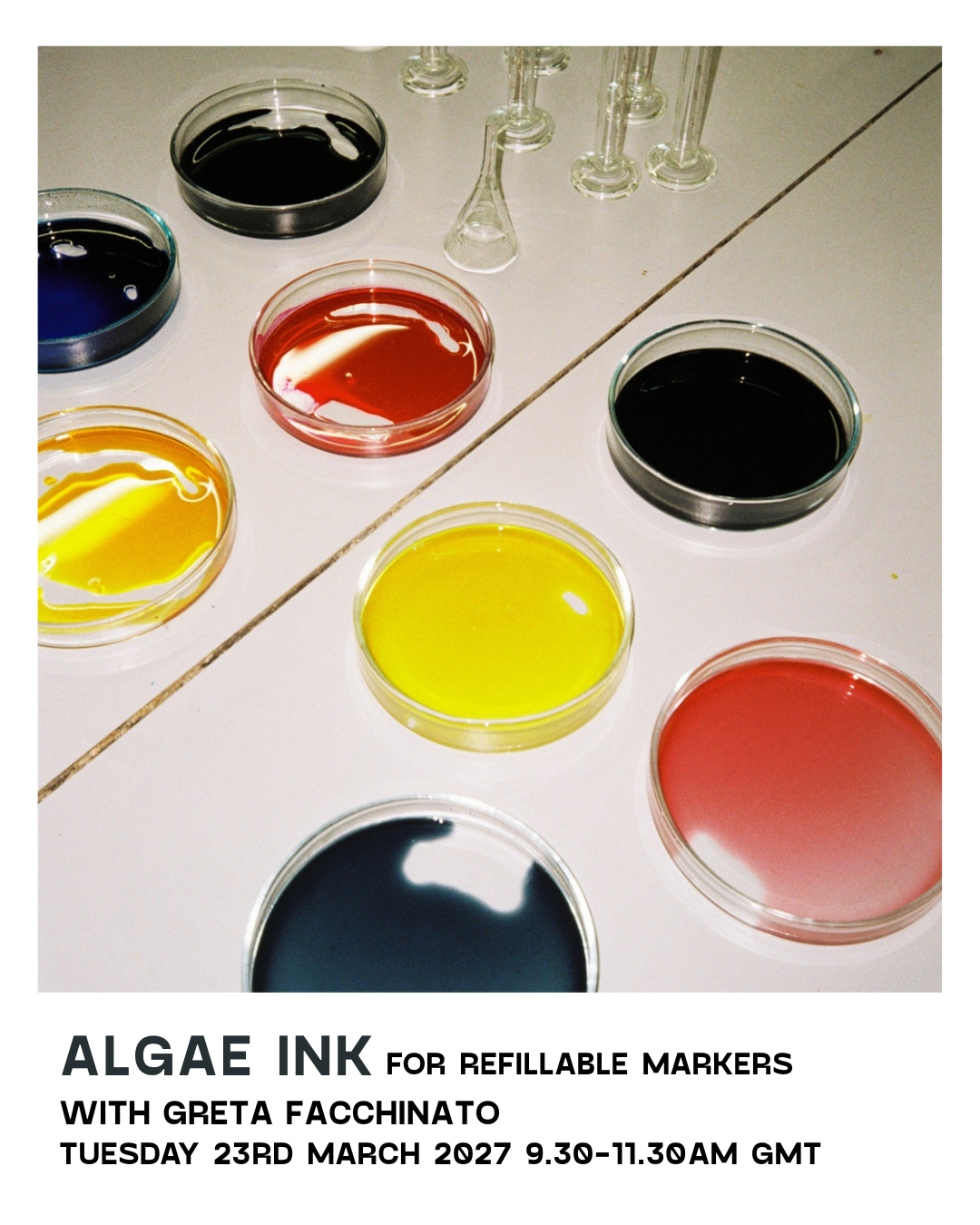
Greta Desirèe Facchinato (IT/LU) is a research-based multidisciplinary artist and designer. She holds a Masters in Artistic Research from KABK Den Haag (NL) and a Batchelors in Visual and Performance Arts with a specialization in Sculpture from Accademia di Belle Arti di Venezia (IT). Through the crossflow of different mediums and the investigation of daily life encounters, gestures, and materials her practice invites us to experience matter from an embodied awareness. She runs a studio focused on research and sustainable education through natural materials, illustration and creative workshops. In 2021 with her project Colour is Alive she researched organic ink making for screen printing. Since then she is been working with the knowledge of color and the interconnection with our environment through the practice of making sustainable ink for printing techniques.
-
![]()
Caroline Nicolay
About Caroline Nicolay
Caroline Nicolay is an archaeologist and heritage interpreter specialising in bringing historic techniques and crafts to life, from paint making in early history to open-fire cooking using clay pots. Her research was focusing on Iron Age wall paintings and evolved towards historic and natural building techniques.
Mainly working with museums and heritage sites, she has been running courses for a number of years, hoping to share widely some techniques that are both thousands of years old and increasingly popular in our 21st century as sustainable arts & building practices. www.pariogallico.com
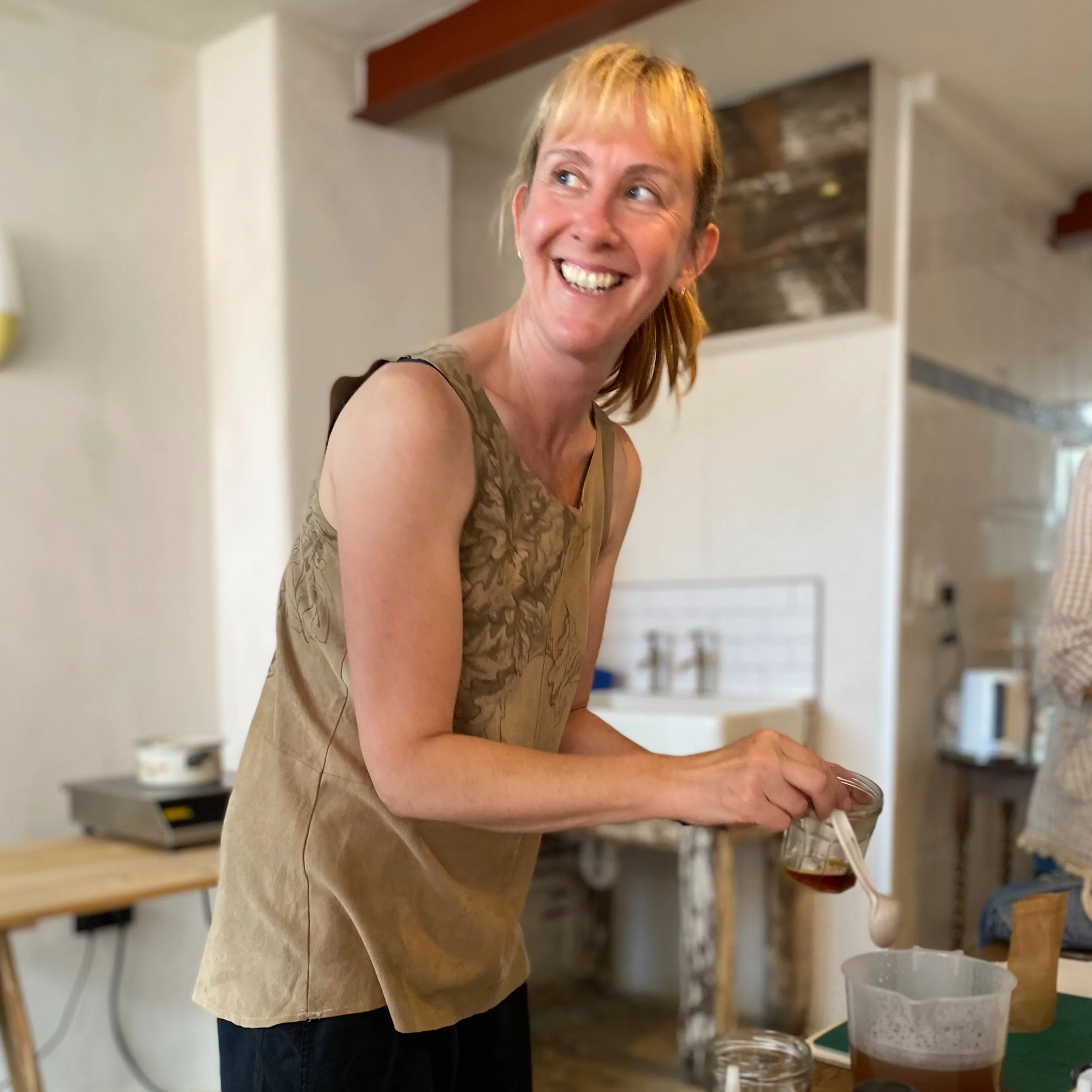
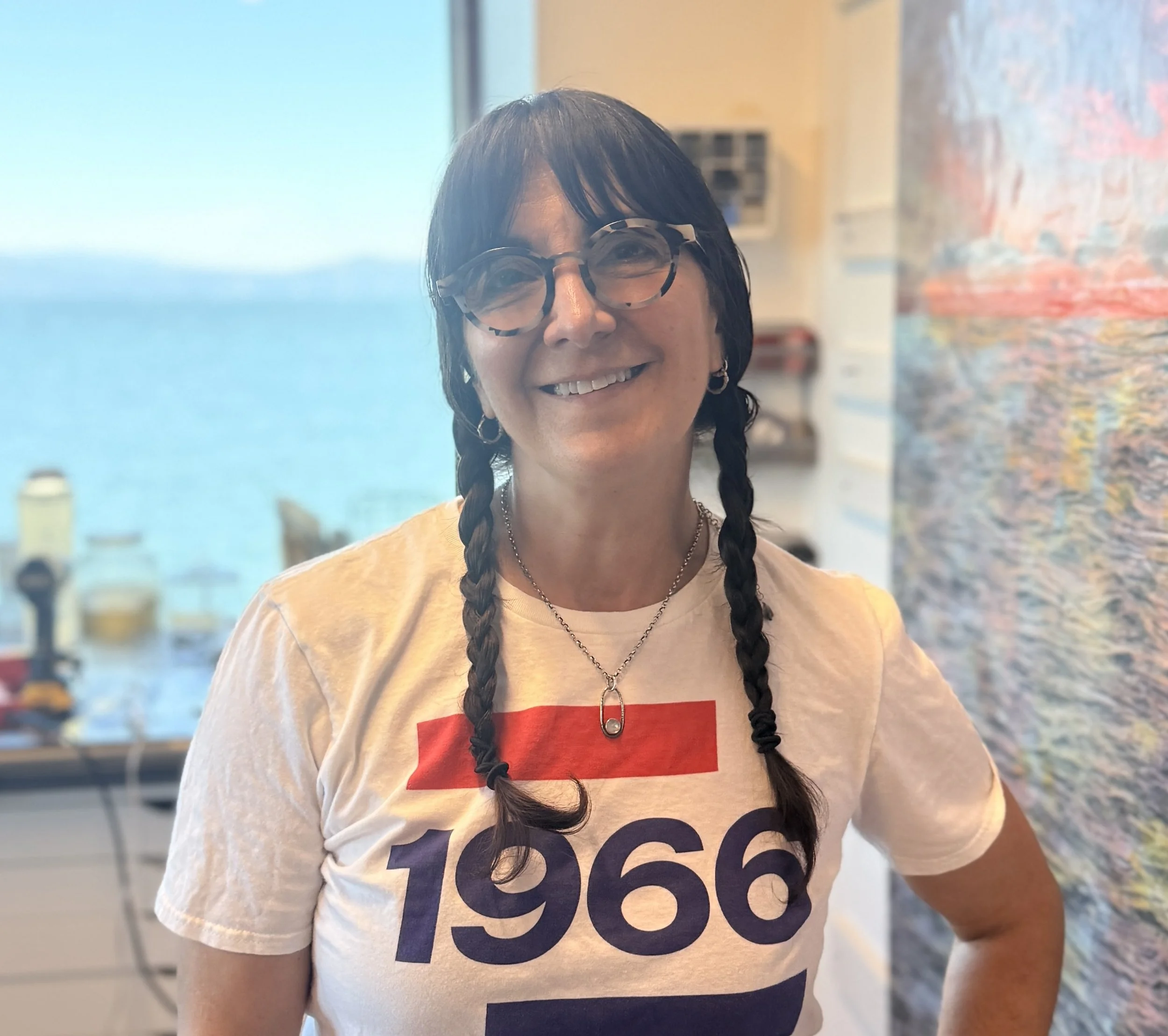
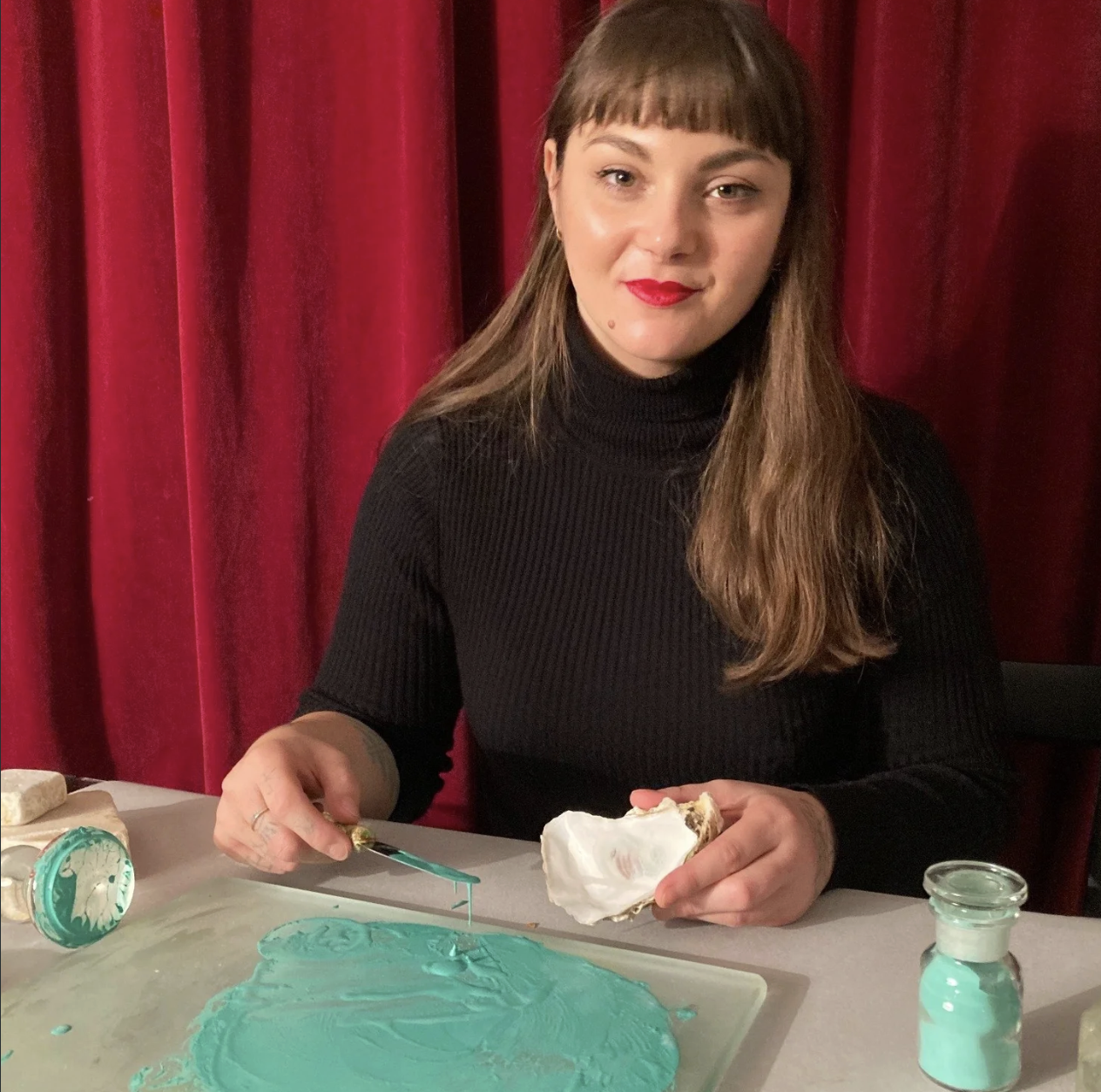
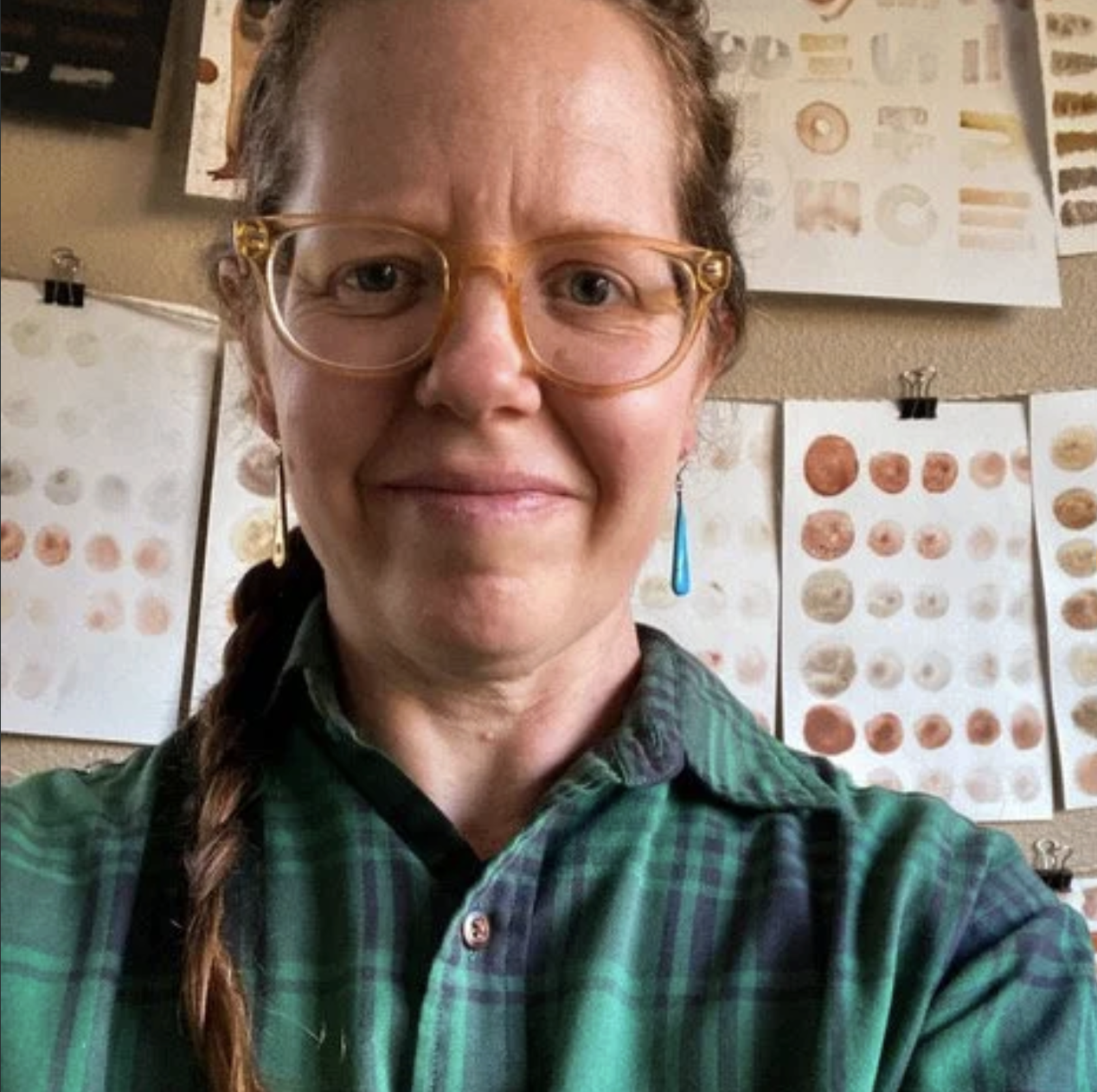
With Natalie Stopka, Caroline Ross, Greta Facchinato, Carolyn Sweeney, Lucy Mayes, Caroline Nicolay & Elise Wagner
An overview of the Making Natural Paints & Inks learning programme. Meet the teachers and learn about the different types of paint they will be covering in their classes.
Introducing swatching. Looking at what inks and paints can be used on which surfaces and covering what equipment and materials you will need to get started.
One 2 hour live session
Join live or watch the recording
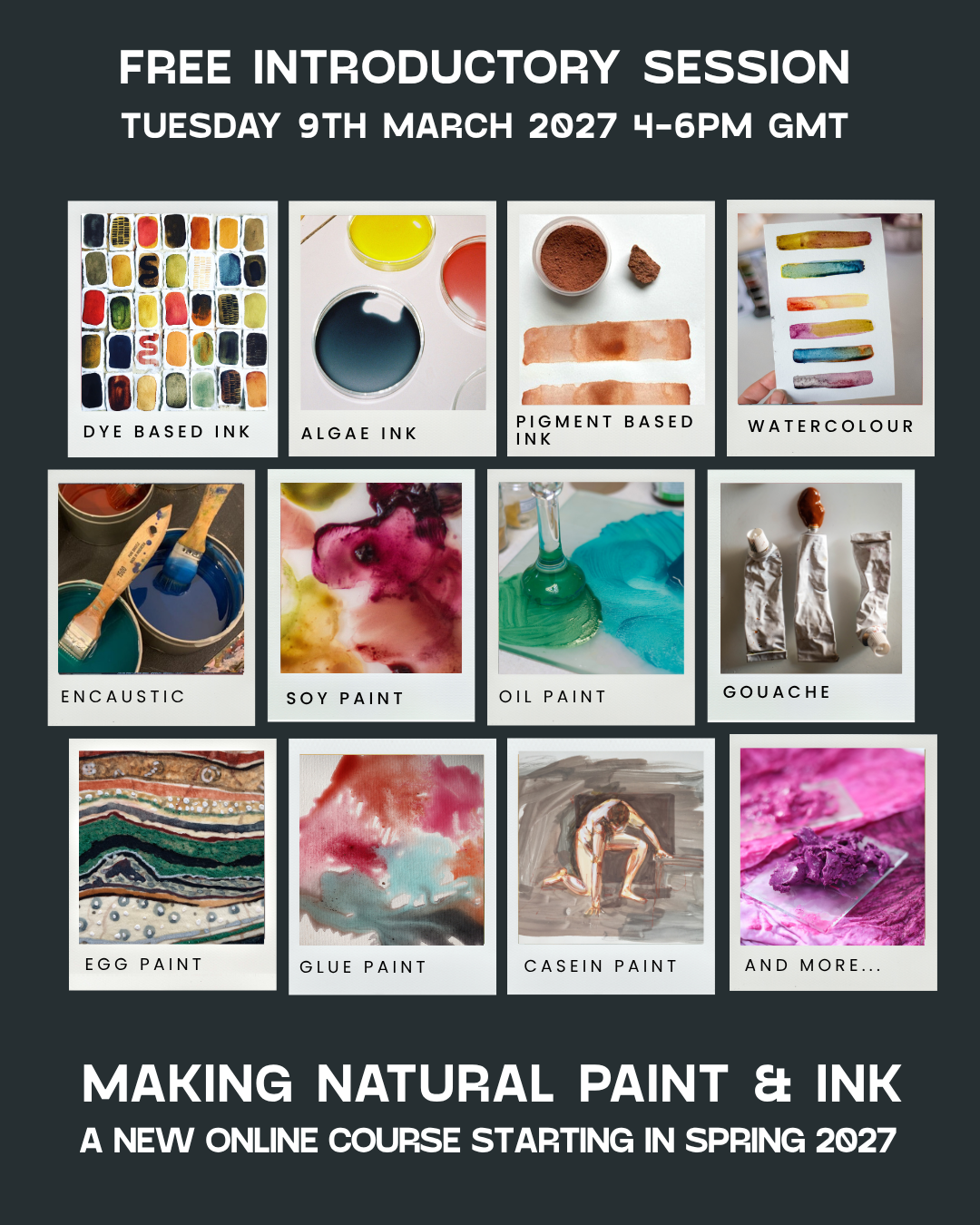
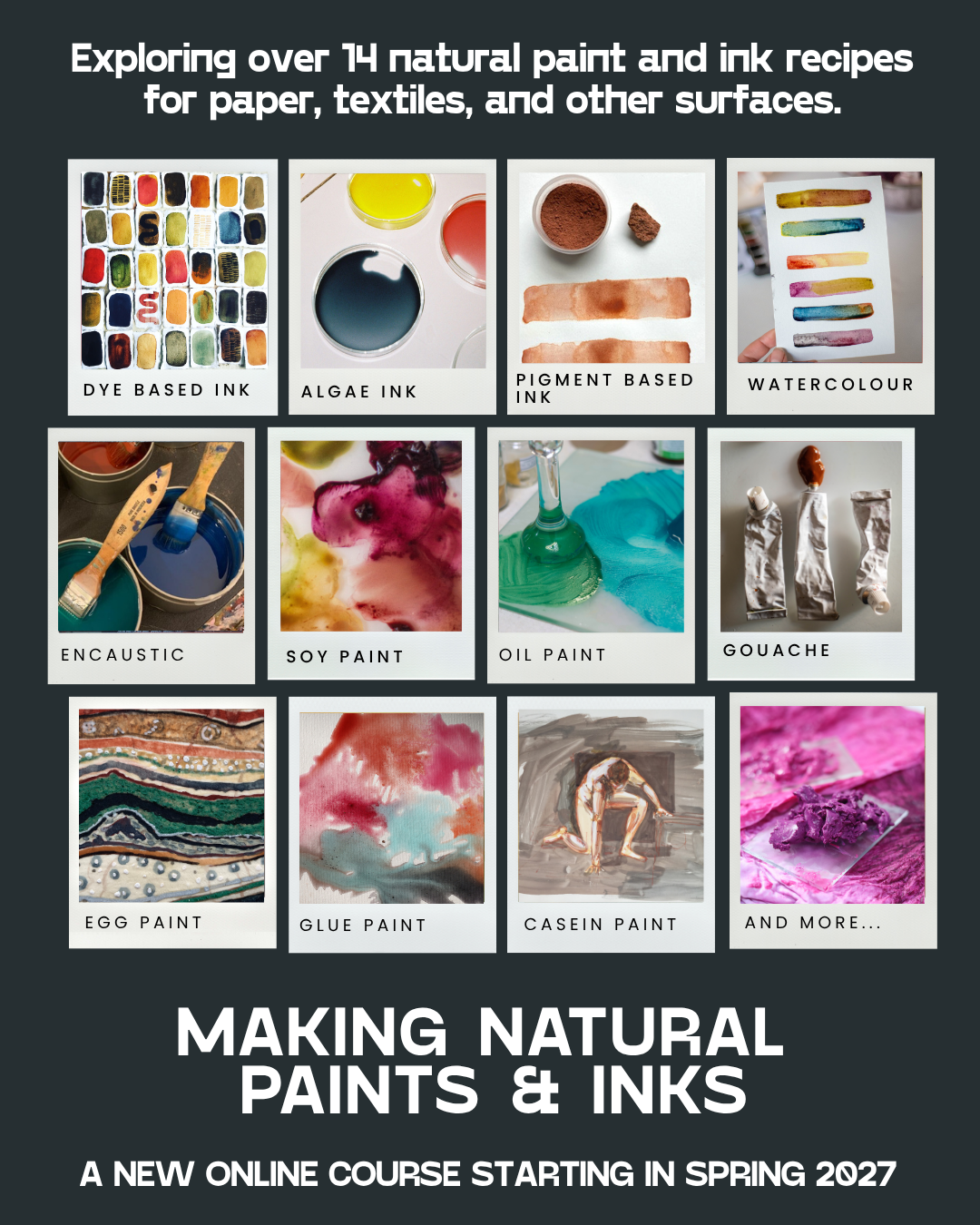
EARLY-BIRD PAYMENT PLANS AVAILABLE UNTIL 31ST DECEMBER 2026
MAKING NATURAL PAINTS - Sessions in Detail
-
Building on the practical and technical knowledge developed throughout the course, this session situates the material culture of painting within a timeline of technological development. It explores how artists have historically selected, prepared, combined and manipulated materials, and how changing technologies, materials and processes have shaped painting practice. Key developments will include animal glues, egg tempera, gum arabic, drying oils, natural resins, oil-resin mixtures, pigments, fillers, extenders and additives, considering painting as an evolving material practice alongside its visual and stylistic history. Throughout the session, we will also consider how historical processes and material knowledge might inform more sustainable contemporary practice, recognising that technologies evolve and that not all materials and methods remain viable or appropriate over time.
The session will consider how the availability, cost, geography and trade of materials influenced artists, workshops and artistic production. We will examine historical approaches to grinding pigments, preparing binders, making mediums and modifying paint, alongside the relationship between material choice, technique, surface and meaning. Particular attention will be given to how changes in materials and technology have influenced the development of painting techniques and the appearance of paintings. We will also consider the interaction of varnish, painting layers, grounds and substrates.
We will examine historical painting techniques through the materials that made them possible, considering how different paint systems were developed and used. This will include tempera and protein-based painting, egg tempera, animal glue paints, gum-based systems, oil painting and resin-oil mediums.
The session will explore the preparation and application of these materials, including their different approaches to layering, translucency, opacity, gloss and surface formation. Oil painting will be explored through drying oils, modified mediums and techniques such as glazing, scumbling and impasto. Natural resins and resin-oil mixtures will be considered for their role in creating gloss, saturation, flow and transparency. Water-based systems such as gum arabic will be examined alongside watercolour and body-colour, with consideration of how different materials can be combined, layered and manipulated, including their potential technical and conservation challenges.
The session will include demonstrations of historical material preparation and painting processes, showing how the physical characteristics of materials influence technique and appearance. A range of historical techniques will be demonstrated, including verdaccio, glazing, scumbling, sgraffito, impasto, wiping and other subtractive or manipulative processes.
-
Imagine the artist’s apprentice of centuries past, stooped over a stone slab, slowly mulling vibrant pigment in sticky binder.
This effort of dispersing color particles in an adhesive binder produces smooth and creamy paint.
In this session, we’ll step into that tradition to focus on translucent watercolor and opaque gouache bound together with natural sap, appropriate for paint pans or tubes.
Learn the essential tools, ingredients, and troubleshooting, as well as the physical motions and rhythms of hands-on paintmaking.
FOR PAPER
-
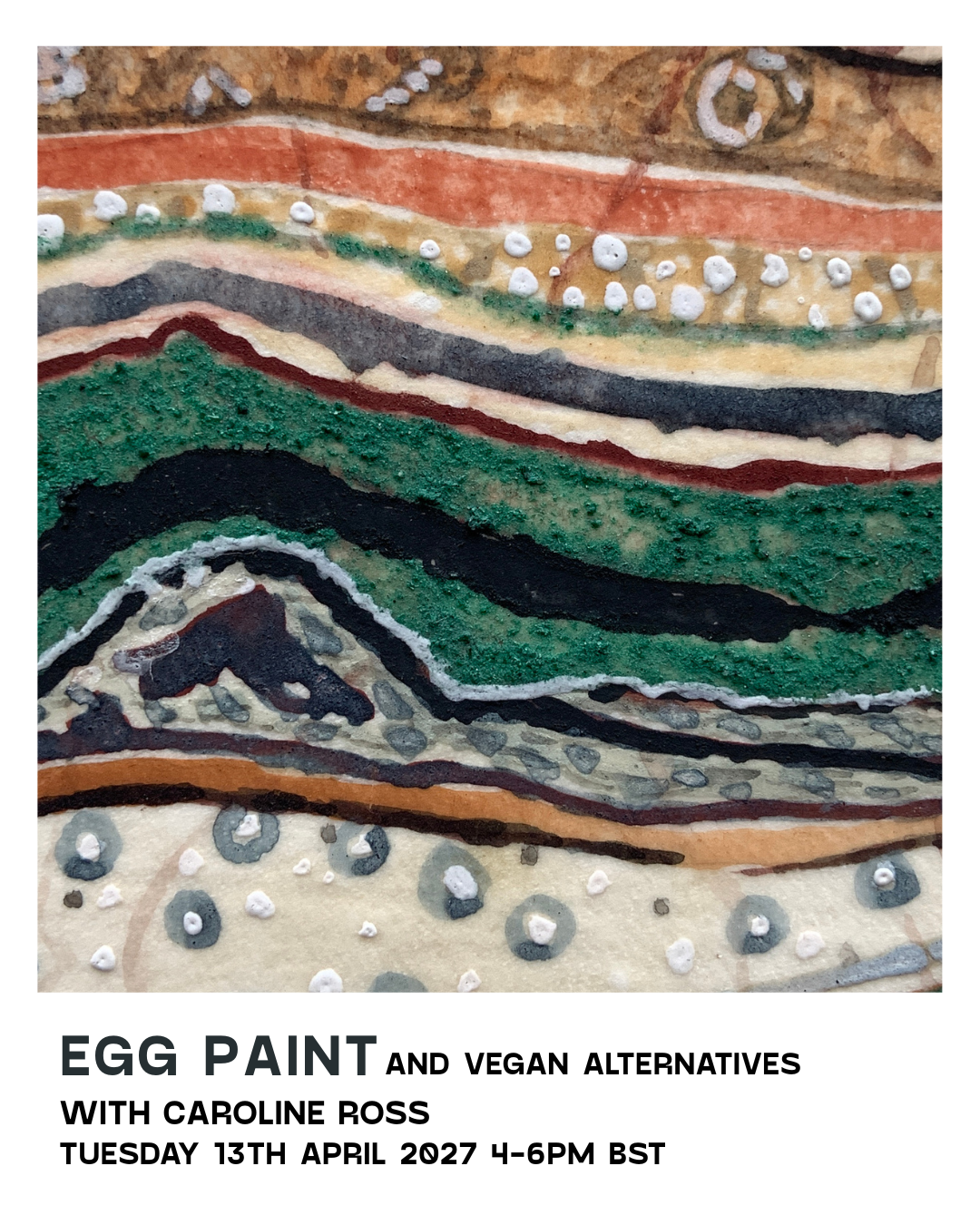
Throughout history, across a huge swathe of the world, people have used the eggs of edible birds as binders for long lasting paints, used on paper, parchment, wood, leather and walls.
Several beautiful, versatile paints can be made from eggs, including tempera from yolks and glair from whites.
In response to requests from friends and students I developed vegan alternatives to these paints in 2016 based on bean cook-water and linseed oil - veglair.
We will look at the traditional and novel uses of both egg and vegan alternatives in this session, learn which surfaces and uses they have most affinity with, and test their finished lustre, opacity, coverage, water and wear resistance, and ability to be diluted or layered.
I'll also be sharing a great way to test multiple paints and mediums of almost any kind to quickly get a feel for new-to-you mediums.
Methods of making and use will be clearly shown and examples of finished work in each medium will be shared. There will be plenty of time for questions.
FOR PAPER, WOOD, CANVAS MOUNTED ON PANEL, GESSO, PREPARED WALLS, PARCHMENT, SUEDE, BUCKSKIN, FABRICS WHICH WILL NOT NEED WASHING (EG WALL HANGING)
-
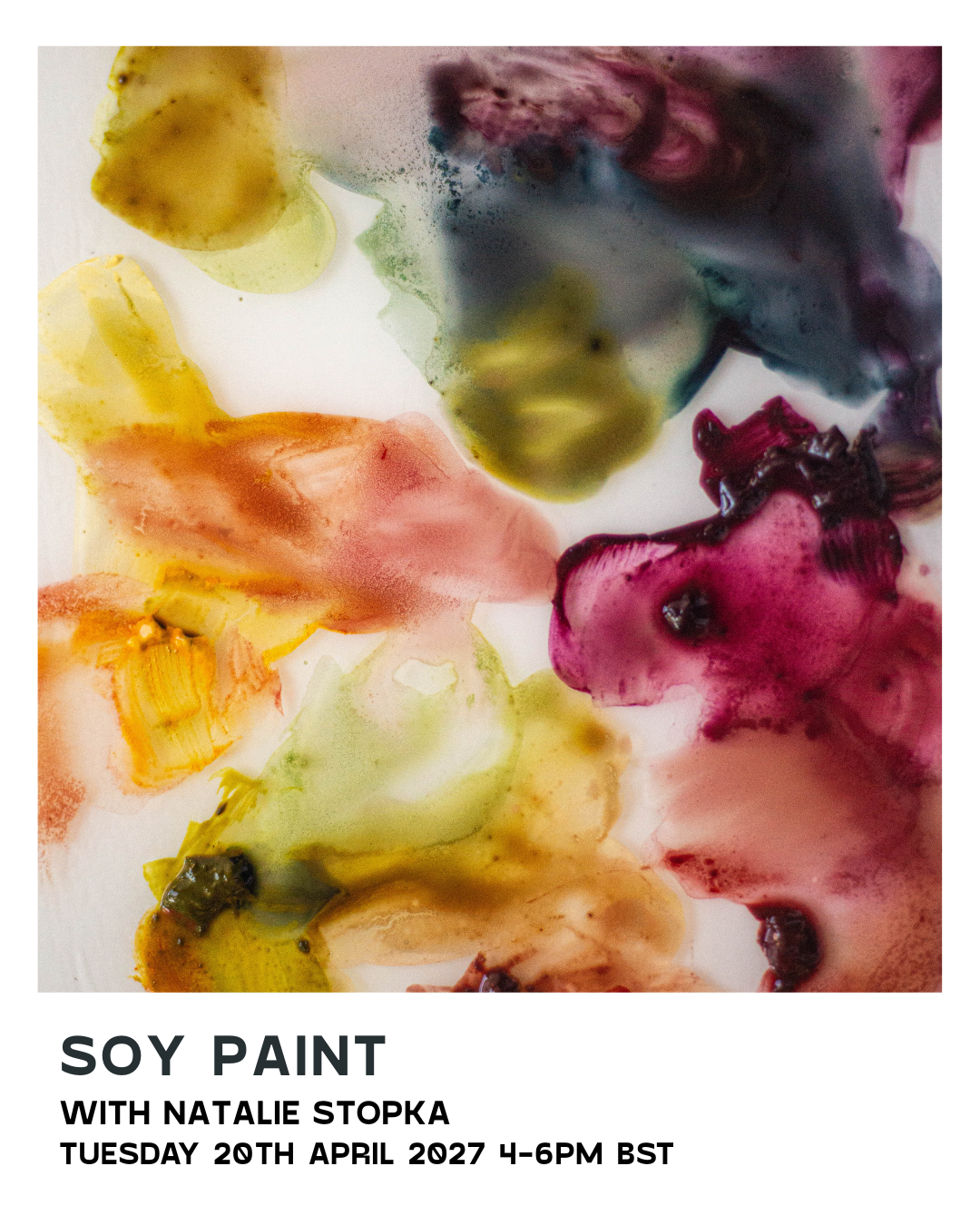
Homemade soya milk is a powerful natural binder and sealant for works on paper, fabric, and leather. It functions as a flexible, water-resistant polymer film that can even withstand laundering and light abrasion. Learn to process fresh soya milk from homegrown or purchased soya beans, then concoct paints using earth pigments, lake pigments, and indigo. This session disentangles the dual chemical and physical roles of soya protein, its working window and shelf life, and the applications best suited to this mighty legume.
FOR PAPER, FABRIC, LEATHER
-
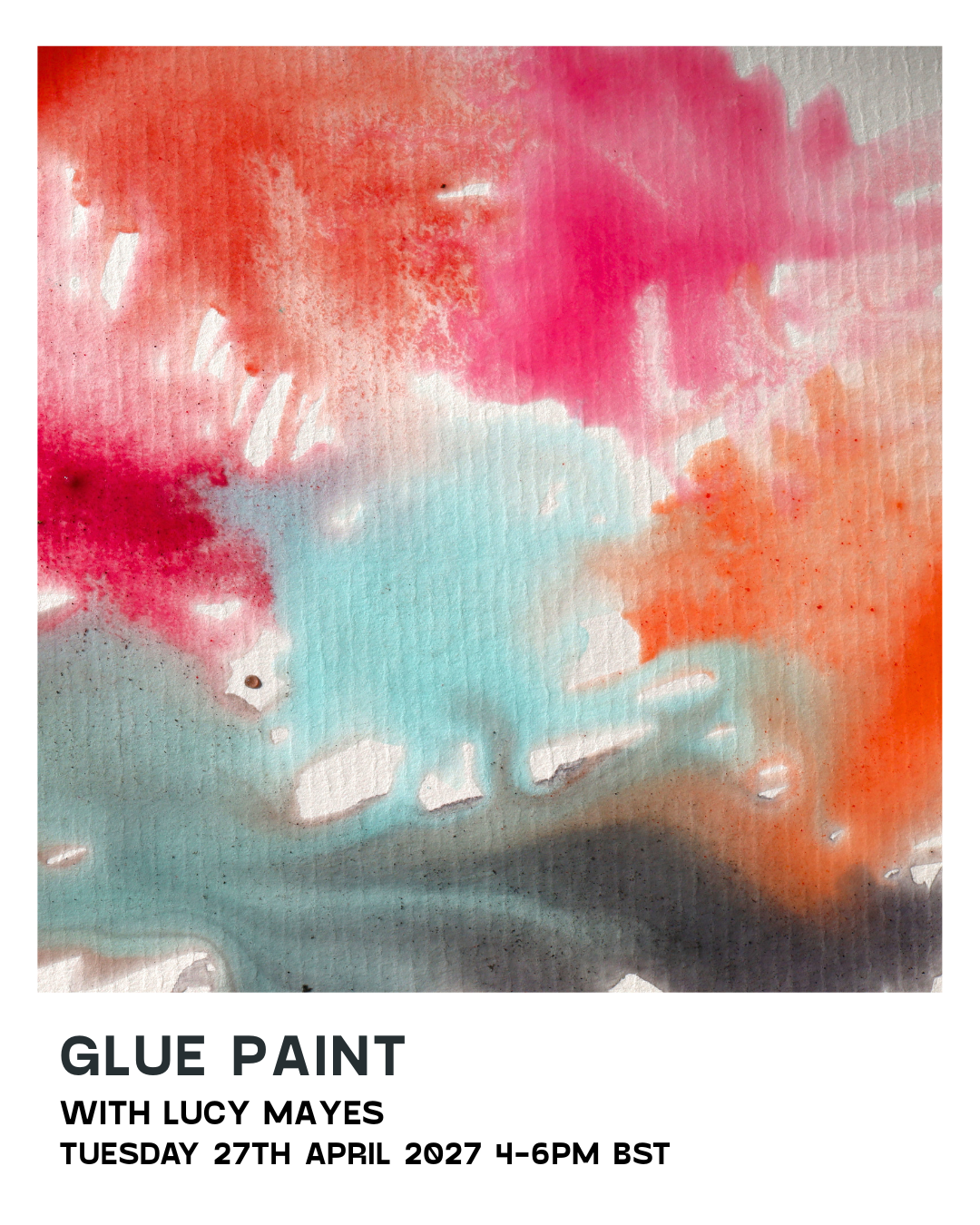
This session explores animal glues as traditional and versatile painting and adhesive materials. We will look at their history, chemistry and preparation, and consider how different types of glue behave when used across a range of substrates and applications.
The session begins with an introduction to the main types of animal glue, including rabbit skin glue, fish glue (seccotine), bovine bone glue, and glue made from parchment clippings. We will consider their historical uses and the differences in their physical and working properties.
We will look at how factors such as strength, viscosity, concentration and preparation affect the behaviour of a glue, and how these qualities can be matched to different substrates and applications. Particular attention will be given to their use in making coloured grounds, inks and paints, exploring how variations in the glue medium can produce different surface qualities and viscosities.
The session will include live demonstrations of preparing commercially available glues, including rabbit skin glue and seccotine, followed by the addition and mixing of pigments and fillers.
We will explore how glue can be transformed into a usable paint medium and look at the practical considerations involved in controlling its consistency, strength and handling properties. Alongside this, we will explore the process of making your own adhesive from bones, following the traditional principles of extraction and preparation. This will provide an insight into how animal glues are produced from their raw materials and how the resulting adhesive can be adapted for different uses.
To finish the session, we will examine the practical qualities of different glue paints through samples, test sheets and live mixing. We will look at Lucy's collection of glue samples and test sheets, comparing the results of different glue types, strengths and mixtures. Together, we will consider characteristics such as flow, viscosity, adhesion, opacity, surface appearance and the interaction between glue, pigment and substrate. You will observe the mixing of materials live during the session, allowing us to observe how small changes in proportion and preparation affect the final paint.
The session aims to combine historical knowledge, material science and hands-on experimentation, giving participants a practical understanding of animal glue paints and the possibilities they offer as both traditional and contemporary materials.
-
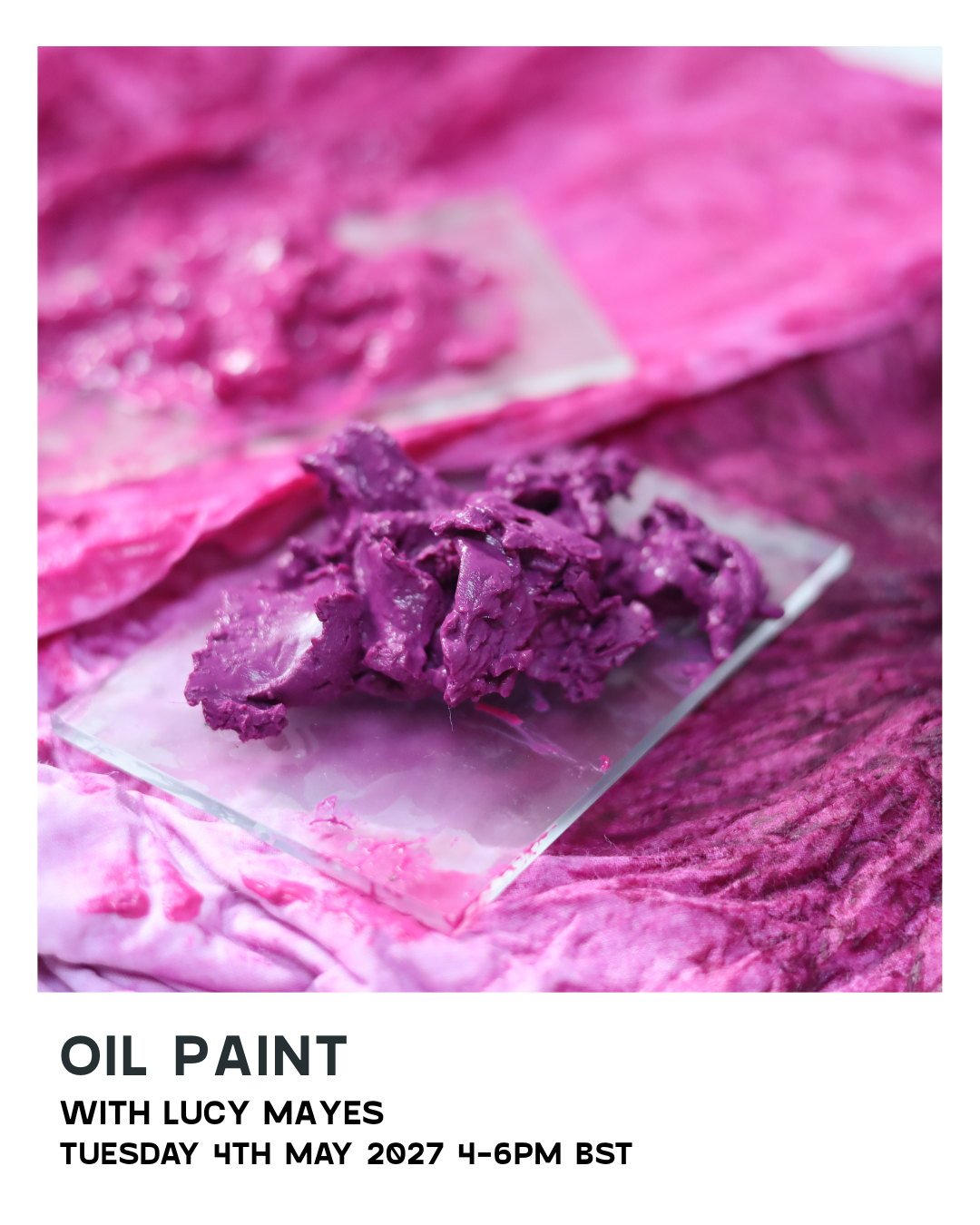
This session explores oil paints and traditional oil-based painting materials, focusing on the preparation, properties and practical use of oil as a paint binder. We will look at the history and material composition of oil paints, considering how different oils, pigments and additives influence the behaviour and appearance of the finished paint.
The session begins with an introduction to the main components of oil paint, including pigments, drying oils and natural resins. We will consider the properties of commonly used drying oils, particularly linseed, walnut & safflower and look at how the relationship between pigment and binder affects the consistency, transparency, gloss, drying time and handling of the paint.
We will explore the process of making paint from dry pigment and oil, looking at how pigments are dispersed and ground into the binder and how the proportions of pigment and oil can be adjusted to create different consistencies and working qualities. Particular attention will be given to the way different pigments absorb oil and how this affects the amount of binder required and the final character of the paint.
The session will include a live demonstration of making oil paint from dry pigments and drying oil, including the processes of mixing, mulling and adjusting the paint to achieve a workable consistency.
We will explore the preparation of resin-oil mixtures using dammar, looking at how the addition of natural resin changes the properties of an oil medium. We will consider the historical use of dammar in painting and examine how resin can affect qualities such as gloss, flow, transparency, viscosity and drying. The demonstration will also consider the distinction between resin-containing painting media and varnishes, and the reasons why resin-oil mixtures need to be considered carefully in relation to the long-term stability of a painting.
Alongside this, we will explore emulsions made using gum arabic, looking at the interaction between aqueous and oily components and the role of gum arabic as a traditional water-soluble binder. We will examine how an emulsion can combine some of the properties of different painting systems and consider how changes in proportion, mixing and preparation affect the resulting material.
To finish the session, we will examine the practical qualities of the different materials through samples, test sheets and live mixing. We will compare freshly made oil paints with resin-oil mixtures and gum arabic emulsions, looking at how each material behaves during application and as it begins to dry.
Together, we will consider characteristics such as flow, viscosity, transparency, opacity, gloss, drying behaviour, surface appearance and the interaction between binder, pigment and substrate. We will observe the mixing of materials live during the session, allowing us to see how relatively small changes in the proportions of pigment, oil, resin and gum can produce significant differences in the final paint.
The session aims to combine historical knowledge, material science and hands-on experimentation, giving participants a practical understanding of how oil paints and related traditional painting materials are made. Through the preparation and testing of oil paints, dammar-oil mixtures and gum arabic emulsions, participants will gain an insight into the possibilities and limitations of these materials as both traditional and contemporary painting media.
-
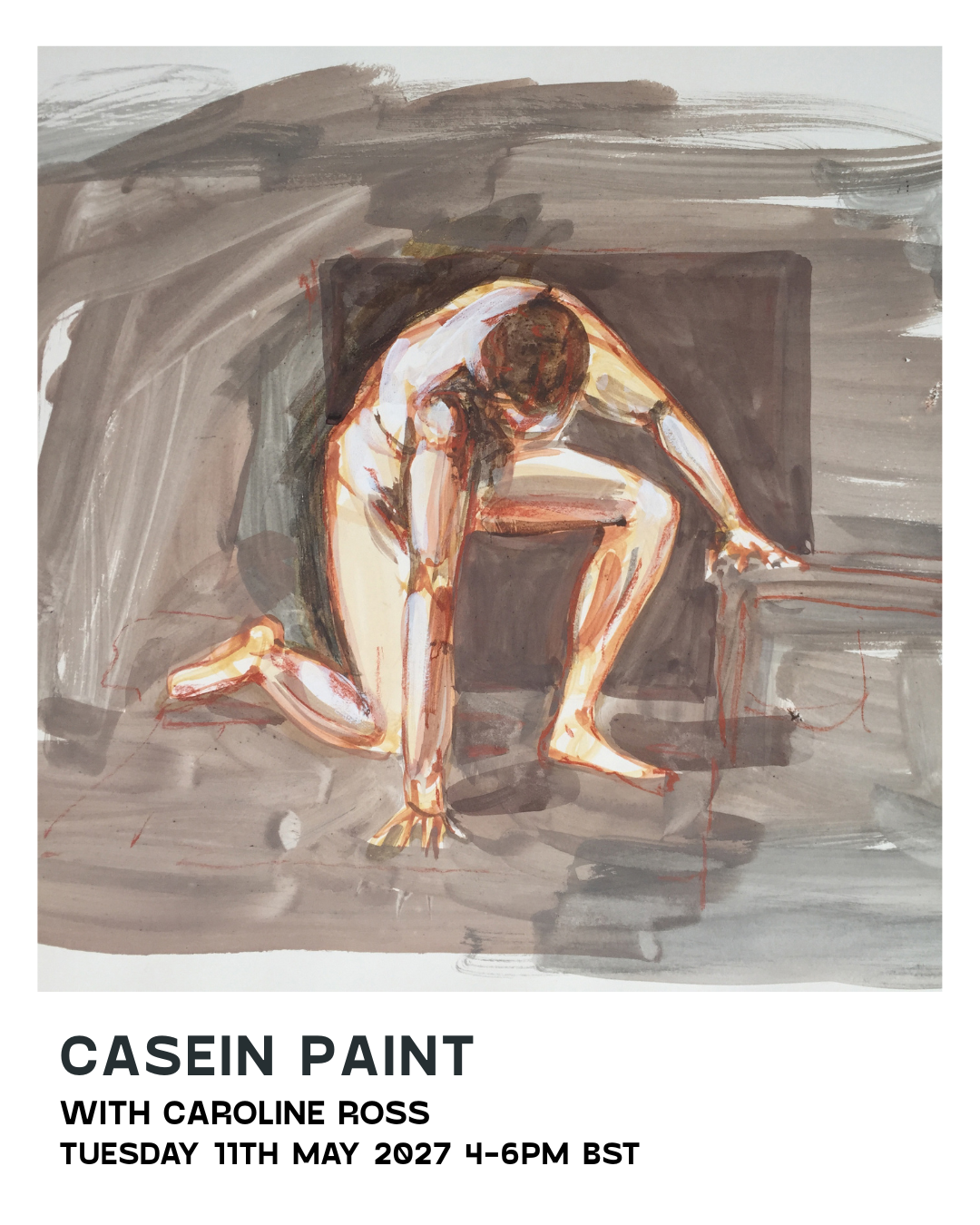
Casein (milk protein) paints have been loved through history for being versatile, cheap to make in quantity, long last and hard-wearing. They make bright, vibrant paints, suitable for sketching, murals, painting on paper, plaster, wood and other surfaces.
I feel this oft overlooked natural paint method is due for a revival. We will cover how to make the medium both from curdling organic skimmed milk ourselves, and from ready-made cottage cheese (soft curd cheese) and household ammonia.
Out of interest, we will look at historical sources of ammonia, such as urine and other household wastes, although you can explore those methods in your own gardens and sheds at a future time! Examples of finished pieces and uses of casein paint will be shared.
FOR WALLS, PAPER, CARD, WOOD, GESSO, PLASTER, SOME LEATHERS AND CANVAS
-
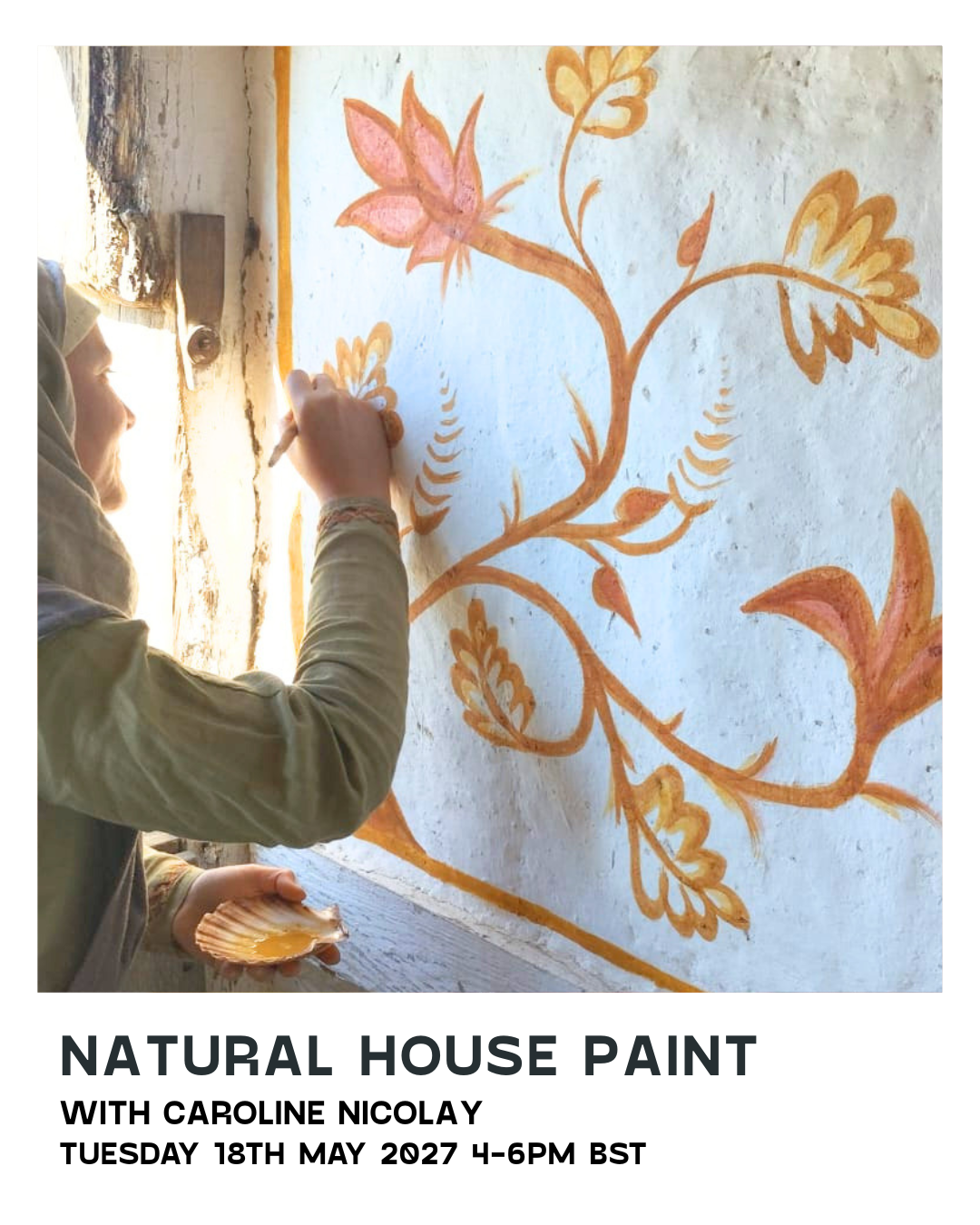
Details Coming Soon
-
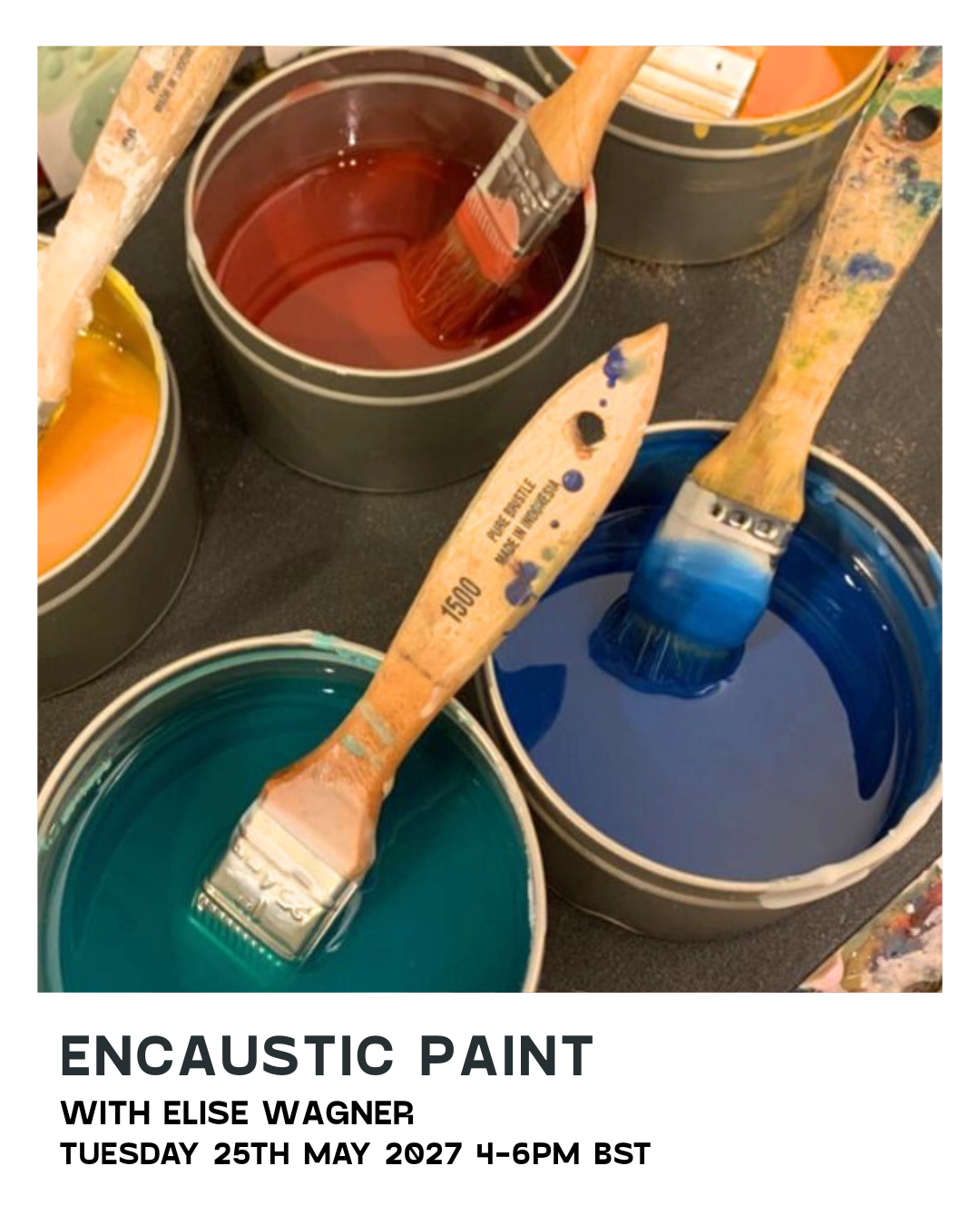
Color behaves differently in wax. Pigments that may appear dense, flat, or familiar in another medium can become luminous, translucent, earthy, or unexpectedly intense when suspended in encaustic.
In this online workshop, artist and educator Elise Wagner takes students through the process from the very beginning: making encaustic medium—the foundation of encaustic paint—and then transforming that medium into color using dry artist pigments.
We’ll begin by making traditional encaustic medium from refined beeswax and damar resin, discussing proportions, heating and filtering, studio setup, and safe working practices. Understanding the medium itself gives students greater control over the consistency, transparency, and working qualities of the colors they make.
From there, we’ll work with dry artist pigments, with an emphasis on the extraordinary range of colors available from Dolci Colori and L. Cornelissen & Son. We’ll look closely at the individual character of pigments—their strength, transparency, opacity, undertones, and how they change when introduced to molten wax.
Elise will demonstrate how she makes small batches of encaustic paint, determines pigment-to-medium ratios, creates tints and related colors, mixes complex neutrals, and develops a personal palette.
Rather than simply following formulas, students will learn to observe what each pigment is doing. Some disperse easily; others have their own particular personalities. Learning those differences is part of developing an intuitive relationship with color and materials.
The workshop will include demonstrations, discussion, color-mixing exercises, and time to experiment. Students will leave with their own encaustic medium, handmade encaustic colors, and a series of color samples and reference swatches that can continue to grow into a personal color library.
-
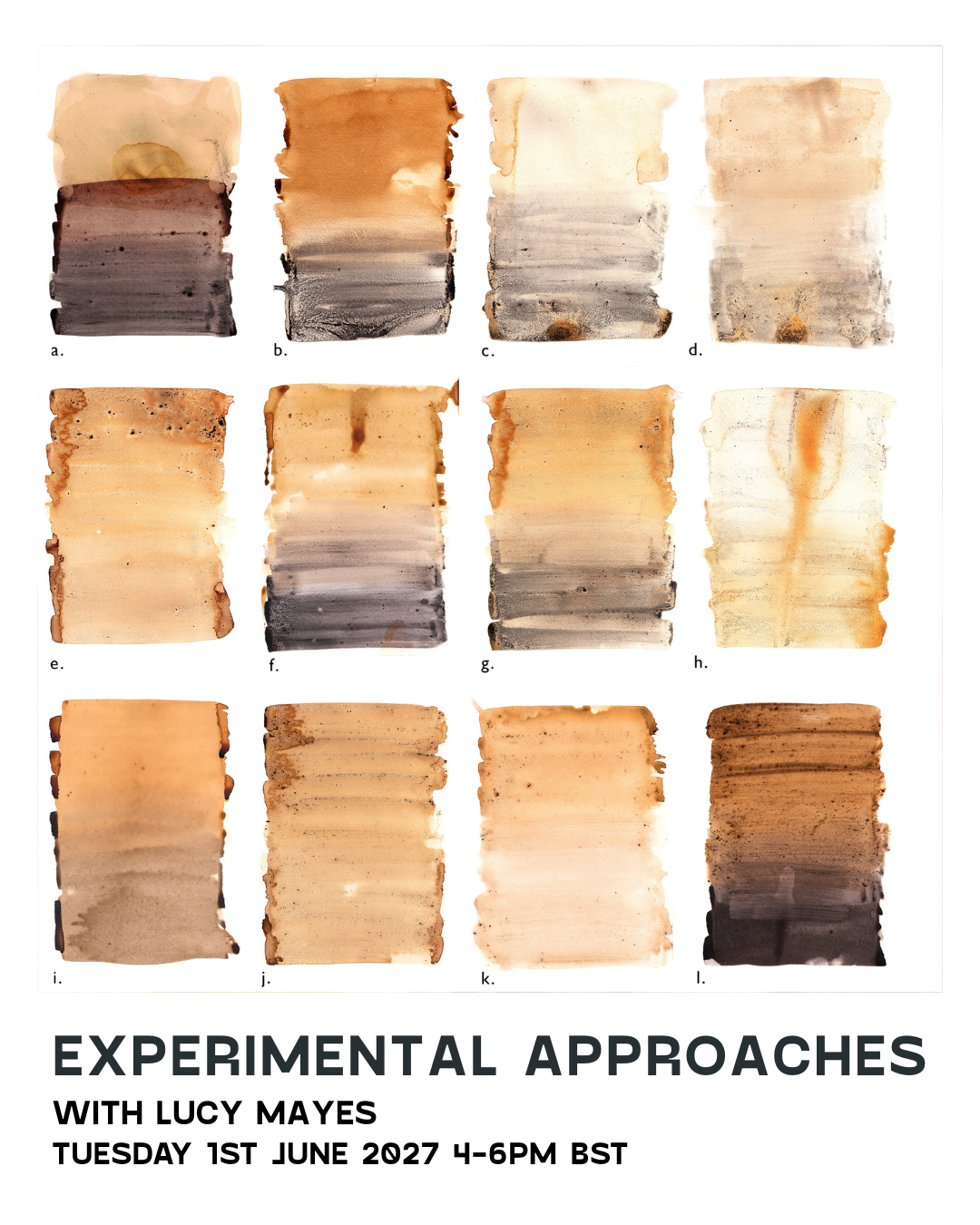
This session explores experimental approaches to the paint materials covered throughout the course, considering how animal glue paints, oil paints, resin-oil mixes and gum arabic emulsions, egg & vegan paint alternatives can be combined, layered and manipulated.
We will look at how these different paint systems work together and how their individual properties can be used to create depth, texture, transparency and contrasting surface qualities. We will also consider the conservation and longevity of different combinations, including issues of adhesion, flexibility, solubility and ageing.
Live Demonstration & Practical Application
The session will include live demonstrations of combining and layering the different paint systems, exploring how changes in application, consistency and sequence affect the final surface.
We will experiment with additives and fillers to create specific finishes and paint effects, alongside different tools and methods of application. Brushes, palette knives, scrapers, rags and other tools will be used to explore scraping, dragging, wiping, scumbling and other forms of manipulation.
Traditional techniques including verdaccio, glazing, sgraffito and impasto will provide a starting point for experimentation. We will consider how these techniques can be adapted and combined across different paint systems to push their visual and material possibilities.
Testing Paint Effects & Techniques
To finish the session, we will develop a series of experimental samples combining different paints, layers, finishes, additives, fillers and application methods.We will examine qualities including transparency, opacity, gloss, texture, flow and surface variation, considering how these can be deliberately controlled to produce specific effects.
The session aims to bring together the technical knowledge developed throughout the course and encourage a more experimental and virtuoso approach to painting, using traditional techniques as a foundation for developing new combinations, surfaces and visual effects while remaining aware of their conservation implications.