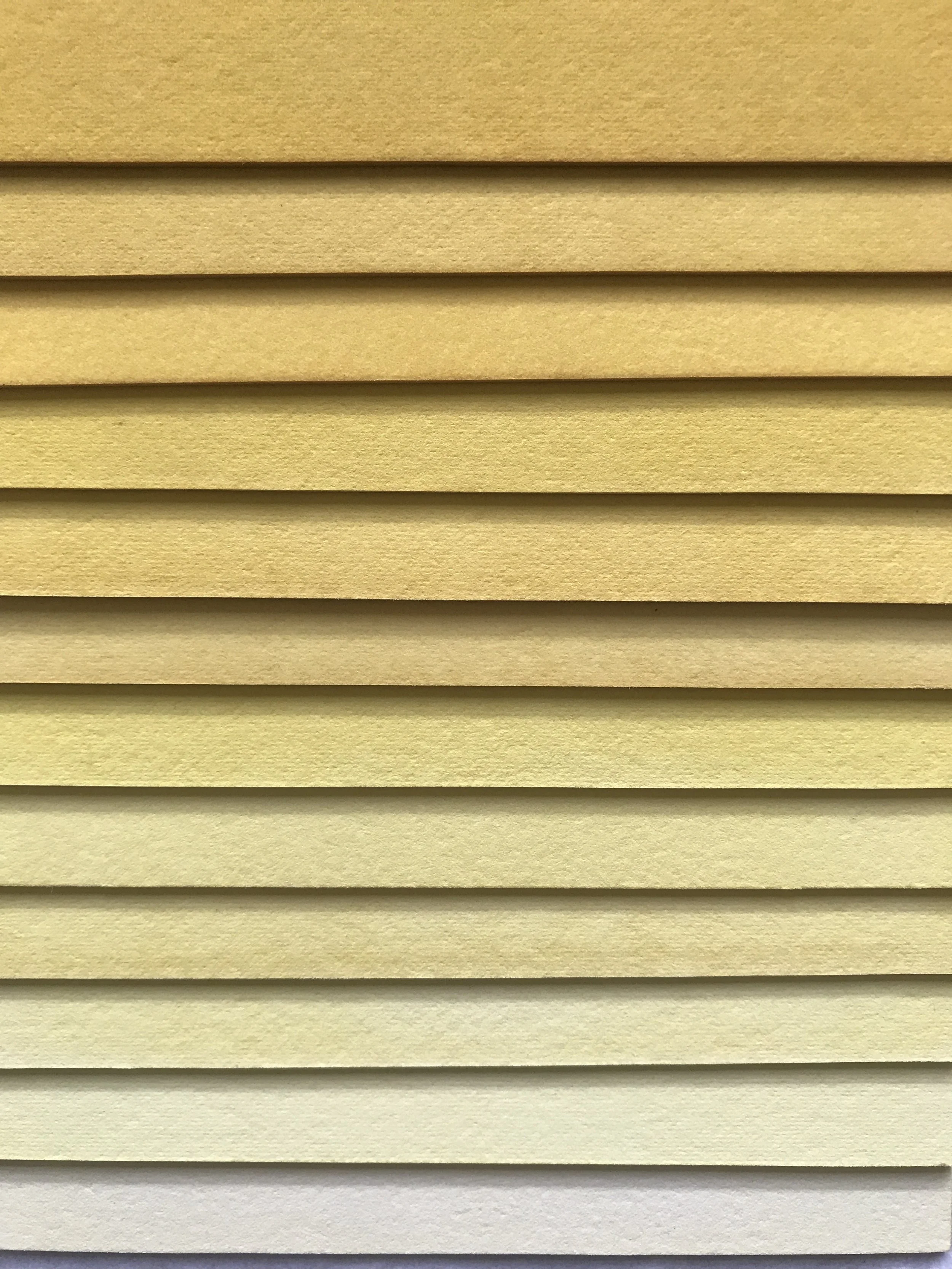
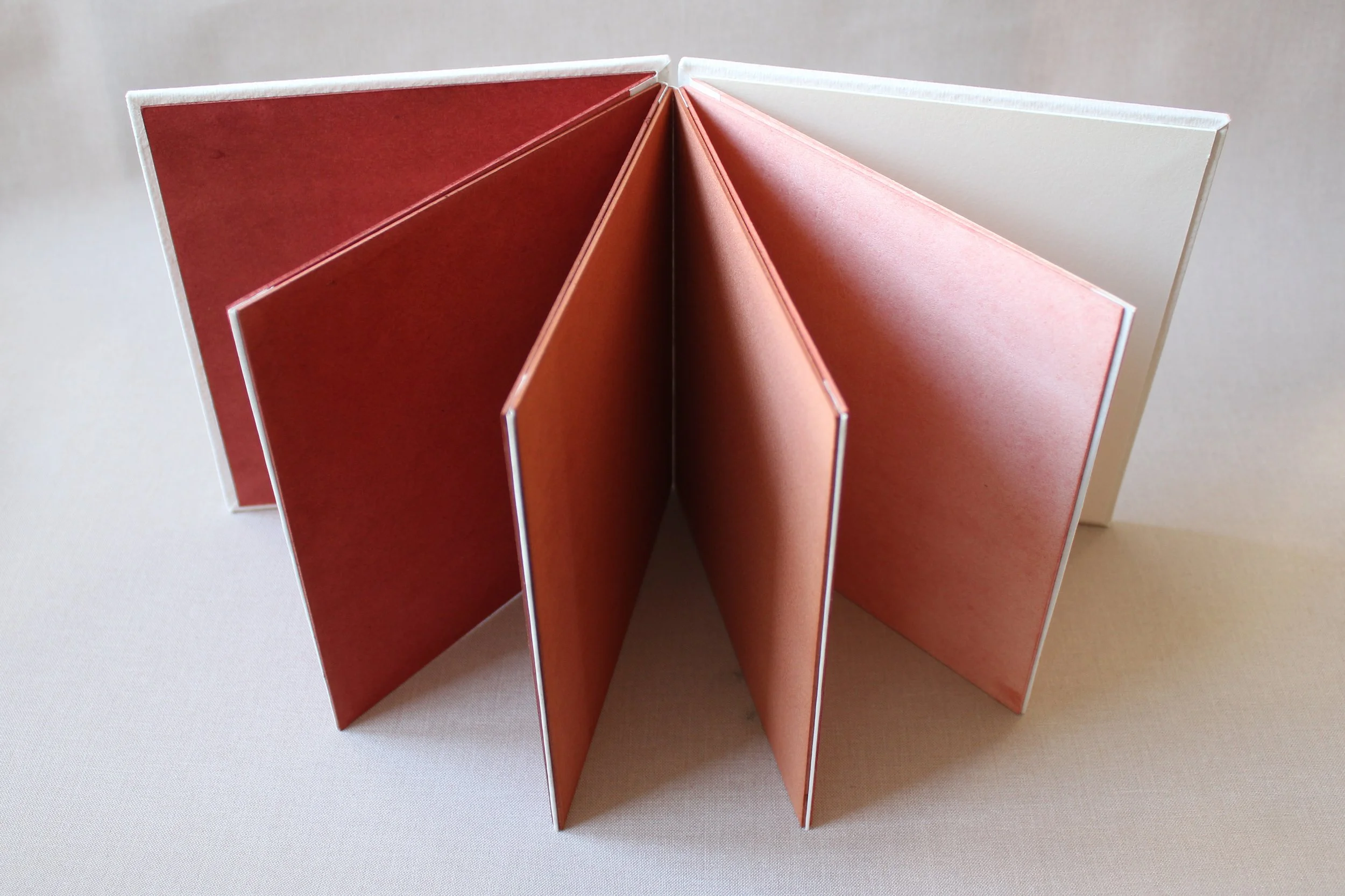
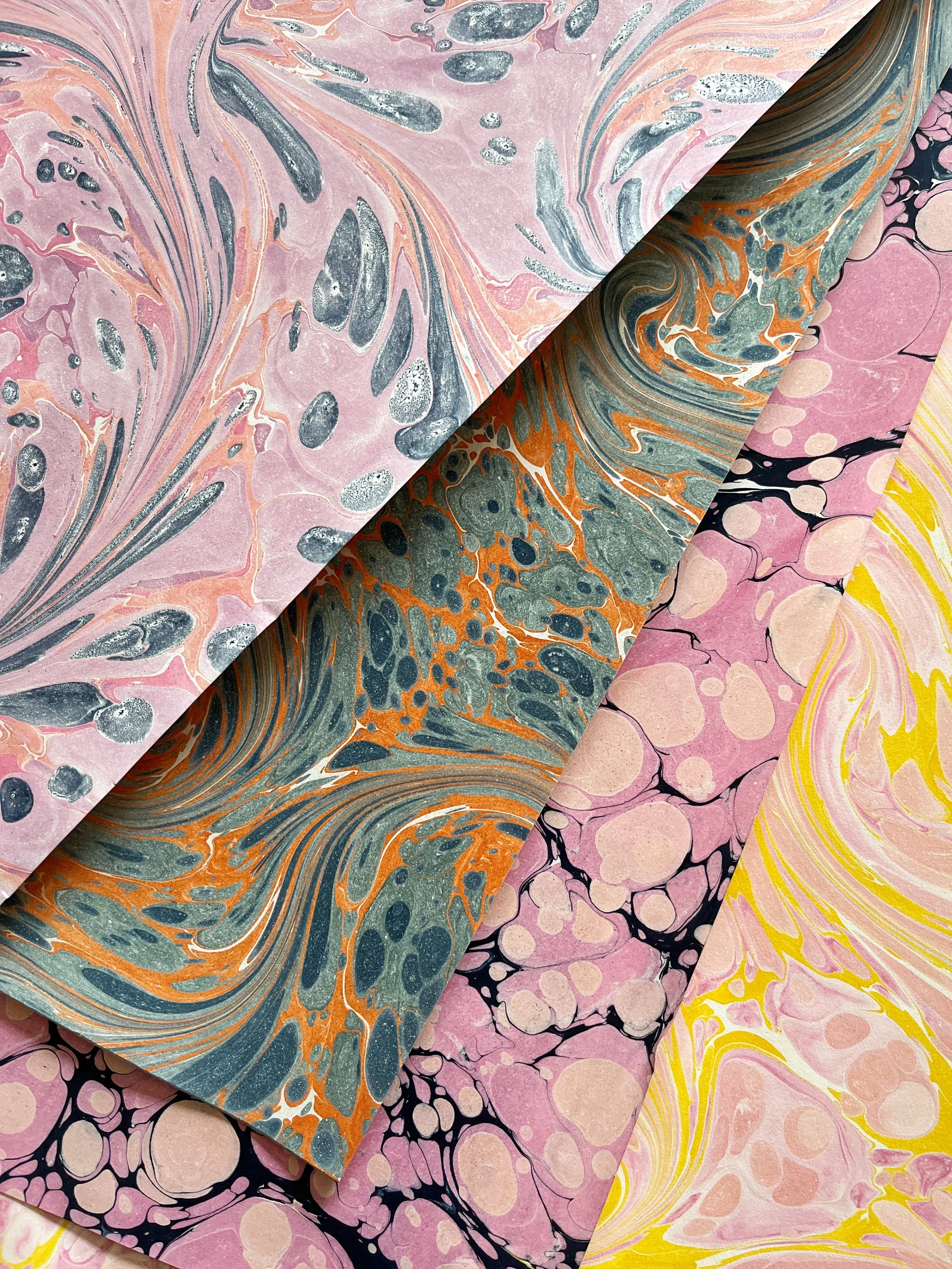
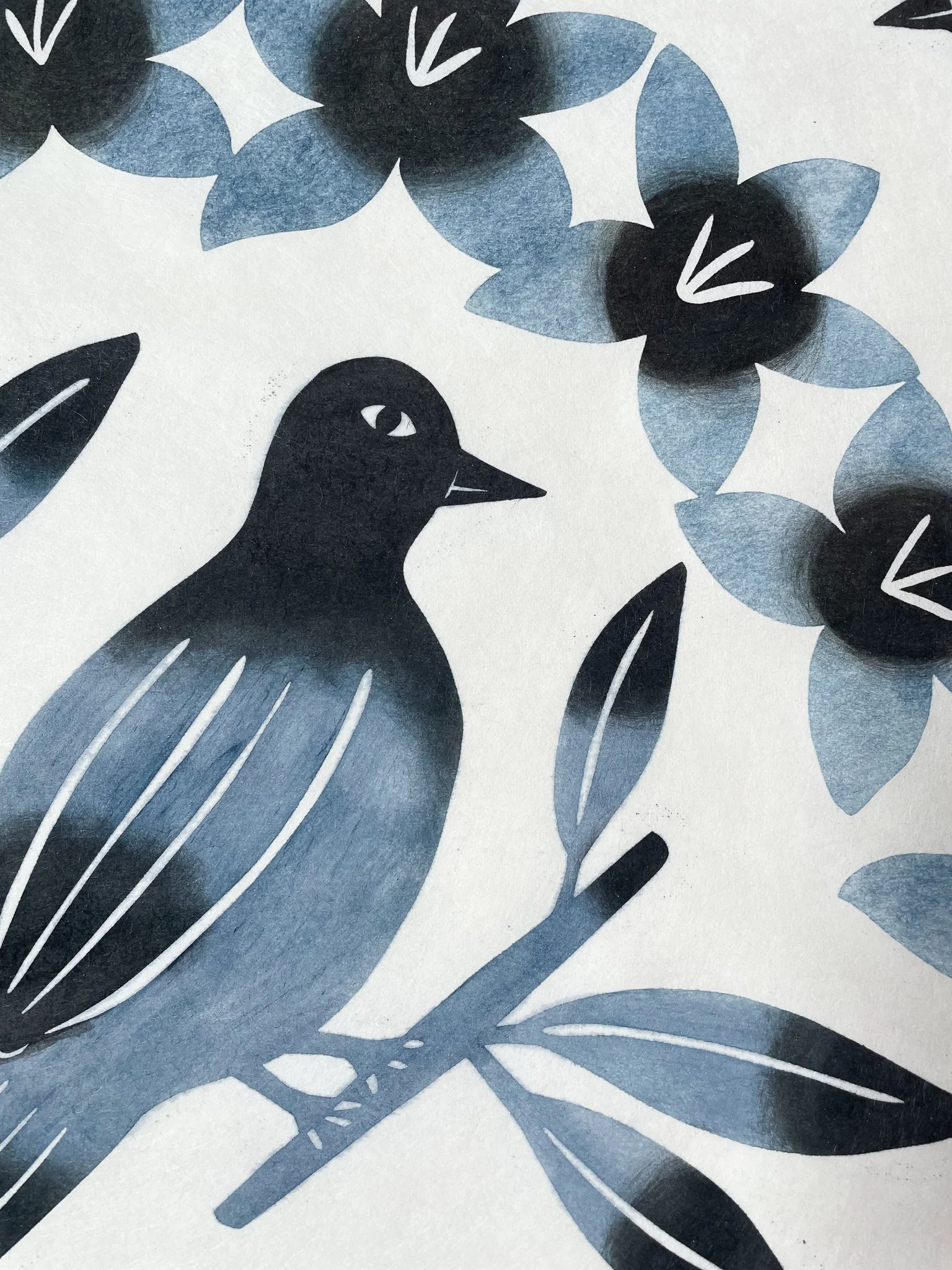
From May 2027 to May 2028 | Join individual classes, or the whole series
Works On Paper
Natural Paper Arts
Hand Paper Making, Thread Making, Paper Dyeing, Printmaking, and Book Arts
Working with natural and locally available materials
All the skills you need to make exquisite entirely handmade artist books
We are inspired to look at all of the elements that can come together to make an artist book, and how we can approach making each element from scratch working with with natural colour, as well as natural, locally available and reclaimed materials.
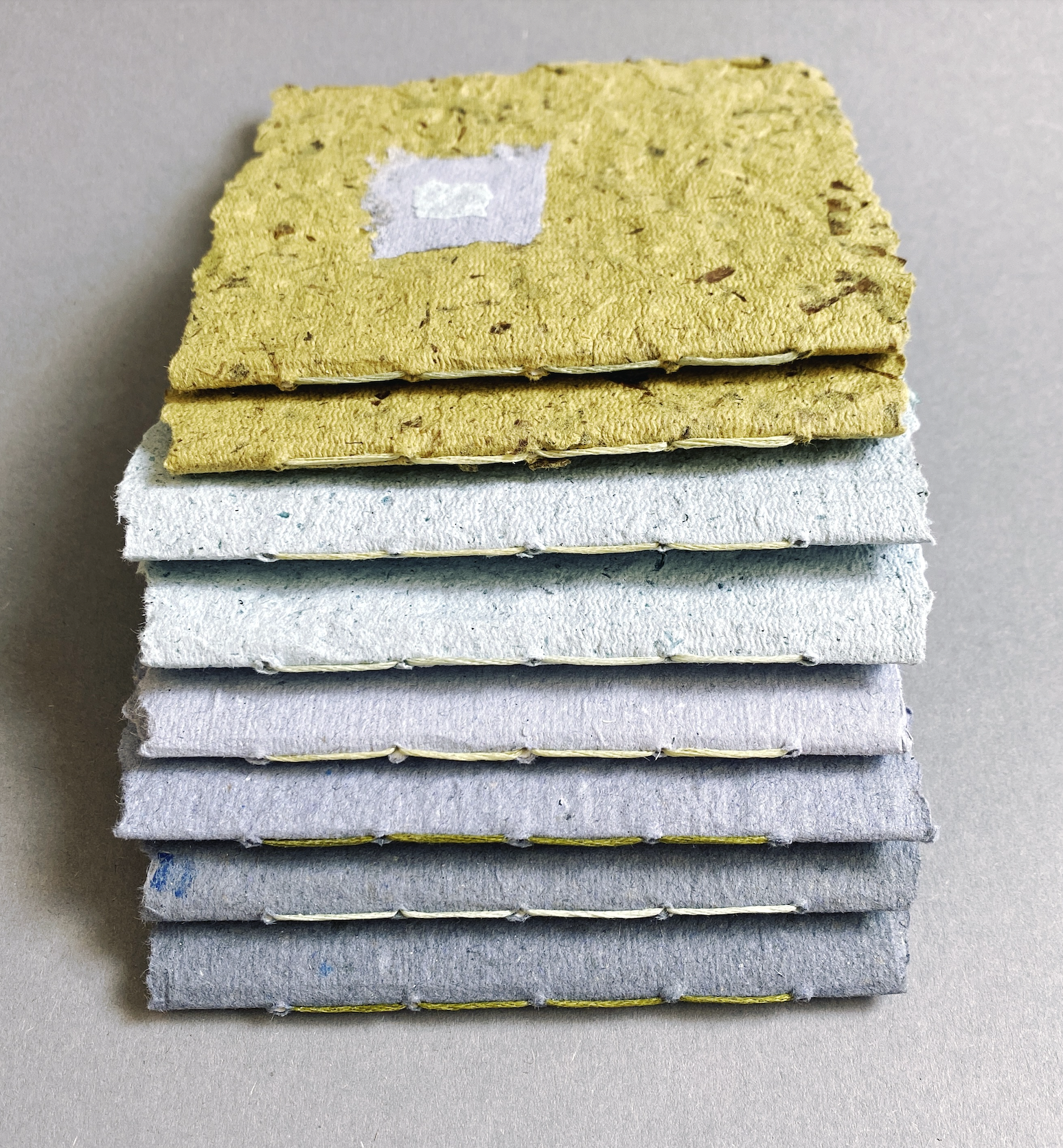
In the spring and summer of 2027, we will start with hand paper making and thread making, moving on to natural dyeing, and printmaking in the autumn and winter 2027/2028. Alongside this, we will be exploring book making, so we can bring these skills together to make beautiful paper based artwork incorporating colour and pattern that can be folded and stitched in to books.
The programme is also available as individual modules, so you can select the techniques that most appeal to you.
Contributors
Making Paper and Threads: Sally Pointer, Christi York, Velma Bolyard, Radha Pandey, Sarah Grace Dye, Isobel Denton, and Greta Facchinato
Paper Dyeing and Printing: Jacqui Symons, Elisabeth Viguie Culshaw, Natalie Stopka, Radha Pandey, Suzi Banks Buam, Greta Facchinato, and Erina Pearl
Book Arts: Sarah Grace Dye, Caroline Ross, Radha Pandey, Lynne Connolly, Suzi Banks-Buam, and Jacqui Symons
Making Paper and Threads
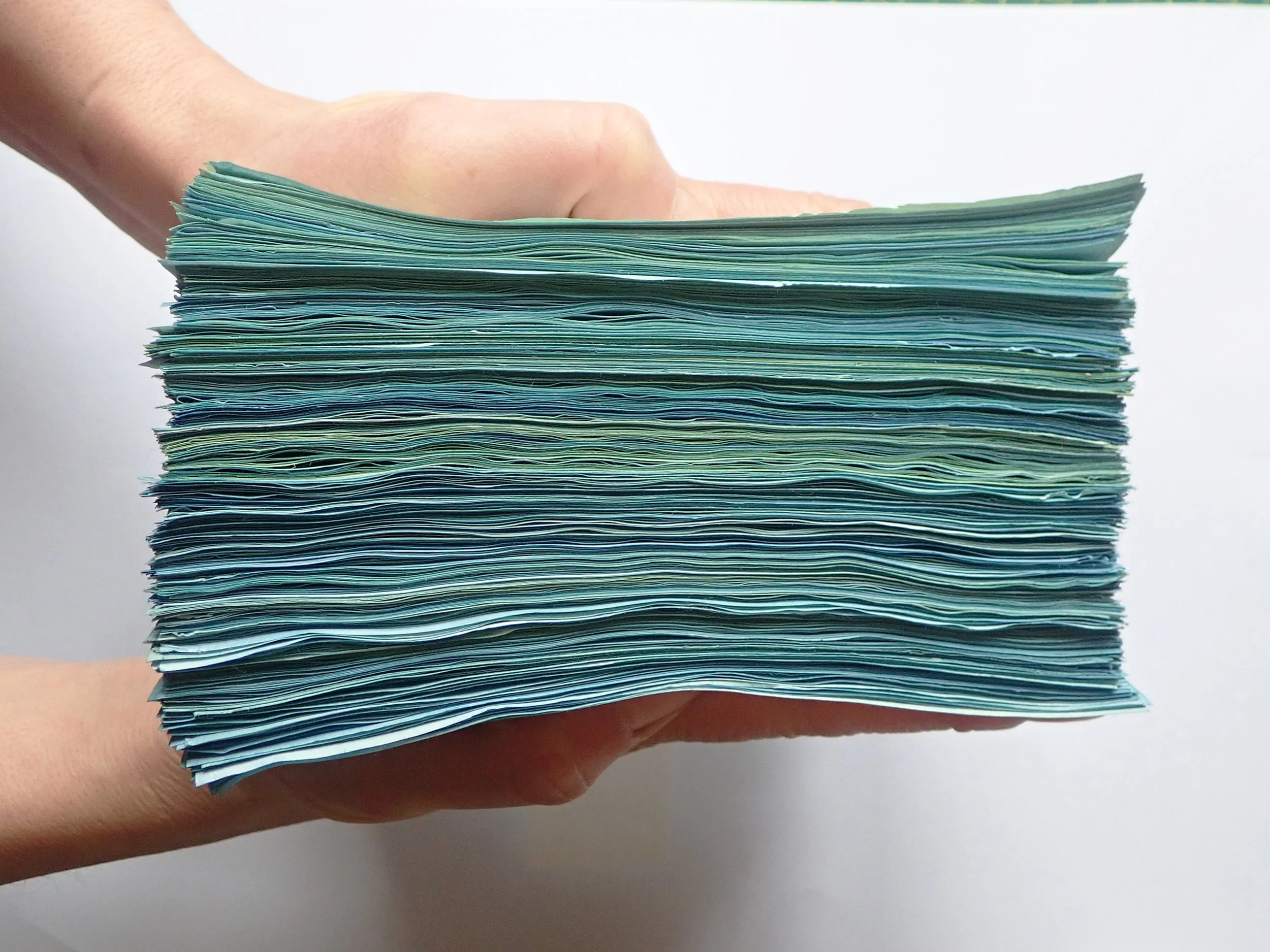
We will begin with working with fibres, paper making, cordage and thread making, making the base materials on to which we can dye and print and then ultimately make in to books. We begin our schedule at the start of the fibre harvesting season in the northern hemisphere, so we can work with locally available plant based fibres you can forage or grow as well as exploring approaches to using household waste. We will create some beautiful handmade materials in the form of flat paper, 3D paper sculptures, threads, and cordage that you can then transform further with in our dyeing, printing and book making classes. We have created three modules you can enroll in individually.
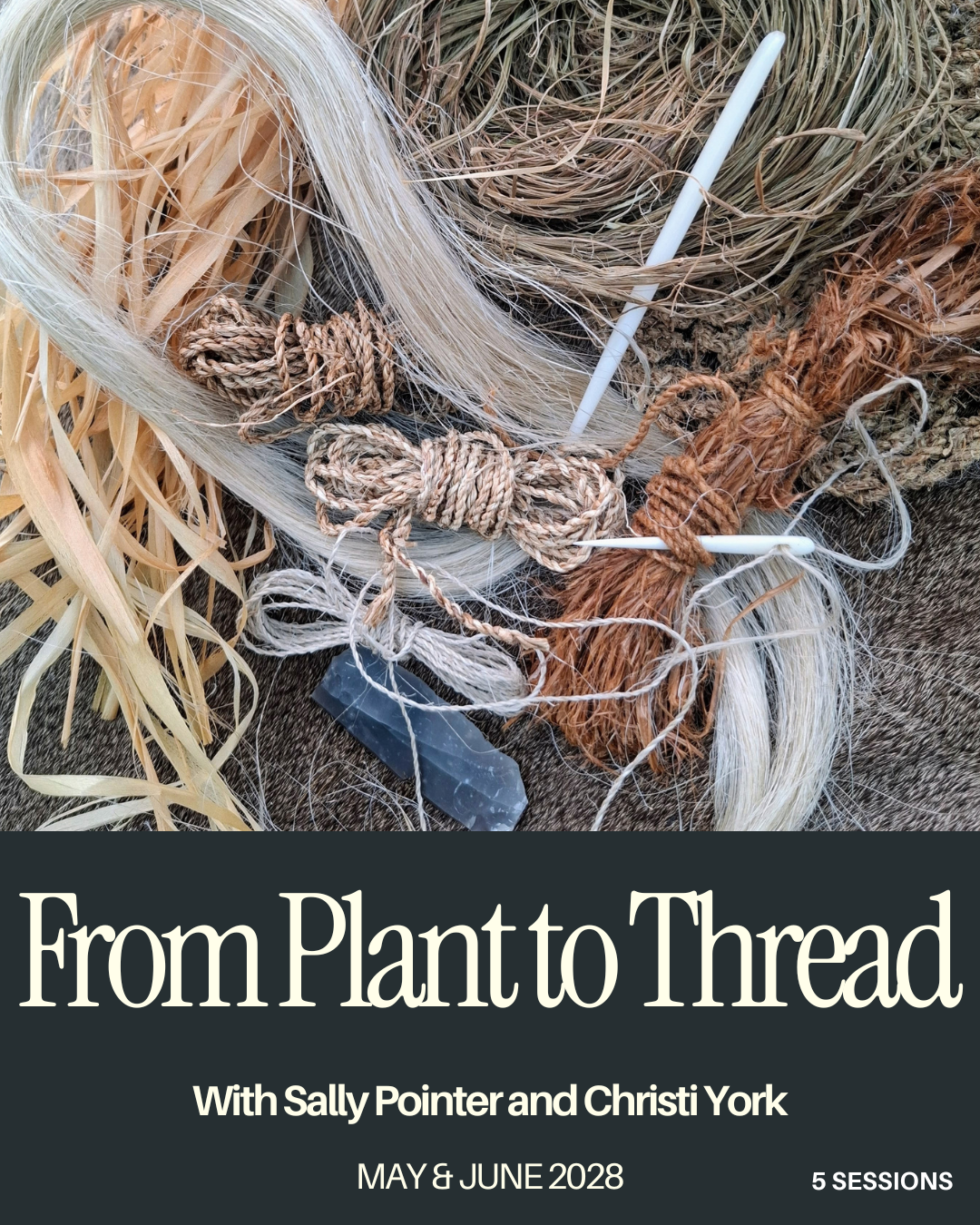
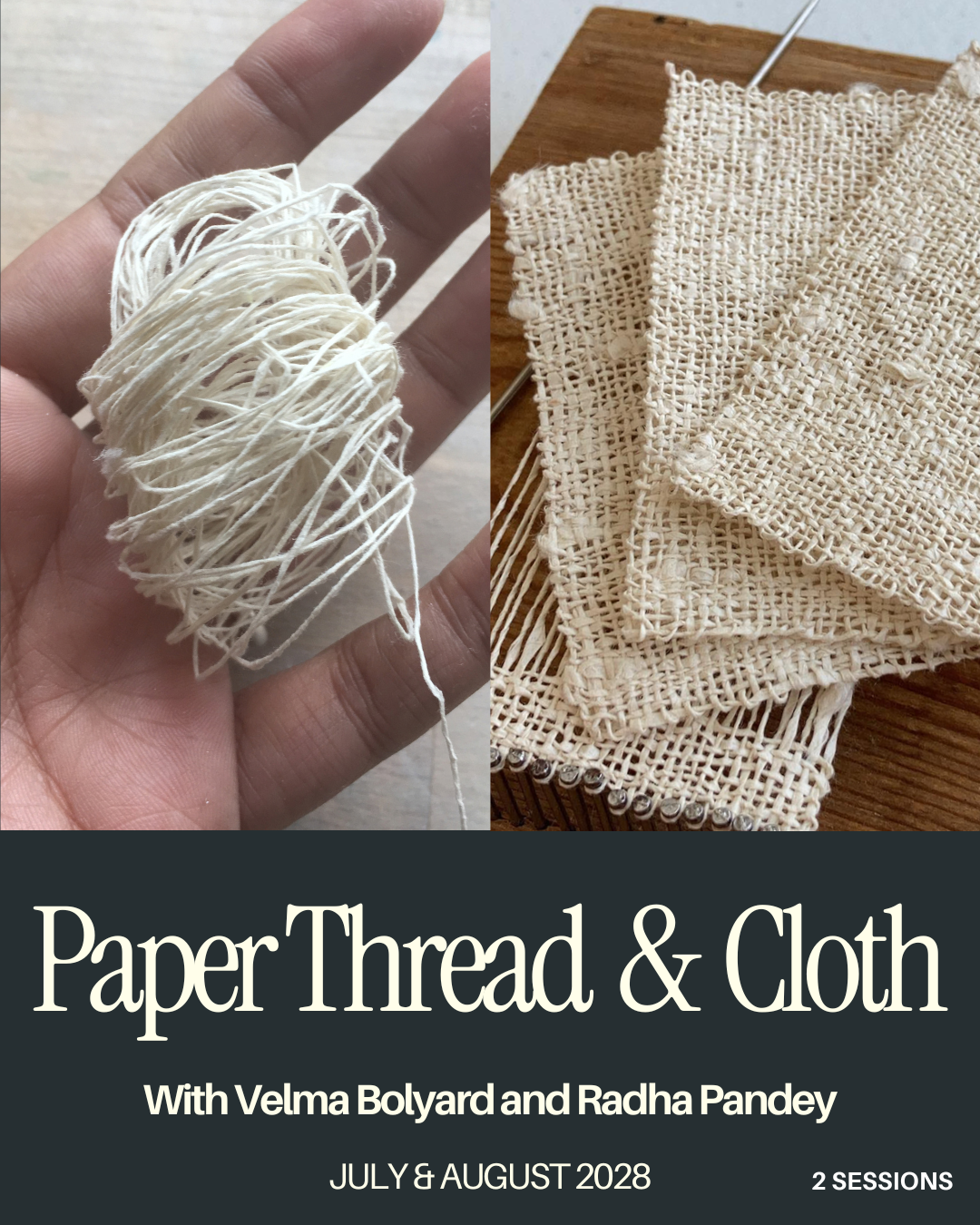
We have curated a series on plant based thread making, looking at all the plants you can forage or grow to thread with, particularly looking at approaches to making fine threads, that can be used for book binding. From working with the inner bark of trees, to foraging for nettles and growing flax, Sally Pointer and Christi York will be covering a wide selection of plants and processing techniques.
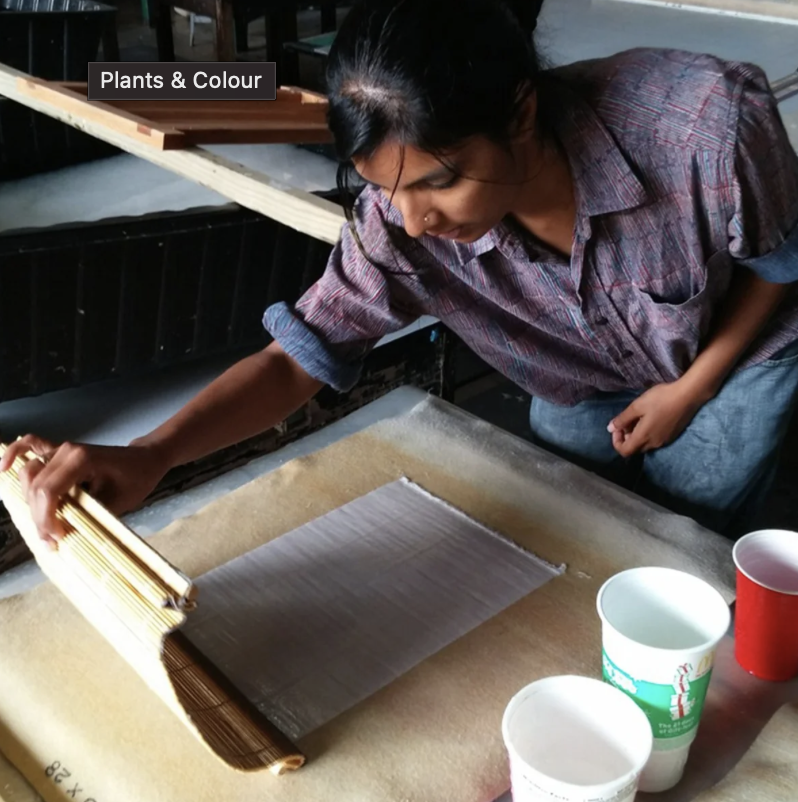
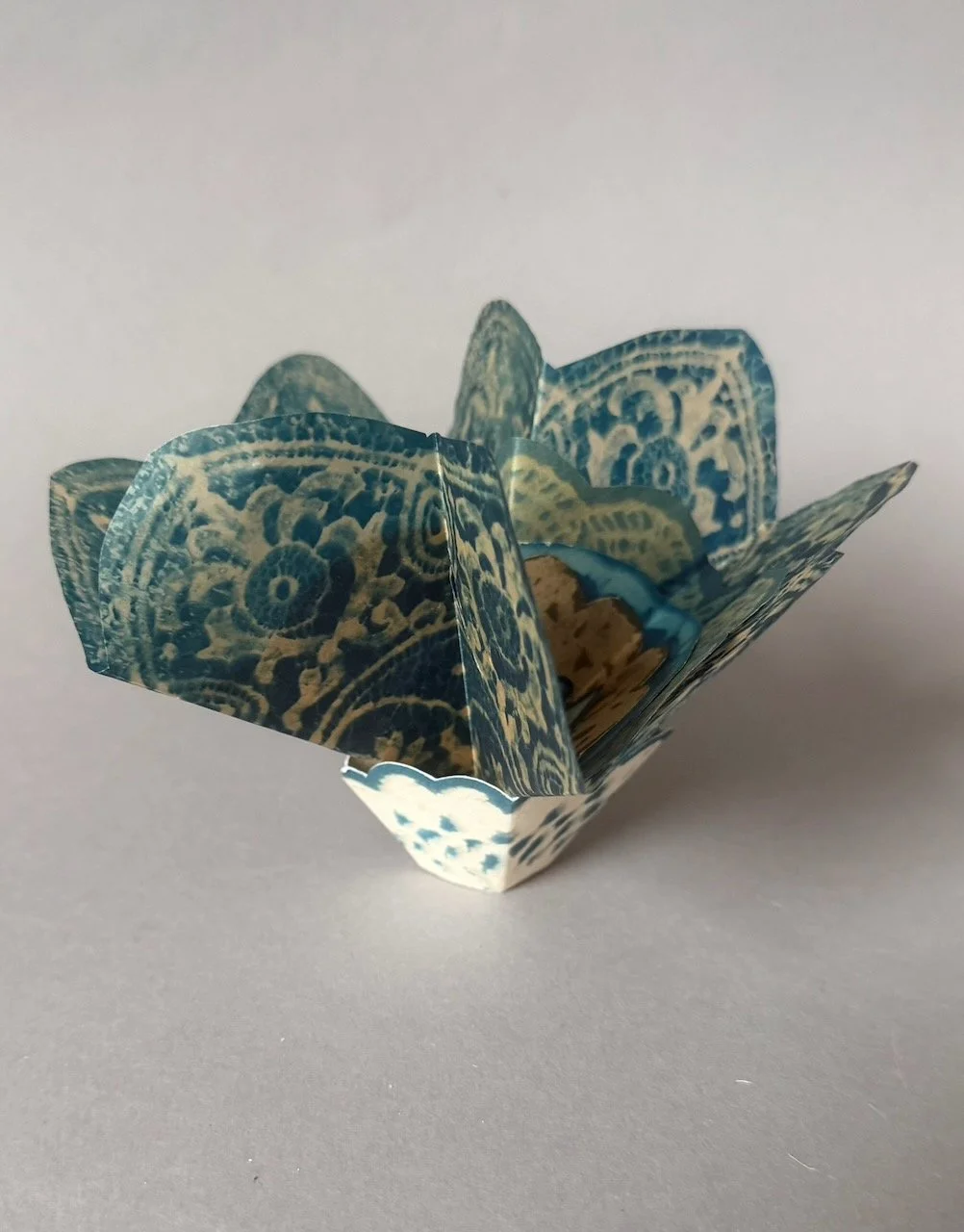
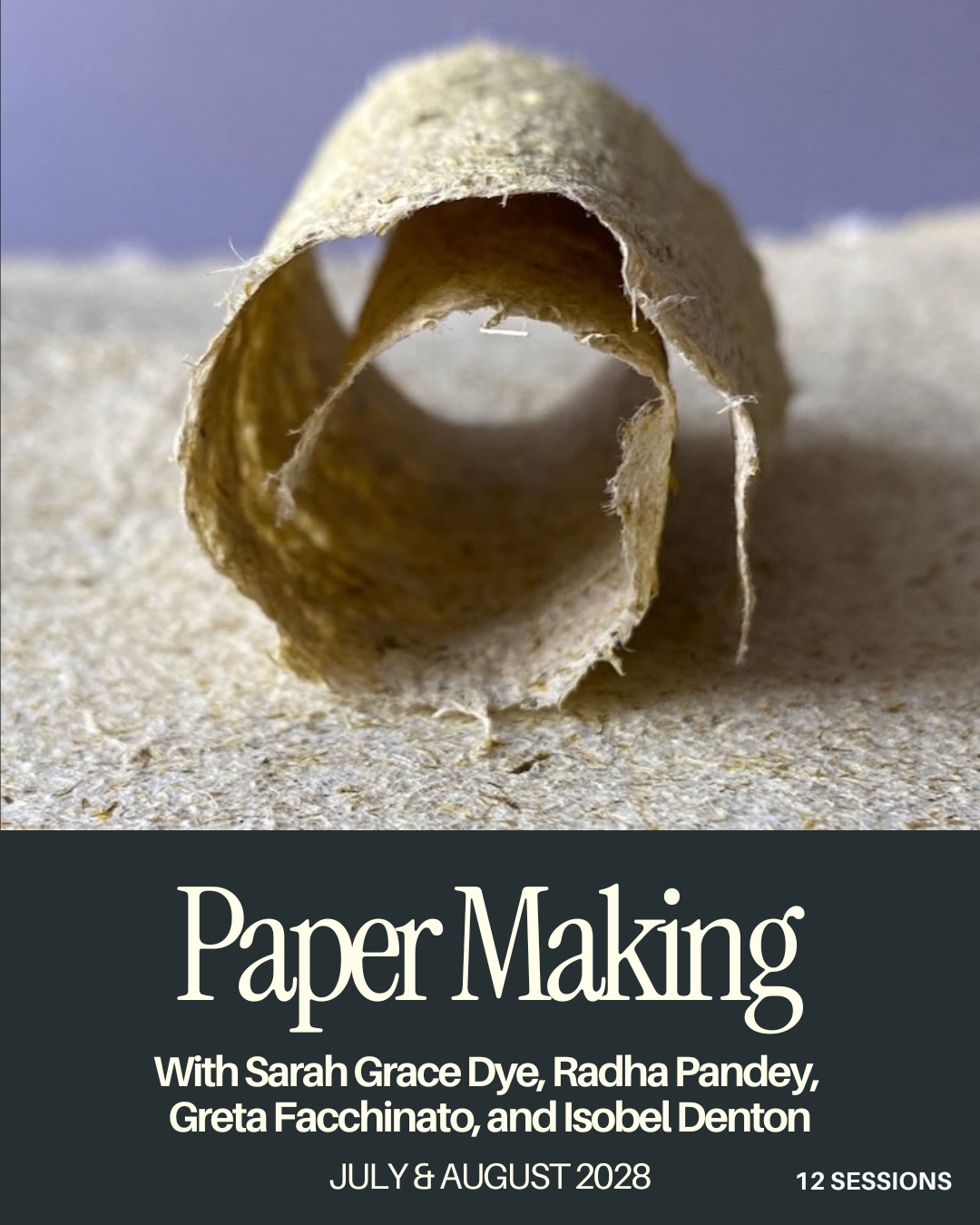
We have inspired to go in depth in to hand paper making this year. Looking at at home techniques incorporating everyday found materials from the home or garden. We will be delving in to creative techniques to making coloured paper, from incorporating found colour, to pulp dyeing with natural dyes, to painting with colored pulp. Starting with making flat sheets, we will be building on these techniques to make 3D paper sculpture.
Applying Natural Colour To Paper
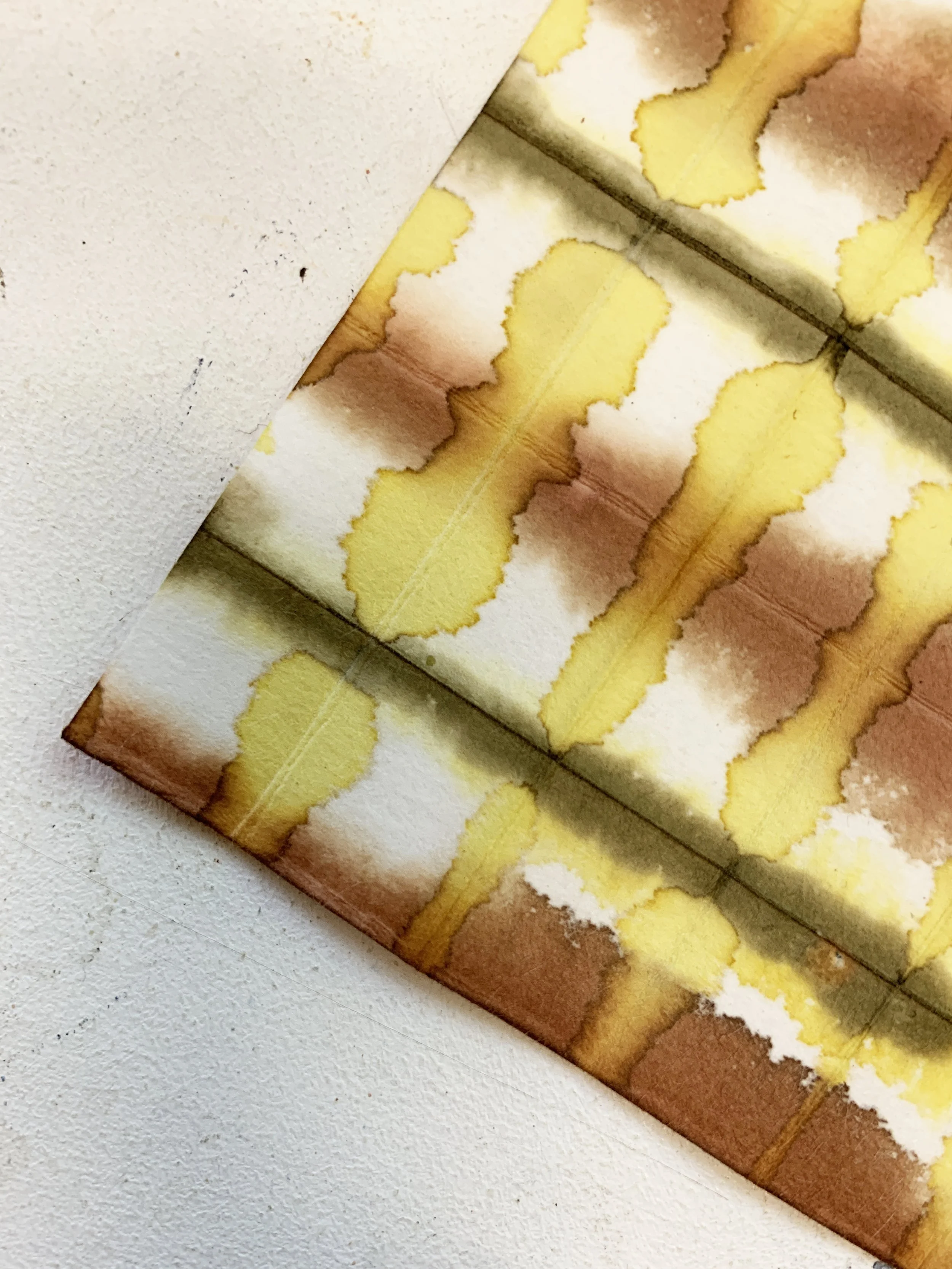
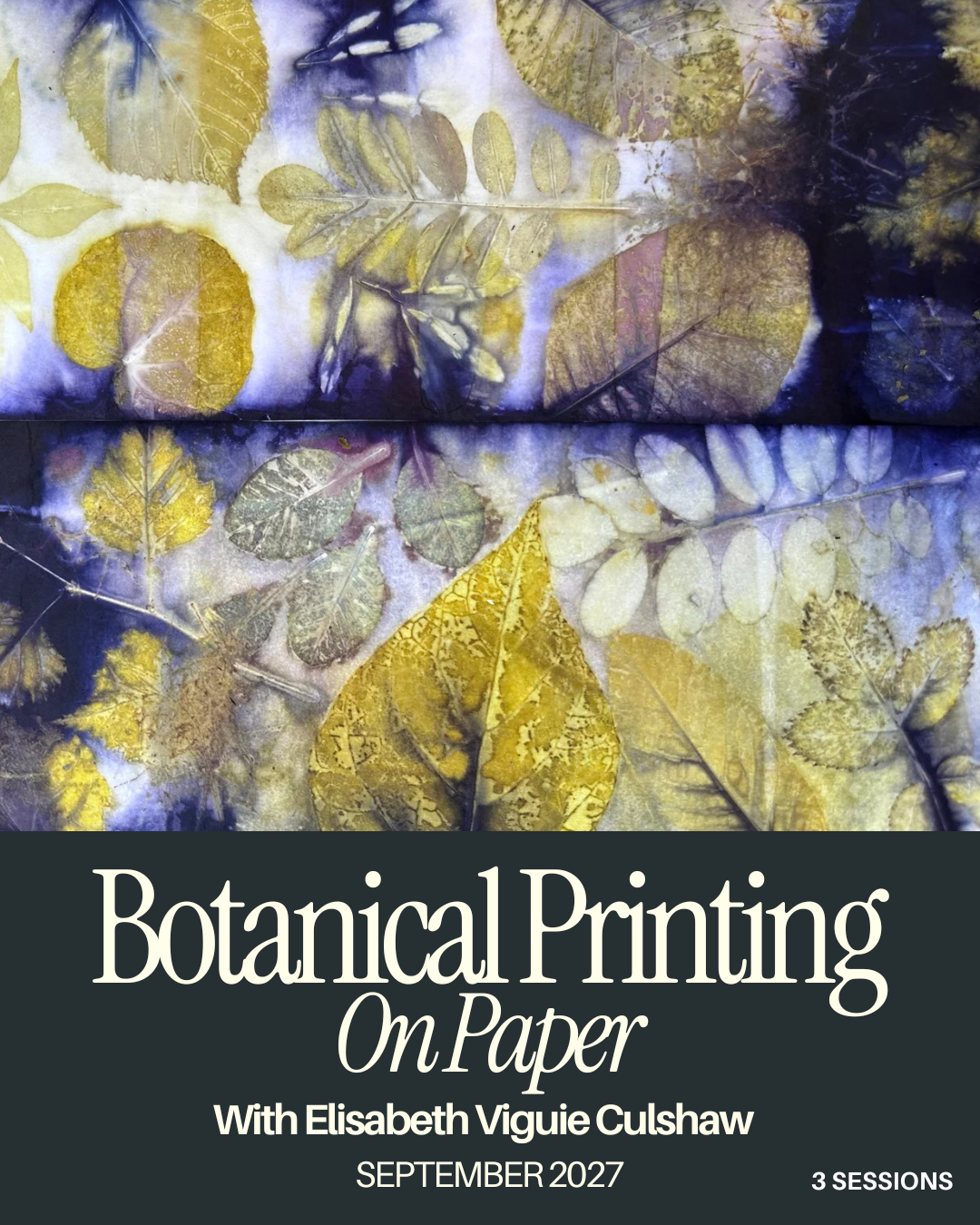
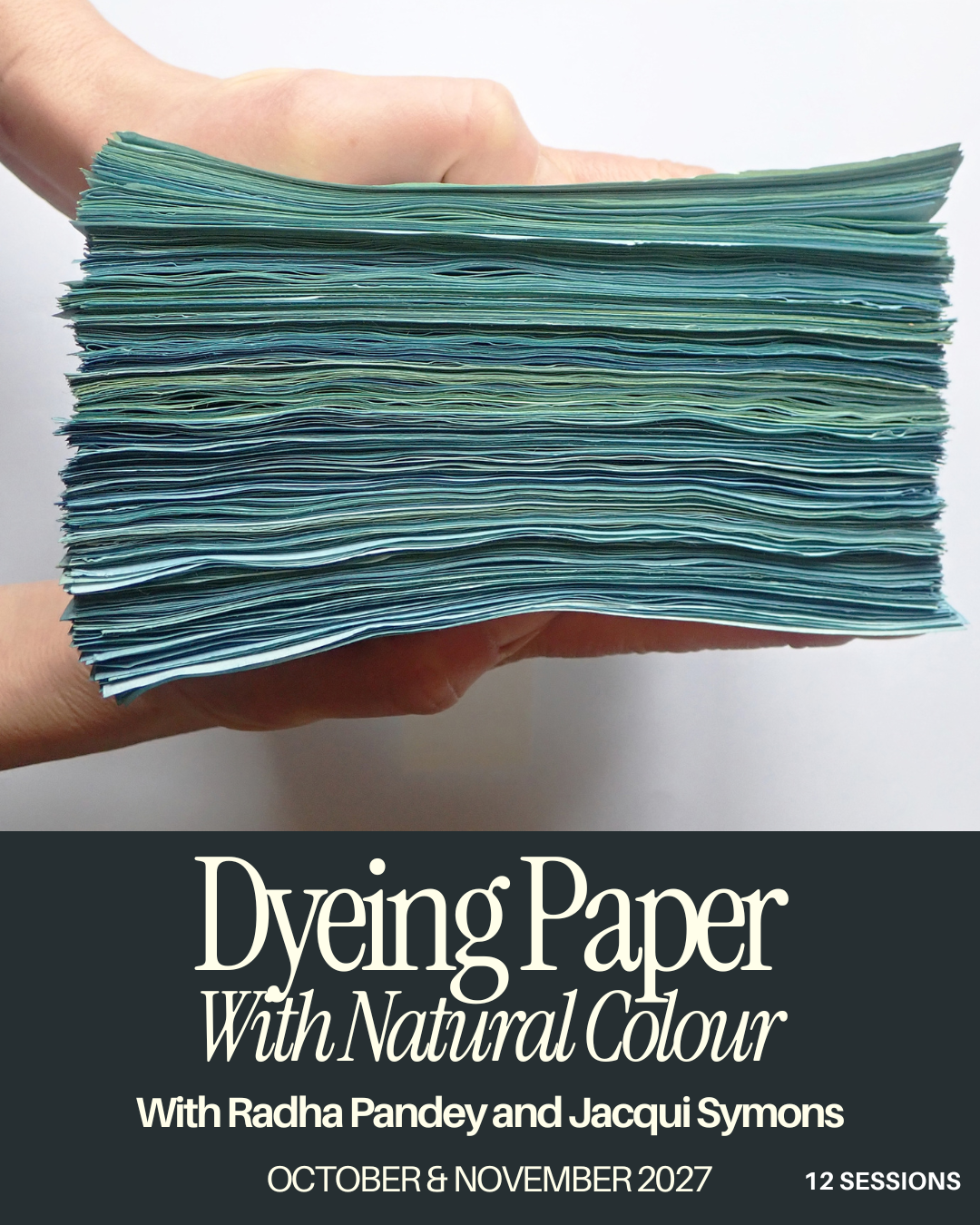
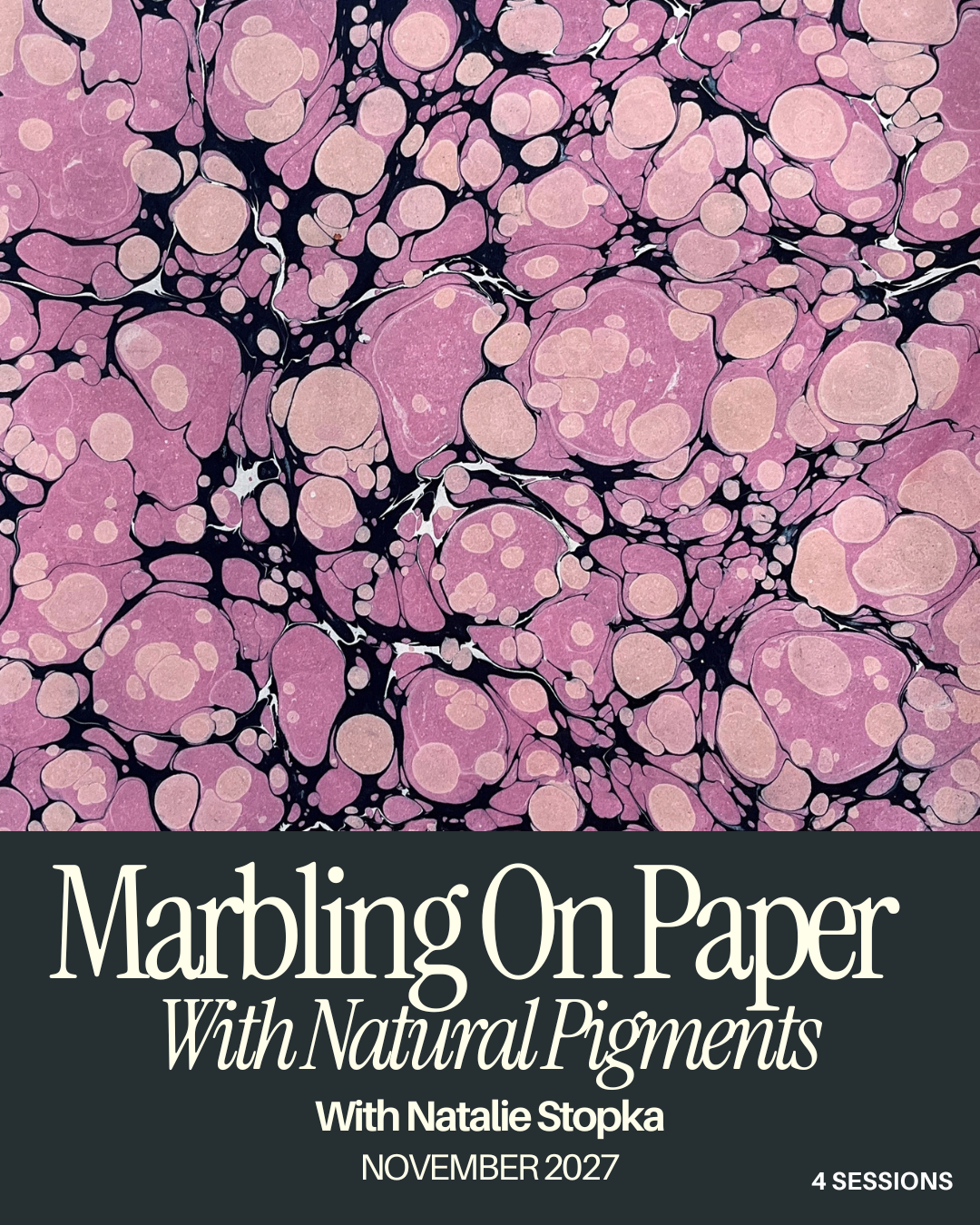
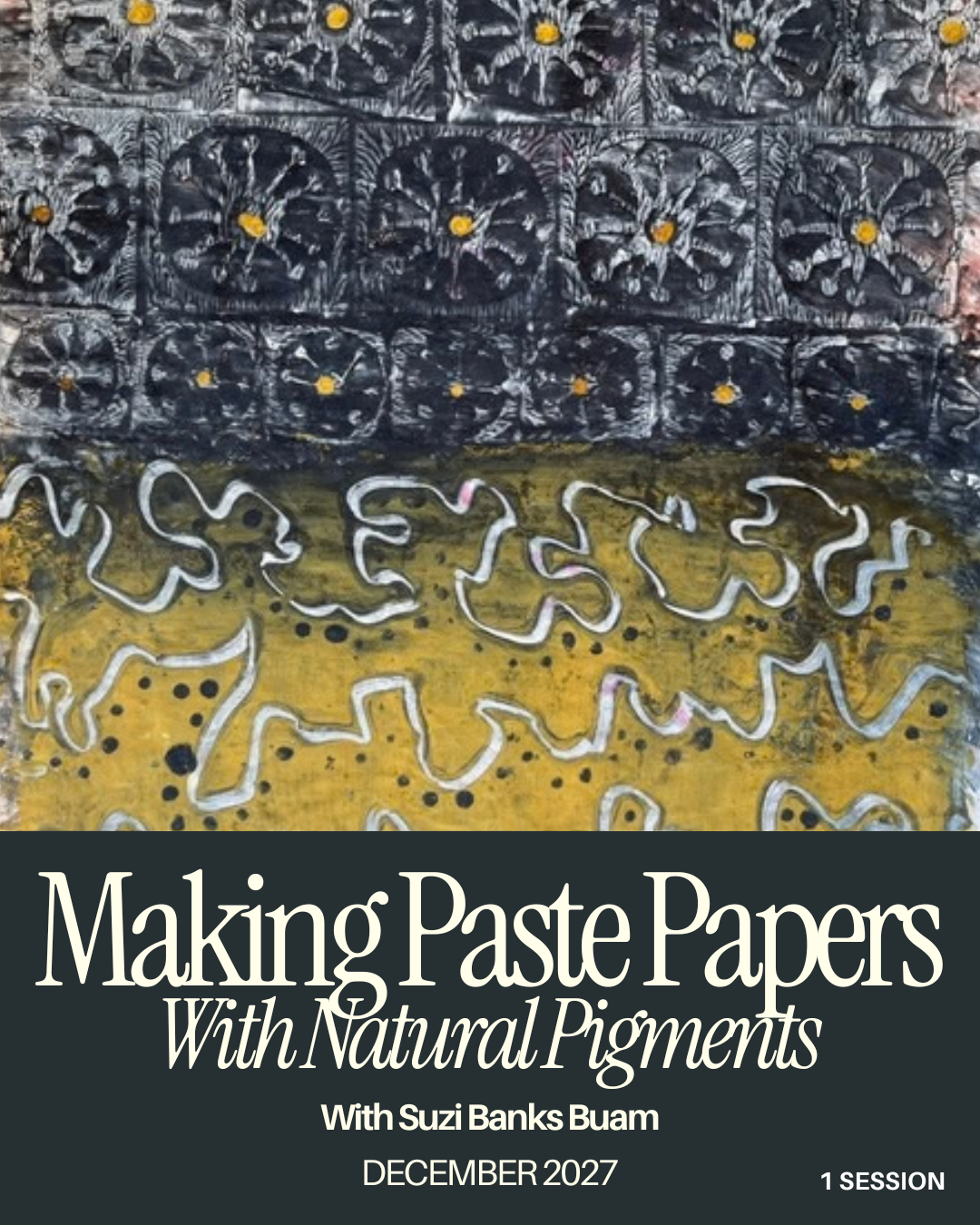
We will look at approaches to applying colour to paper, during the paper dyeing process and after. Both to achieve flat lightfast colour with natural dyes on paper, as well as a variety of approaches to achieving mono printed patterns, from botanical printing, marbling, and making paste papers, working directly with raw dye-stuff, extracted dyes, as well as plant and mineral based pigments.
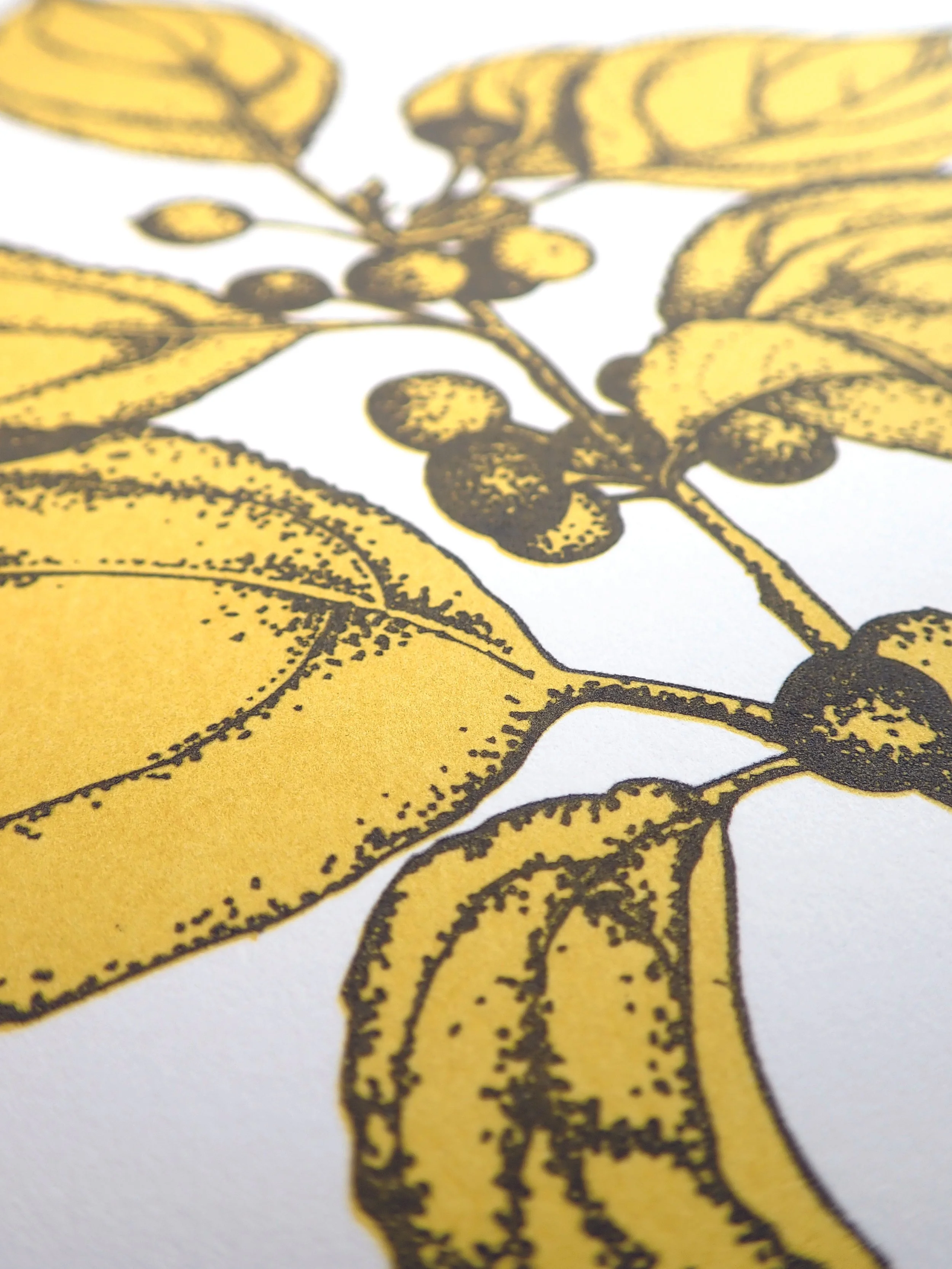
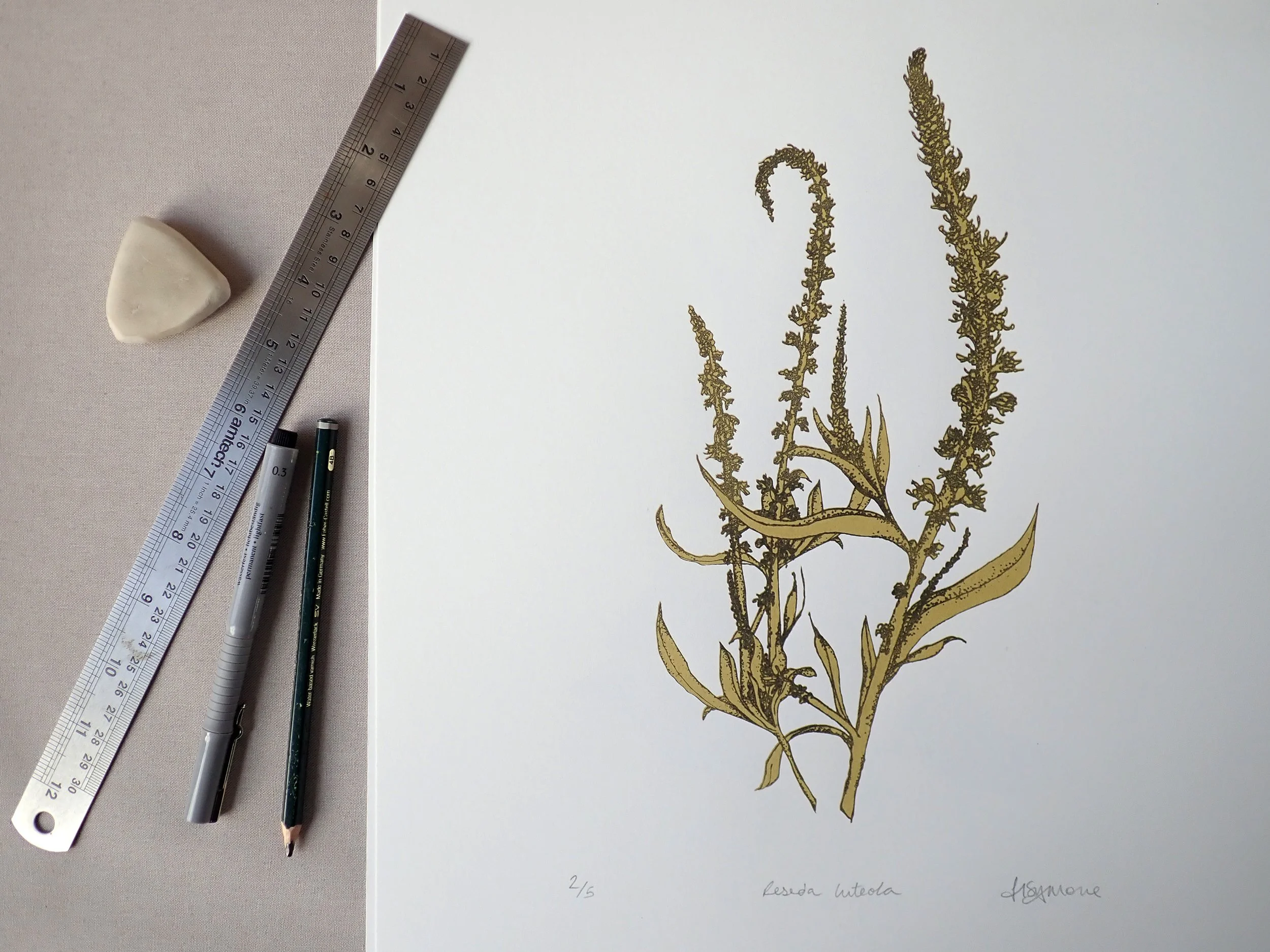
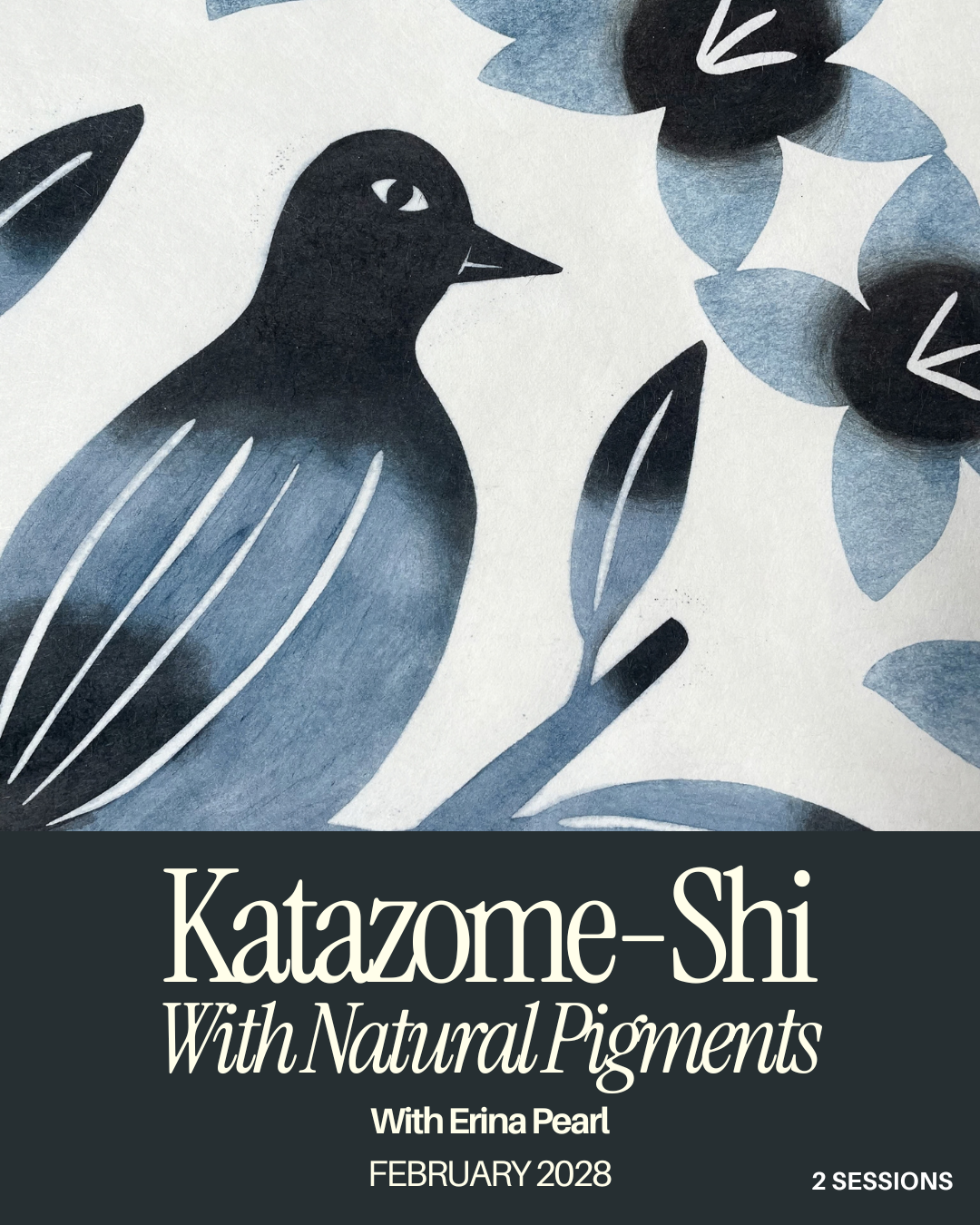
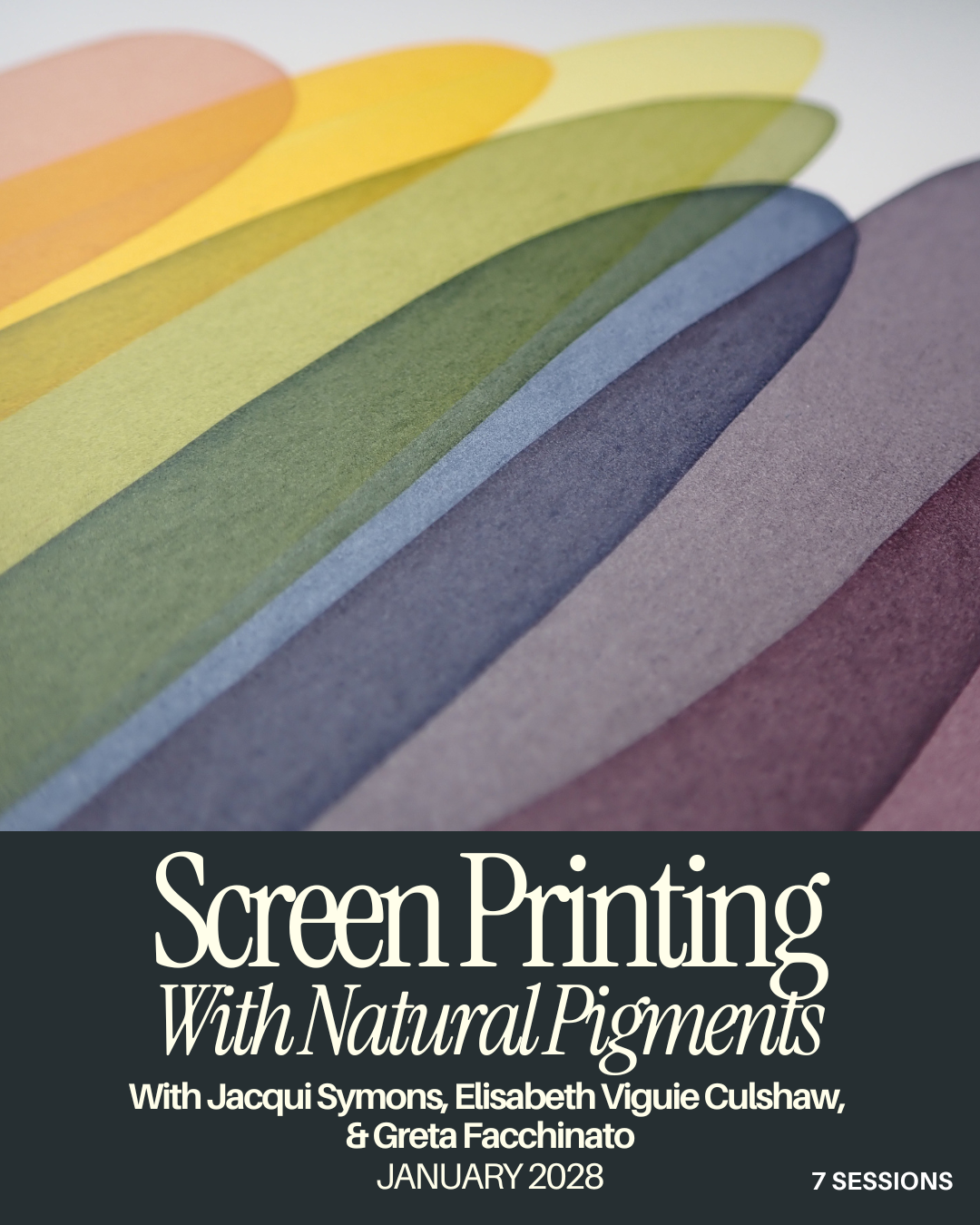
We will then move on to explore screen printing on paper with natural colour, so you can make multiple editions of prints. From traditional Japanese Katazome-shi resist technique with hand applied pigments, to at home screen printing with natural dyes and pigments with handmade screens and stencils, as well as photographically developed screens.
We are also developing some classes on relief printing to follow, these will be announced in 2027.
Book Arts
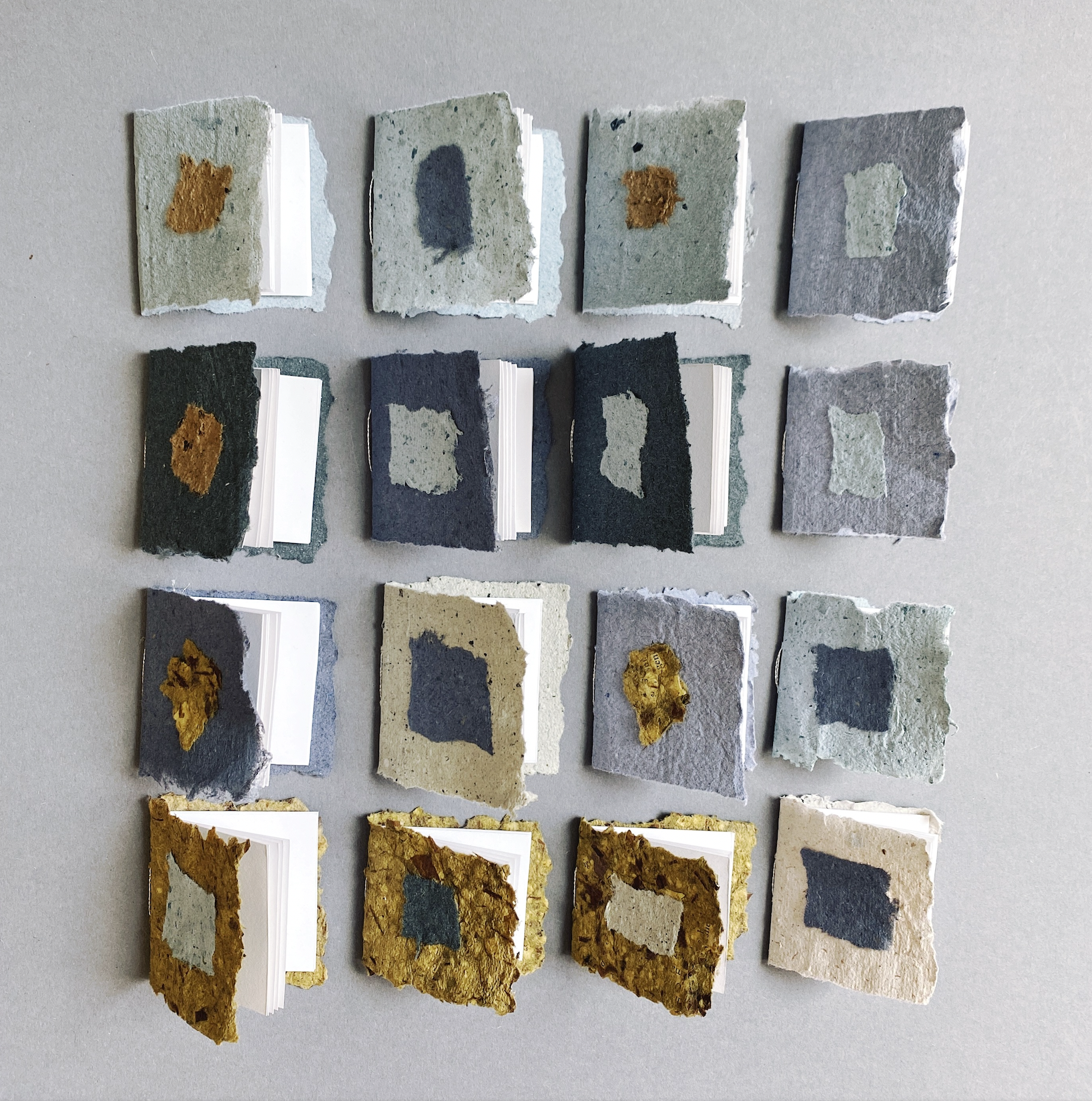
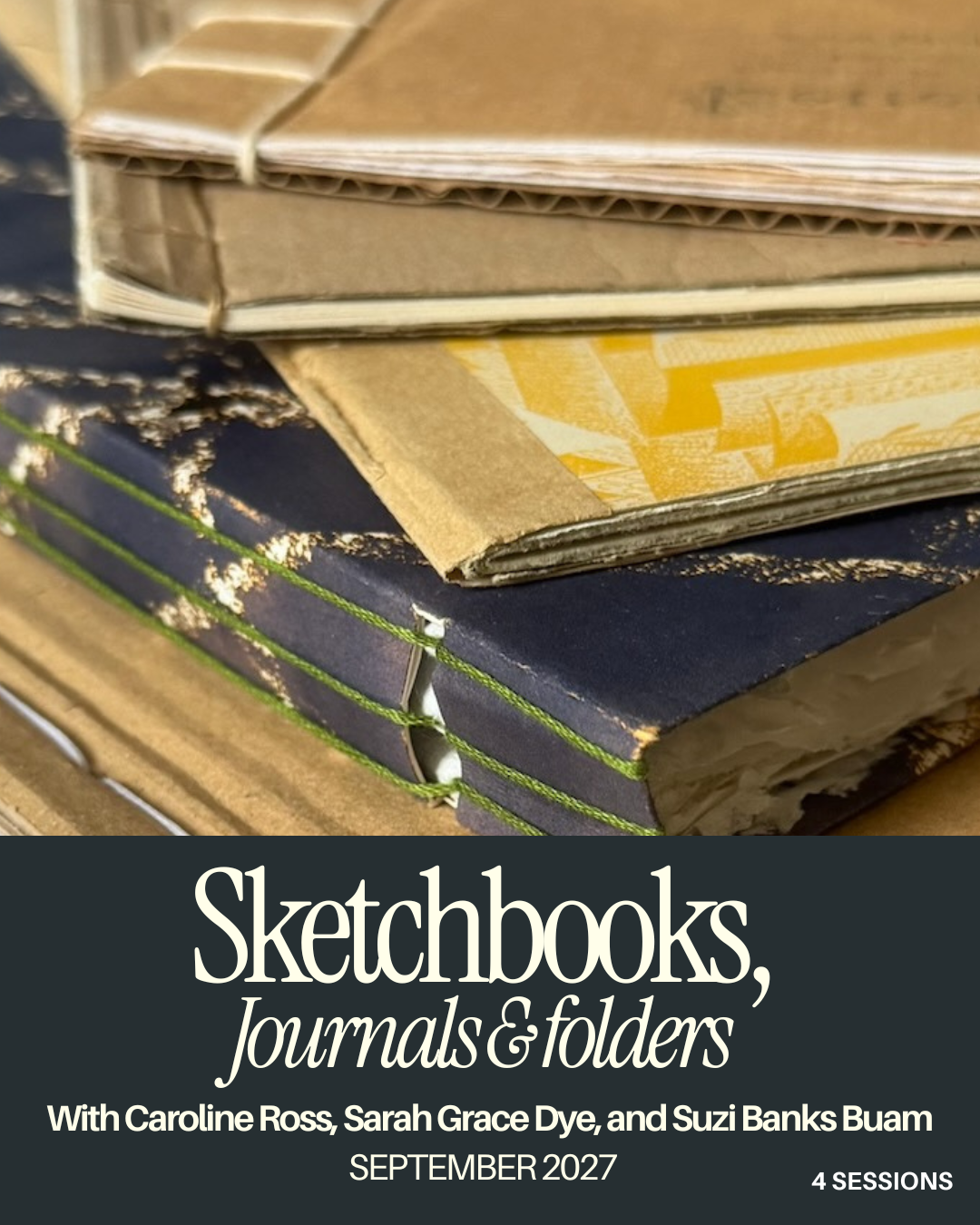
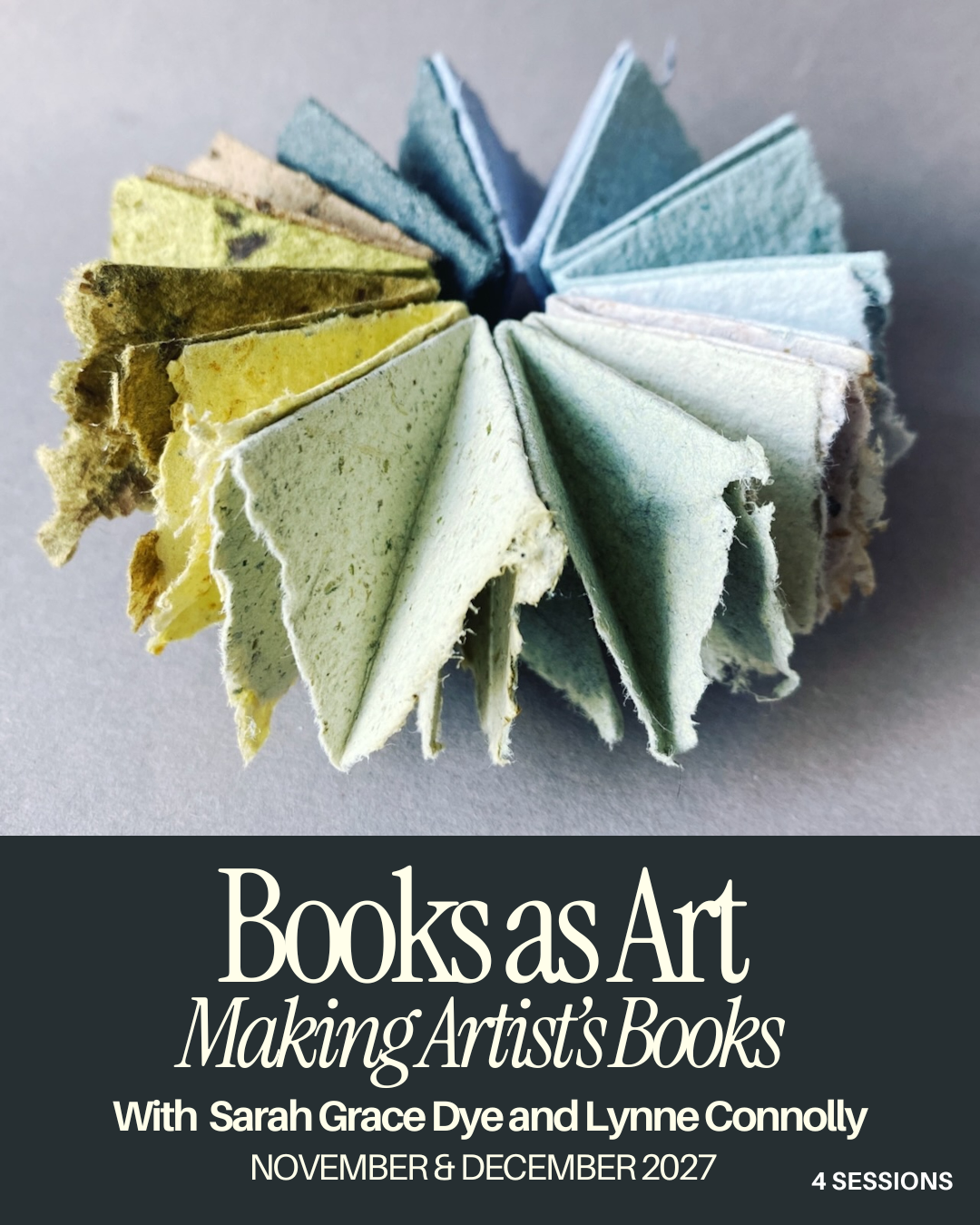
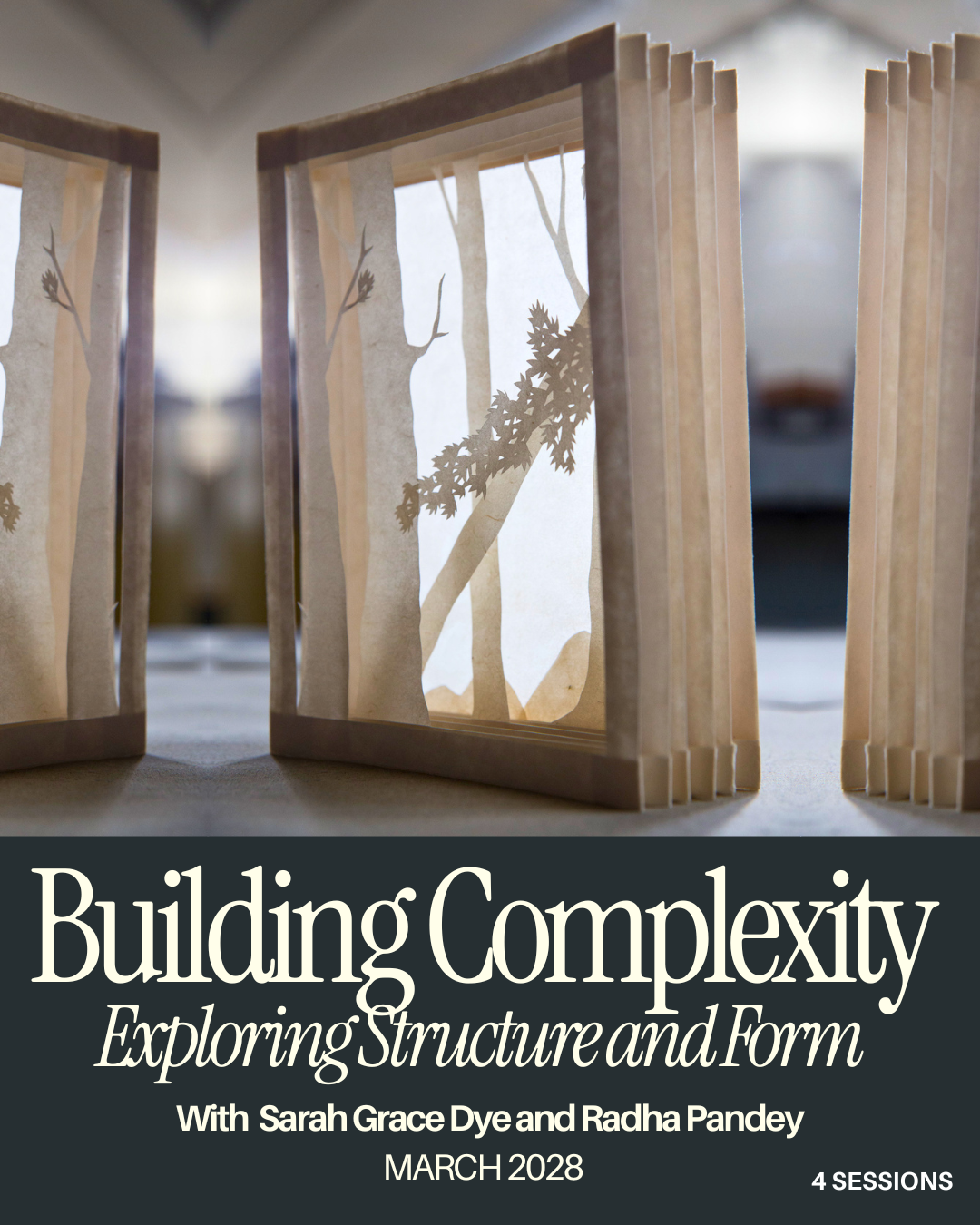
We have scheduled three book making modules in September, November, and March. Starting sharing making sketchbooks and folders to house your work. The second module, is alongside the paper dyeing and printing classes so you can make beautiful artist books with your hand printed and dyed papers. Followed by a third module at the end of the programme building in more complexity in to your books such as flaps and complex forms. These three modules are open to registration individually, or you can join all three to build your skills over the whole course.
Practice Space
You do not need a studio or a permanent dedicated space to try these techniques. All these classes are focussed on approaches that are accessible at home. Part of the joy or working on paper is that it is easy to pack away once your making session is finished. We will be sharing how you can make beautiful books and folders to store your work in. As you join the sessions and meet the teachers, you will see a variety of different ‘studio’ set-ups from large studios to pop up/pack-away at home studios.
Session Duration
Most sessions are 2 hours long, including a short presentation, a demonstration, and a Q&A session. You do not need to procure any equipment or materials in advance of the live sessions, we find it best to just show up and learn from the teacher and then have a go afterwards.
Equipment
We ensure all the equipment required are accessible and affordable, sharing approaches that rarely require specialist equipment, when specialist equipment is required, we share how you can make your own, such as paper making deckles and silk screens, as well as signposting to recommended suppliers.
Materials
From foraging for useful plants and rocks in the landscape, to kitchen ingredients and commercially available specialist ingredients, we share how you can work with entirely natural materials. Your own practice and materials will be unique to where you live and what plants, minerals and suppliers are available to you. For each class, you will receive a materials list, recommending materials you can source from the wild, cultivate, or purchase
Sourcing Natural Fibres
We are sharing techniques for working with plants you can forage or grow, as well as common trees that might be growing in your local area.
Sourcing Natural Colour
We will be focussing on plant and mineral based colour, including botanical dyes, plant based pigments, and earth pigments. Insect based pigments and dyes can also be used with these techniques.
Meet the Team
-
![]()
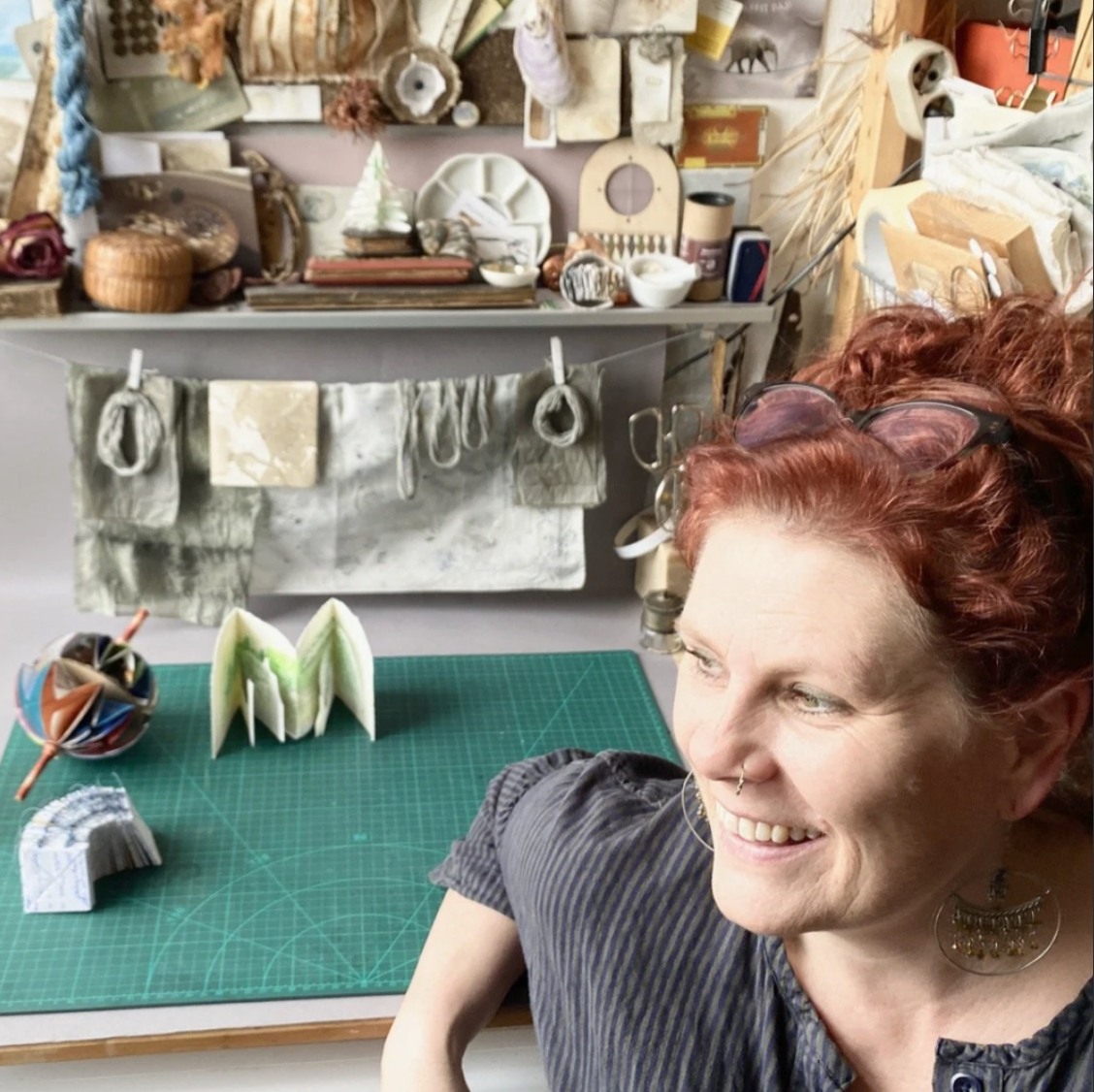
Sarah Grace Dye
Sarah Grace Dye is a visual artist who loves to find a use for and beauty in the ephemera of the everyday. Working with these objects has become like an alchemic practice enabling a transformation to take place. She believes learning to use the materials that surround us is important and her ethos dictates that it is important to waste nothing, that everything has a purpose and unique attributes to be examined, explored, elevated and a new purpose discovered. In essence, to search out beauty and hope in everything. The resulting alchemic objects are to be celebrated, shared and treasured.
Sarah is a collector and uses papermaking, natural dye and ink making, drawing, cyanotype, stitch and origami to create work, often within book structures, that amalgamates these together to produce small and perfectly formed keepsakes that echo the essence of the materials and story they communicate.
Sarah is a firm believer that everyone has the capacity to be creative and she is keen, wherever possible, to provide the catalyst for that to be realised. Her belief in the freedom to play and discover ones own marks is central and she is constantly developing this area within her own practice.
-
![]()
Sally Pointer
Sally Pointer is an archaeologist and heritage educator committed to keeping techniques from the past in modern use. With a working background in the museum and heritage industry, she has an MSc in Experimental Archaeology and is an Honorary Associate Research Fellow at Exeter University, where she is currently researching prehistoric textiles. She is a member of the Heritage Crafts Association and EXARC, and teaches traditional skills and heritage crafts both in person and via online tutorials.
-
![]()
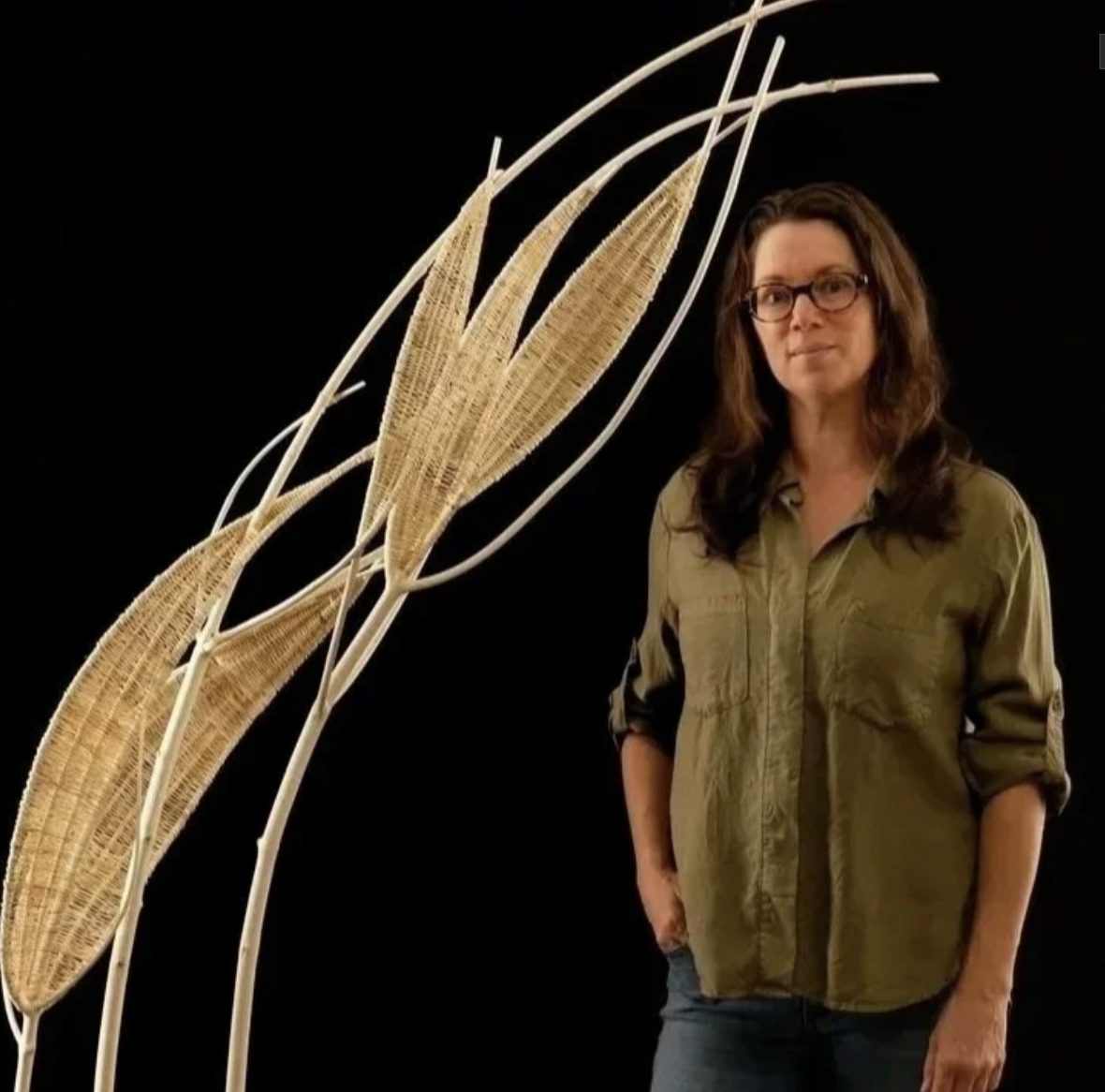
Christi York
Christi York is a Vancouver Island-based contemporary craft artist working with hand-harvested plant materials. Interested in ancient plant technologies and hand skills once passed through generations, she reimagining these traditions through a contemporary lens. Her work speaks to a sense of place; including disturbance, balance and history.
York has studied basketry and related techniques with internationally recognized teachers from Canada, Denmark, the United Kingdom, and the United States. She also leads workshops and artist talks exploring sculptural basketry, plant materials, botanical inks, and the creative possibilities of so-called invasive species. Her practice is rooted in a lifelong connection to the West Coast of British Columbia and, perhaps, began with her first job in a flower shop.
-
![]()
Jacqui Symons
Jacqui Symons forages, cultivates and uses plants to create colour for textiles, paper, printmaking and pigments.
Created from a desire to be more environmentally-aware, buy and consume fewer products and generate less waste, She began exploring natural colour and dyes in 2018. She researched and developed the use of plant-based pigments for oil-based printmaking inks and from there expanded into making her own watercolours, pastels, inks, screenprinting pastes and dry powdered pigments from plant sources.
In 2019, Jacqui trained under Jenny Dean to learn about the use of natural dyes with textiles and yarns, drawing on Jenny’s 40 years of experience in this field to develop further knowledge and understanding of this increasingly relevant and respected industry.
Jacqui created Slow Lane Studio to provide resources, information, practical advice and workshops focusing on natural dyeing, plant-based pigments and plant-based artist colours. Alongside working on creative projects and commissions, she is developing a pigment garden and a plant pigment library as a reference and resource for other artists.
-
![Greta Desireèe Facchinato in The Garden of Colors, July 2023. Photography by Maryse Aalbers]()
Greta Facchinato
Greta Desirèe Facchinato (IT/LU) is a research-based multidisciplinary artist and designer. She holds a Masters in Artistic Research from KABK Den Haag (NL) and a Batchelors in Visual and Performance Arts with a specialization in Sculpture from Accademia di Belle Arti di Venezia (IT). Through the crossflow of different mediums and the investigation of daily life encounters, gestures, and materials her practice invites us to experience matter from an embodied awareness. She runs a studio focused on research and sustainable education through natural materials, illustration and creative workshops. In 2021 with her project Colour is Alive she researched organic ink making for screen printing. Since then she is been working with the knowledge of color and the interconnection with our environment through the practice of making sustainable ink for printing techniques.
-
![]()
Radha Pandey
Radha Pandey is a book artist, papermaker and letterpress printer. She earned her MFA in Book Arts from the University of Iowa Center for the Book. She specializes in Indo-Islamicate Papermaking and teaches book arts classes in India, Europe and the US.
Her book Anatomia Botanica (2014) won the MICA Book Award and received an Honorable Mention at the 15th Carl Hertzog Award for Excellence in Book Design. In 2018, her book Deep Time won the Joshua Heller Memorial Award. Pandey’s most recent book Flora of Mughal India won the prestigious MCBA Book Prize (2024).
Her books are held in over 80 collections internationally, including the Library of Congress and Yale University. She runs a book arts studio in India and Norway with her partner, Johan Solberg.
Currently, Radha is working on a book about shadows and our perception of the colour black.
-
![]()
Caroline Ross
Caroline Ross is an artist, writer and teacher living by the sea in Bournemouth. Her debut book ‘Found and Ground: A Practical Guide to Making your own Foraged Paints’ was published by Search Press in June 2023. She is writing the follow up about ancient and foraged drawing materials, ‘Drawn From the Wild’ to be published spring 2025. Using what nature provides and repurposing what humans discard are a large part of her practice. After the rooks have feasted on the riverbank, the empty mussel shells become paint palettes. The seasonally moulted flight feathers of local swans and geese become quill pens and brushes. Chalk dug out from their setts by badgers is left in piles in the woods, where she gathers it and take it home to make gouache. Caroline makes paints from foraged earth pigments from around the UK, and art tools and inks from natural, wild, and found materials such as oak galls, rusty nails, elderberries, bay leaves and cherry tree gum. The natural fluctuations of materials and the botanical ink stains or ochre paints forming prepared grounds on paper, all suggest forms with which she works.
-
![]()
Suzi Banks Buam
Suzi Banks Baum is a mother, writer, book artist. She follows the thread of daily creative practice through her visual and literary work. Entirely obsessed with marigolds, Suzi’s pursuit with naturally derived color fuels a desire to reduce plastics in studio practice and draws her into the Berkshire landscape she calls home. A national workshop leader in the US, Suzi teaches book arts with a focus on technique and a wild array of paper decoration. Suzi created a book arts residency in Gyumri, Armenia where she has taught for 4 years. Her mixed media work appears in Collage Your Life by Melanie Mowinski. Her writing appears in a variety of literary journals, including Open Secrets Magazine online and in the Guild of Book Workers journal. A skilled needleworker, her embroidered Story Cloth is featured in Does It Have Pockets online.
-
![]()
Natalie Stopka
Natalie Stopka is an artist and educator focused on the material history of color and sustainable studio practice. She captures material and elemental interactions in her collaborative, experimental art practice. Her drawings and prints incorporate plant dyes and historical pigments, which provide a seasonally evolving vocabulary of texture and color. Natalie’s freelance studio and dye garden are located in Yonkers, New York. She holds a BFA from the Rhode Island School of Design and MFA from the University of New Mexico, Albuquerque.
-
![]()
Elisabeth Viguie Culshaw
Elisabeth Viguie Culshaw (aka Betty) is a colour maker and educator, working only from Nature. Originally trained in Decorative Arts by Christie’s the auction house, she spend her working life in heritage stencilled schemes conservation.
In 2015 she branched out to the Eco world and is currently essentially working from plants and earth pigments in both Botanical printing and Indigo dyeing.
Born in France she lives and works in Scotland where she runs a sustainable studio in Glasgow. She frequently travels to teach and learn to France and South East Asia.
She is the author of “Botanical printing on paper” (Crowood press 2026), The online Botanical printing method “The True Colour of the Cotinus”, and grows “The Indigo Plot” an Indigo garden in the grounds of the Glasgow Botanical garden. She runs Eco colours retreats in France and Thailand.
-
![]()
Flora Arbuthnott
Flora is a natural colour maker, forager, illustrator, designer, and online learning enthusiast. She lives on the western edge of Dartmoor, where she grows, forages, and makes colour. She loves to experiment with making dye, print, and drawing materials for textiles and paper, developing new recipes and testing out plants. Her work is about place based natural colour making, and education. She is passionate about making plant based colour application processes for textiles and paper more accessible through online courses and events on this website as well as programming guest teachers on her learning platform plantsandcolour.com. Encouraging you to work with locally available plants to make vibrant and enduring colours for craft, art, and design practices.
-
![]()
Isobel Denton
Issy is a textile artist specialising in traditional practices creating natural inks & dyes for textile & paper applications. She works from her studio in West Yorkshire under the name of ‘abitmoreink’. She became interested in dyes, and dyeing techniques whilst originally working in theatre, film and television, as a costumier. For the last 3 years she has been creating an extensive dye garden - growing plants for use in her own practice. Presently, she is focussed on developing a 3D sculptural work using various traditional craft practices and making paper using plants such as flax and other materials she either grows, or forages locally. In addition to her own practice she regularly delivers workshops at various venues. She also works with many arts based organisations and in schools, to create pieces for exhibitions that explore the narrative of natural dyeing and related processes.
‘I'm focused on growing my dye plants, as I have a large dye garden. I'm more of a generalist when it comes to using the materials I grow and a general experimentalist. Sustainability is at the core of my practice, and more recently my work has been exploring paper-making and sculptural forms. I’ve just co-created an exhibition with children from @makerworldhudds called Biophilic Sculptures as part of the Woven Festival, made entirely from sustainable materials—recycled paper and textiles, naturally dyed with plants from my garden.’
-
![]()
Velma Bolyard
Velma began her working in textiles and making paper in the fiber art program at Buffalo State, before she landed in the western Adirondack Mountains of New York. She set up her paper and fiber studio, Wake Robin, in the North Country in the 1980's. She is a weaver, spinner, papermaker, book and fiber artist. Currently ahe works with paper, shifu (a spun and woven paper textile), botanical contact (or eco-) printing on paper and textiles.
She makes artists' books, in small editions. In 2016 she retired from teaching special education in public school. She is now teaching workshops/classes in shifu, hand papermaking, and book arts in North America, and Australia and at St Lawrence University in Canton, NY. Her work maps how she responds to this place she calls home, and explores her connections and concerns for the land, animals, plants, and weather of this place. She has fallen deeply in love with this harsh, hard scrabble, beautiful place.