
Shifu and Kami-ito: Making Thread and Cloth from Paper
With Join Velma Bolyard and Radha Pandey for two live online sessions
On Wednesday 28th July and Wednesday 11th August - 4-6pm BST
Exploring the traditional Japanese paper crafts of shifu and kami-ito; spinning thread and weaving cloth from paper.
Velma will reflect on her life long practice of working with paper from papermaking, to hand-spinning, weaving and making artists' books. Radha's workshop will introduce the Japanese process of making threads from paper.
A unique insight into the extraordinary possibilities of paper as fibre and the processes of making from sheet to thread to textile.
-
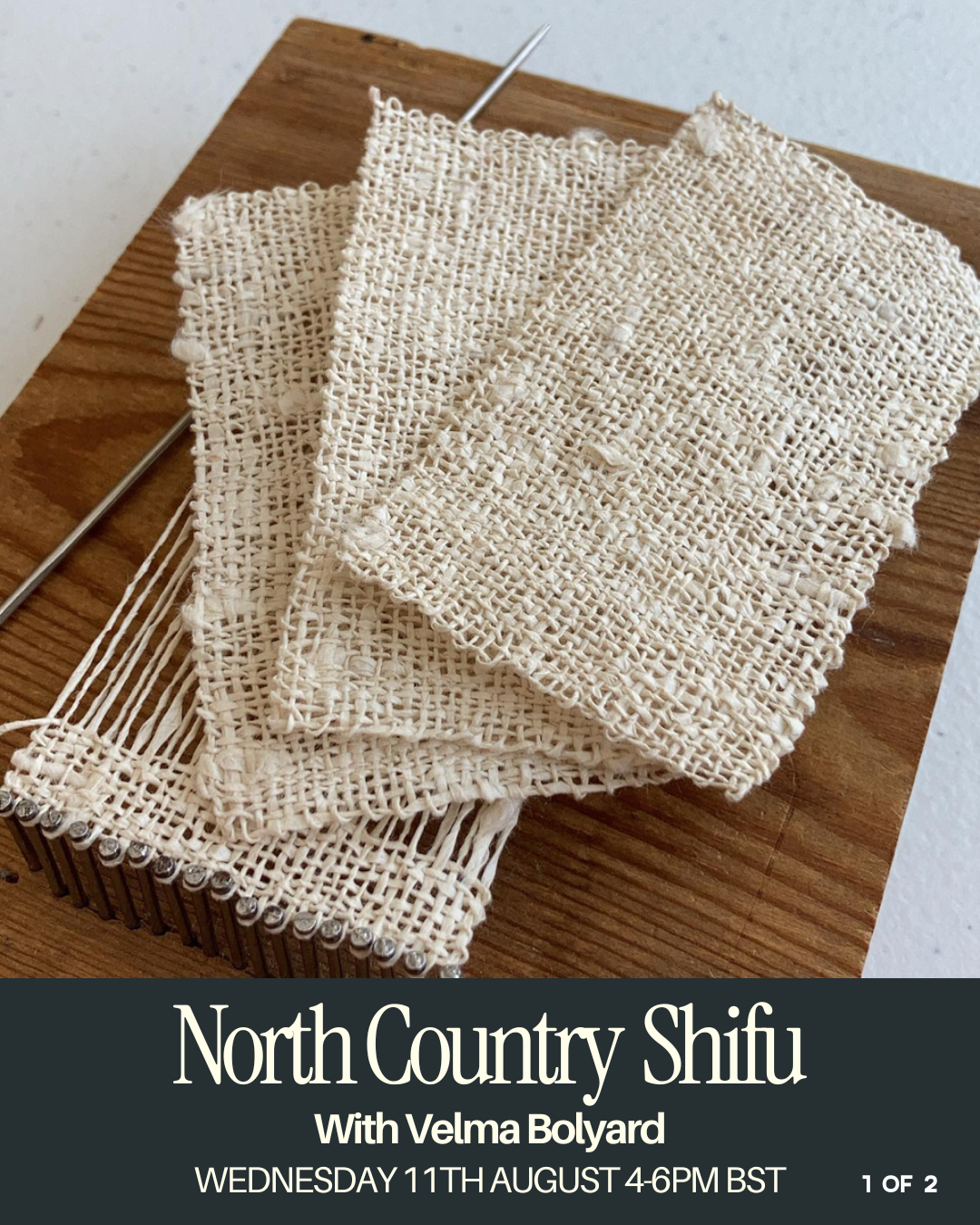
An illustrated talk tracing how Velma's fibre work in weaving, spinning, and papermaking forged a lifelong cartograph.
Understanding the deliciousness of cellulosic fibres, spinning kami-ito and weaving shifu connected these for her, linking paper, to spindle, to loom, to page, and ultimately to artists' books.
-
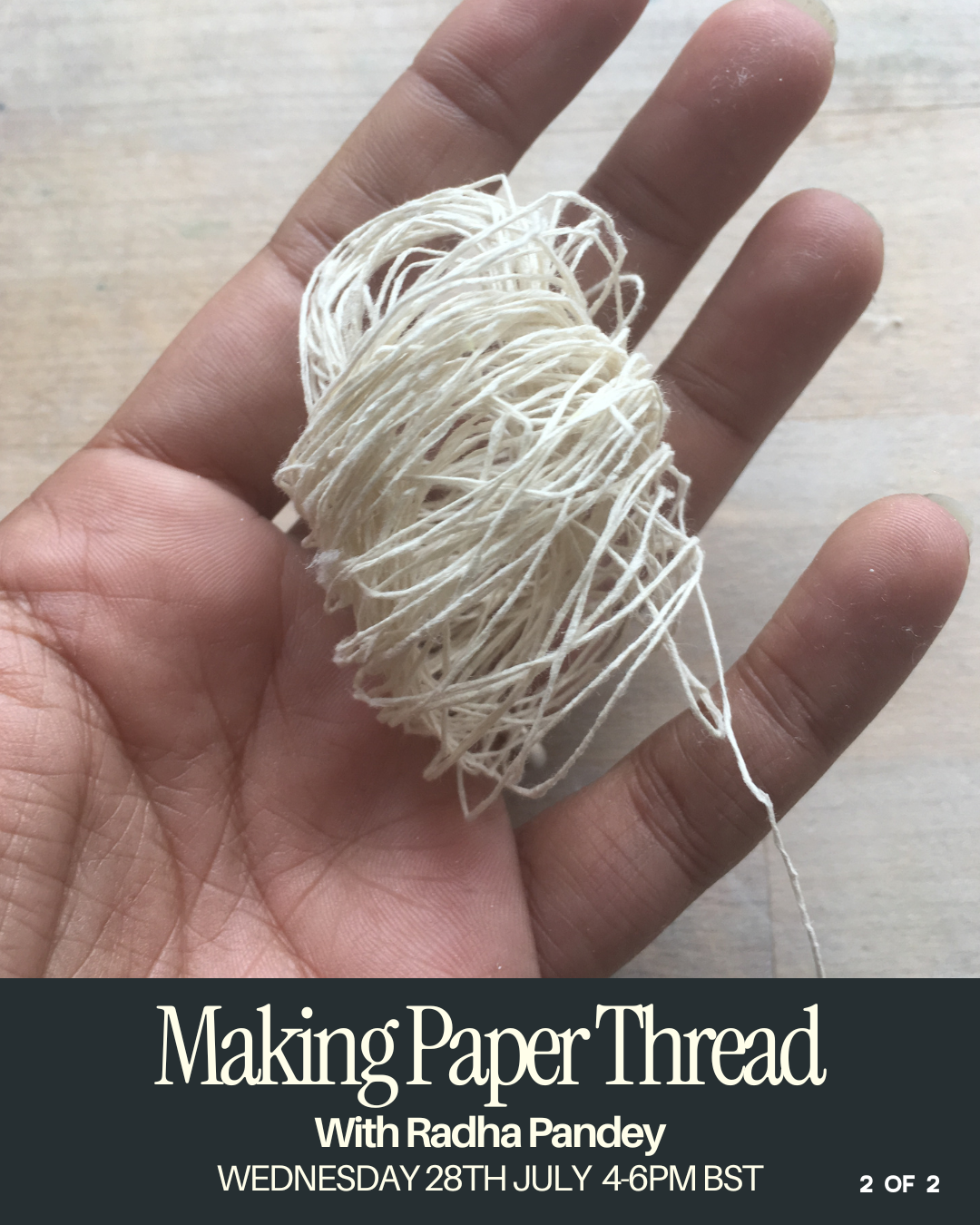
This traditional technique is specific to the Japanese paper tradition. Radha learned it from papermaker Asao Shimura years ago in the Philippines. A master papermaker, he wove fine paper threads into garments!
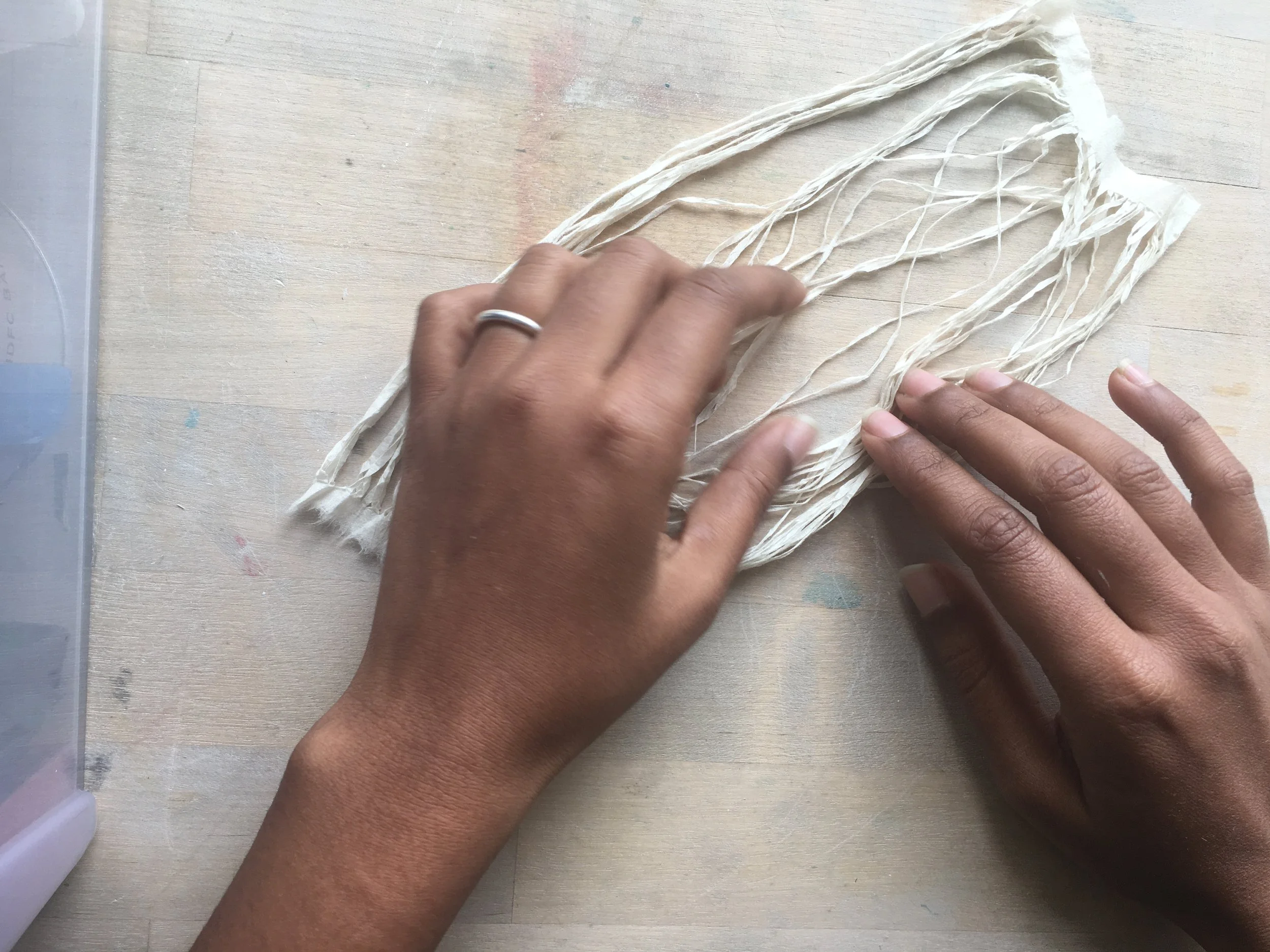
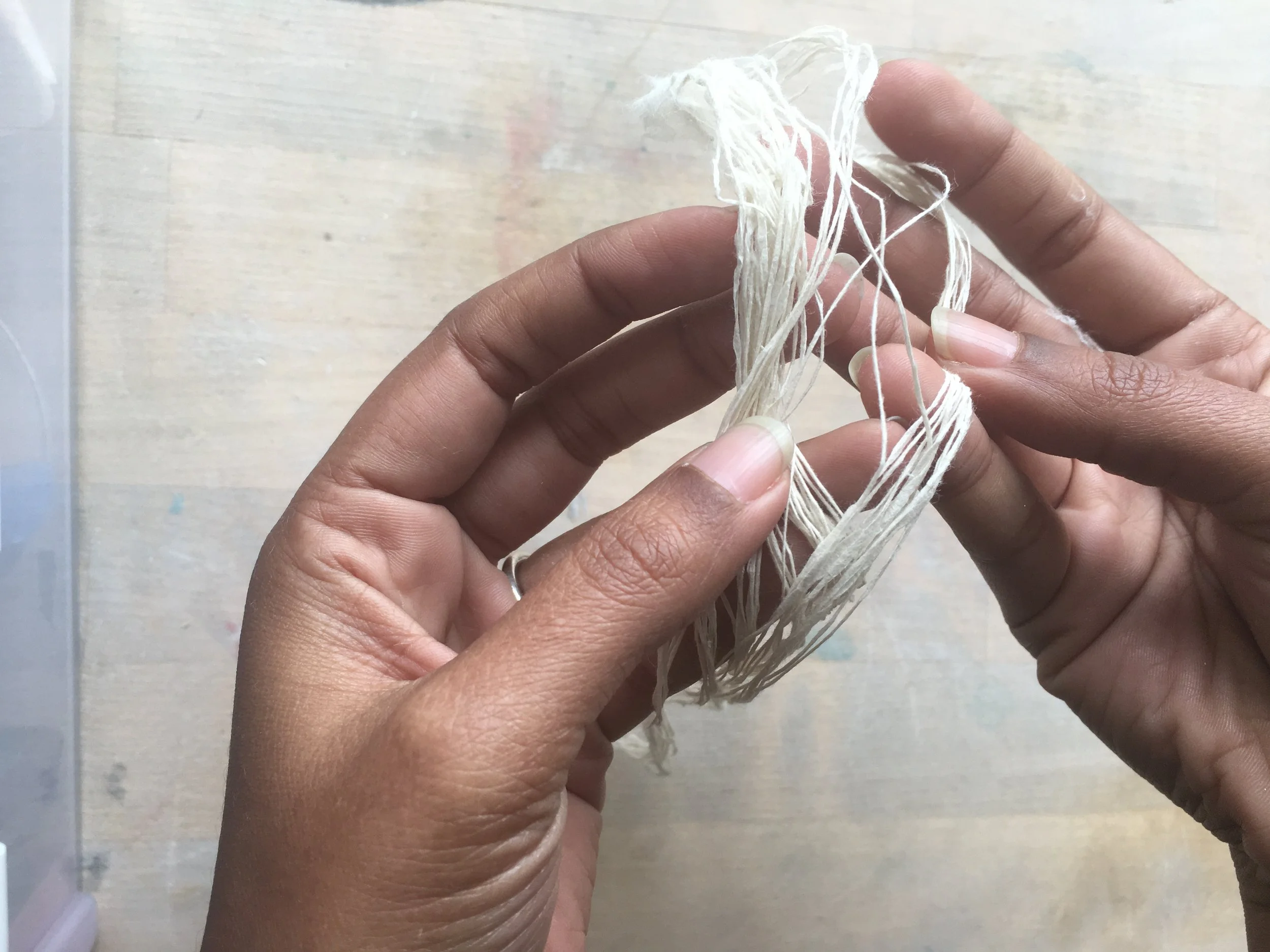
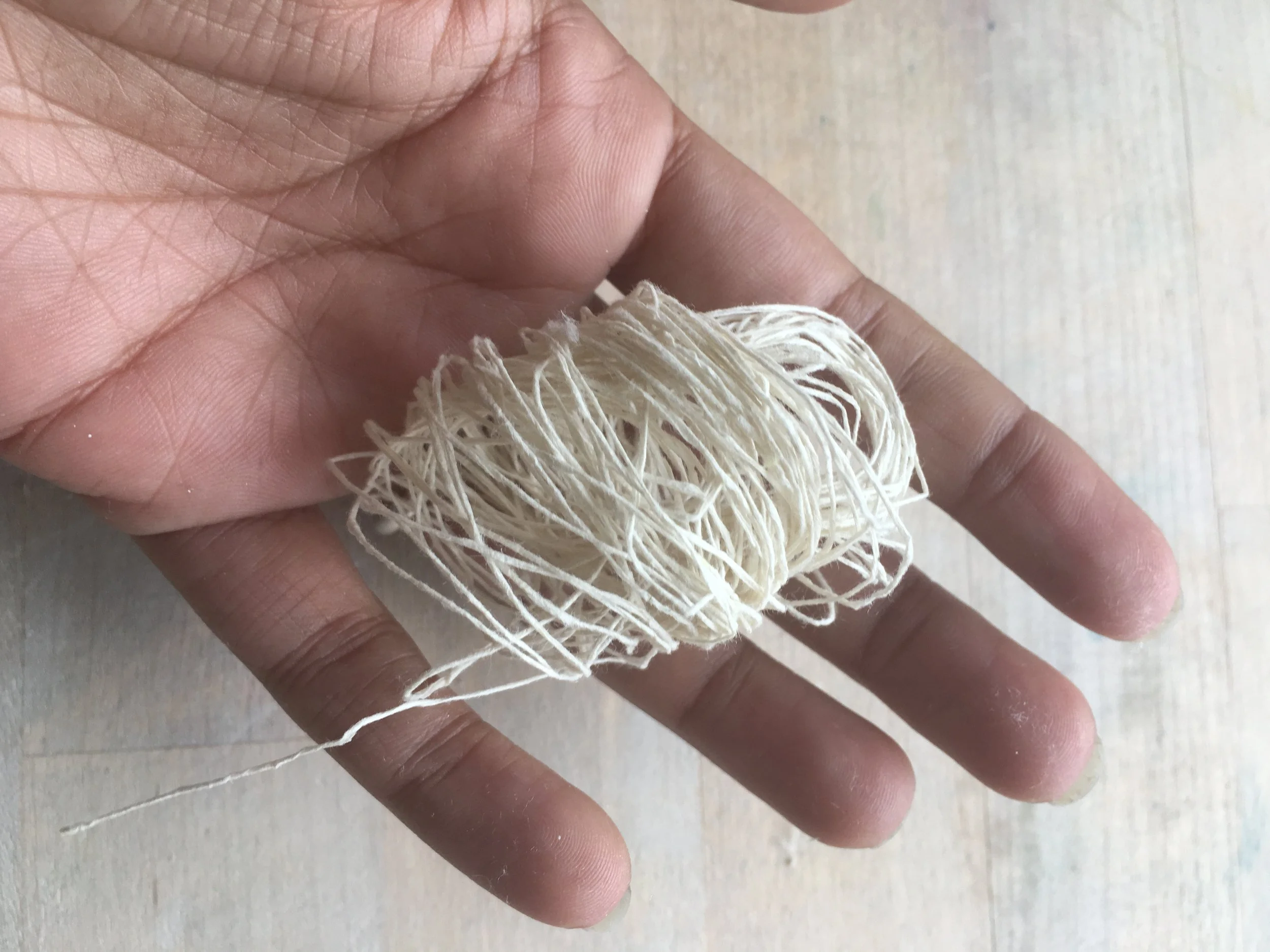
These threads are made from kozo, but can also be made using hanji and piña (pineapple) paper. Longer fibres in these papers make them suitable for converting into thread. This magical transformation takes some time and some elbow grease. This class will cover all the steps from beginning to end, but will not cover spinning or weaving.
Paper Thread and Cloth
Two 2 hour live Online Sessions
Join live or watch the recordings
Access The Recordings for one Year (until August 2028)
Two Printable PDF Handouts Provided
-
Introduction To Shifu
With Velma Bolyard
North Country Shifu, an illustrated talk tracing how Velma's fiber work in weaving, spinning, and papermaking forged a lifelong cartograph. Understanding the deliciousness of cellulosic fibers, spinning kami-ito and weaving shifu connected these for me, linking paper, to spindle, to loom, to page, and ultimately to artists' books.
Wednesday 28th July 4-6pm GMT
-
Making Paper Thread
With Radha Pandey
This traditional technique is specific to the Japanese paper tradition. Radha learned it from papermaker Asao Shimura years ago in the Philippines. A master papermaker, he wove fine paper threads into garments! These threads are made from kozo, can also be made using hanji and piña (pineapple) paper. Longer fibres in these papers make them suitable for converting into thread. This transformation takes some time and some elbow grease.
Wednesday 11th August 2027, 4-6 GMT
What are Shifu and Kami-ito?
Shifu and kami-ito are traditional Japanese crafts of making and using paper as a textile fibre.
Kami-ito (紙糸) literally means “paper thread” (kami = paper, ito = thread). It is a craft technique involving preparing traditional Japanese paper into very narrow strips, and working those strips by rolling/twisting them into a thread that can be used for weaving or other textile work.
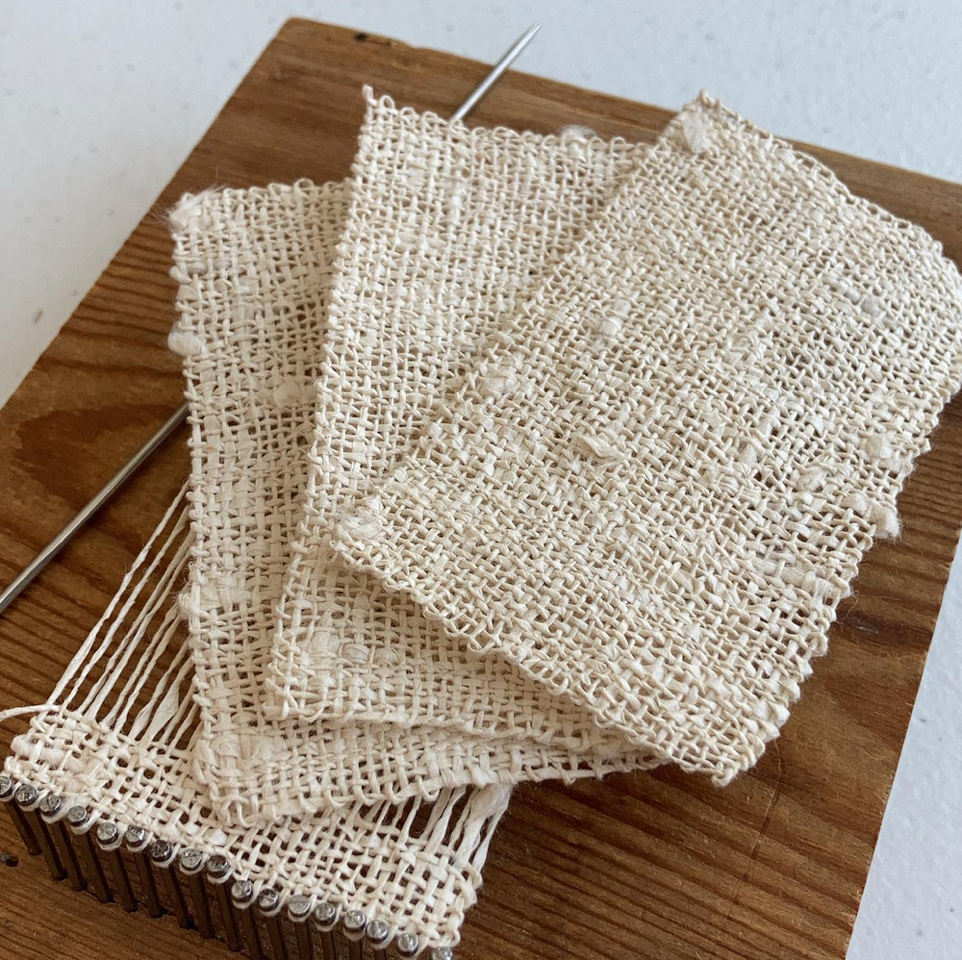
Shifu (紙布) literally means “paper cloth.” It refers to a textile craft tradition of making cloth woven from paper thread (kami-ito). The resulting textile can be surprisingly strong, light, and supple, and has a distinctive tactile quality.
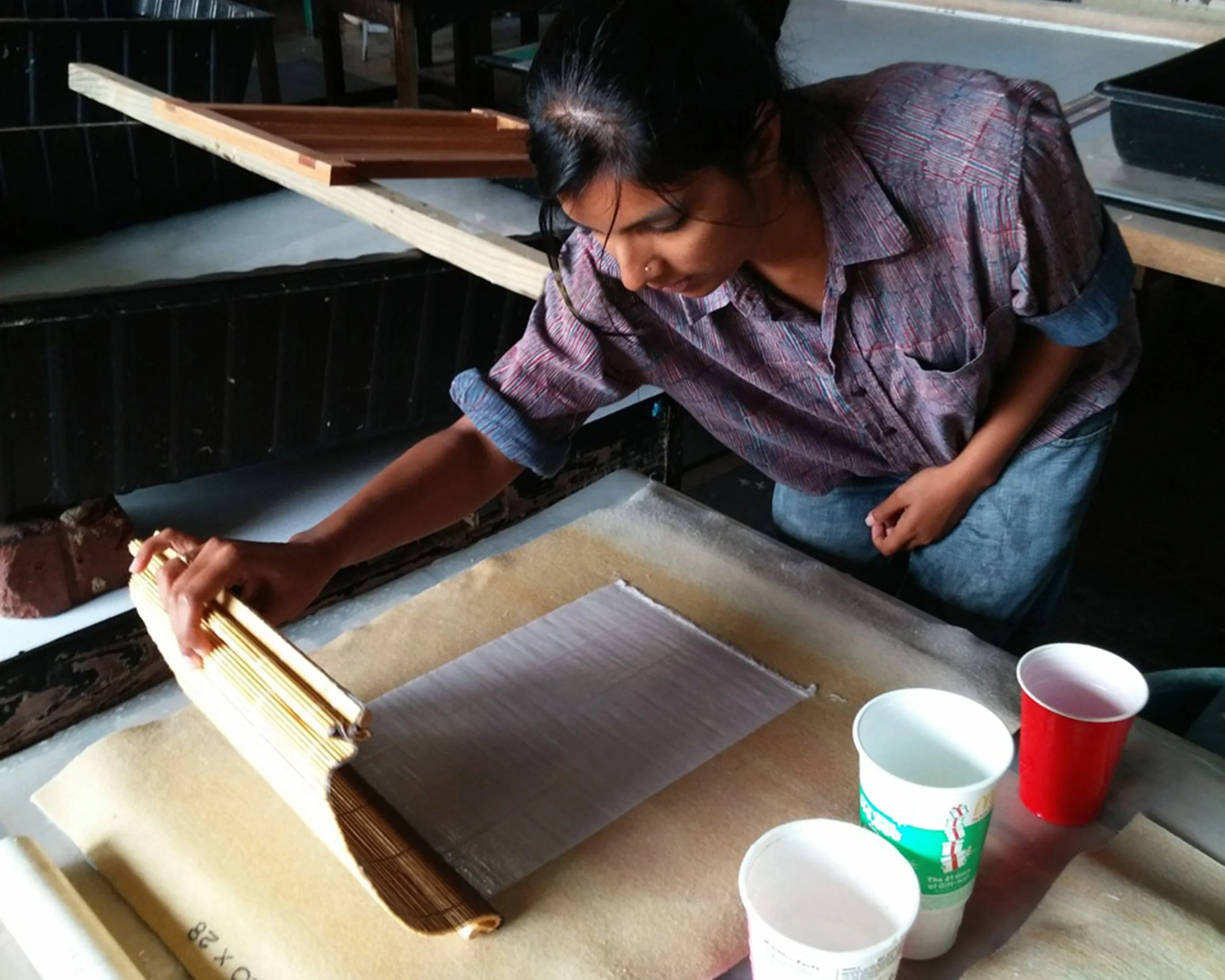
Radha Pandey
Radha Pandey is a book artist, papermaker and letterpress printer. She earned her MFA in Book Arts from the University of Iowa Center for the Book. She specializes in Indo-Islamicate Papermaking and teaches book arts classes in India, Europe and the US.
Her book Anatomia Botanica (2014) won the MICA Book Award and received an Honorable Mention at the 15th Carl Hertzog Award for Excellence in Book Design. In 2018, her book Deep Time won the Joshua Heller Memorial Award. Pandey’s most recent book Flora of Mughal India won the prestigious MCBA Book Prize (2024).
Her books are held in over 80 collections internationally, including the Library of Congress and Yale University. She runs a book arts studio in India and Norway with her partner, Johan Solberg.
Currently, Radha is working on a book about shadows and our perception of the colour black.

Velma Bolyard
Velma began her working in textiles and making paper in the fiber art program at Buffalo State, before she landed in the western Adirondack Mountains of New York. She set up her paper and fiber studio, Wake Robin, in the North Country in the 1980's. She is a weaver, spinner, papermaker, book and fiber artist. Currently ahe works with paper, shifu (a spun and woven paper textile), botanical contact (or eco-) printing on paper and textiles.
She makes artists' books, in small editions. In 2016 she retired from teaching special education in public school. She is now teaching workshops/classes in shifu, hand papermaking, and book arts in North America, and Australia and at St Lawrence University in Canton, NY. Her work maps how she responds to this place she calls home, and explores her connections and concerns for the land, animals, plants, and weather of this place. She has fallen deeply in love with this harsh, hard scrabble, beautiful place.